
Why This Matters
Brenda Fricker’s death marks the loss of one of Ireland’s most quietly formidable screen performers, an actor whose work helped bring an unmistakably Irish presence to the center of international cinema. Fricker died Thursday night in Dublin following a period of ill health, according to a statement from her agent, Phil Belfield. She was 81.
To many filmgoers, Fricker will forever be associated with her Academy Award-winning performance in Jim Sheridan’s 1989 drama My Left Foot, in which she played Bridget Fagan Brown, the fierce and exhausted mother of writer and painter Christy Brown. Her performance, opposite Daniel Day-Lewis, was intimate, unsentimental and physically grounded — the kind of supporting turn that reshapes a film without announcing itself as the center of attention.
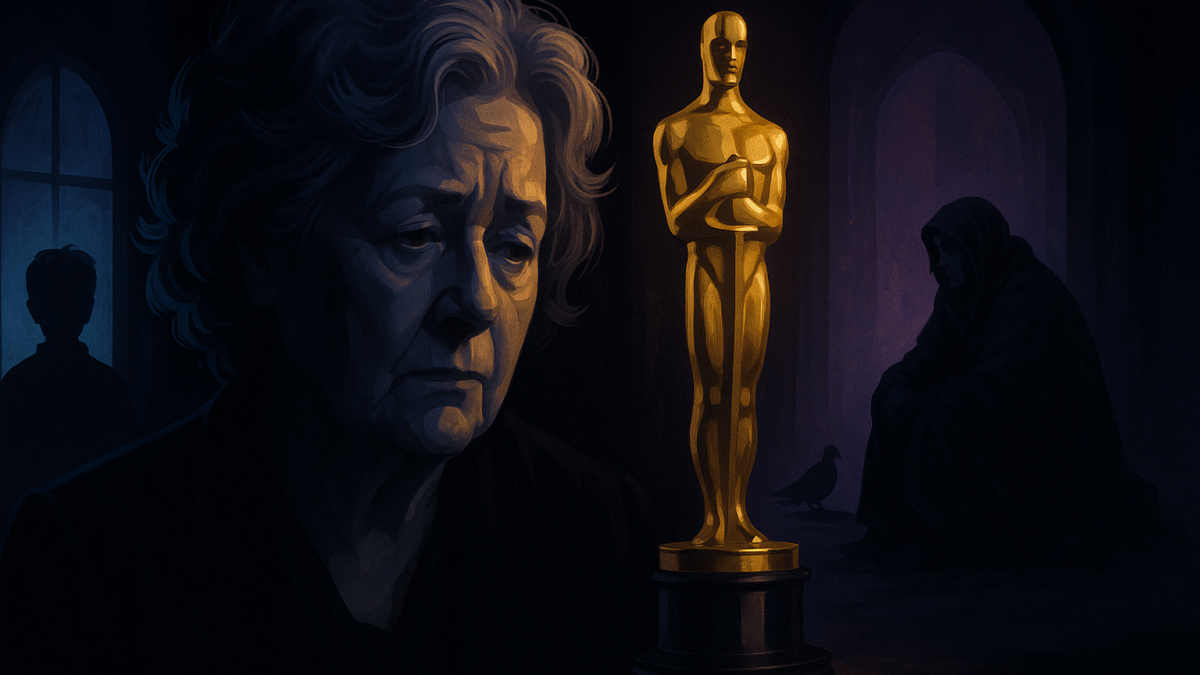
When she won the Oscar for best supporting actress in 1990, Fricker became the first Irish woman to receive an Academy Award. The achievement carried significance beyond a single awards-season triumph. It placed an Irish character actor, trained through years of theater, television and ensemble work, on one of the industry’s most visible stages at a time when Irish cinema was beginning to command renewed global attention.
Fricker’s career also matters because she resisted easy categorization. For some audiences, she was the emotionally raw, working-class mother in My Left Foot. For others, she was the bird-loving woman who befriends Macaulay Culkin’s Kevin McCallister in Home Alone 2: Lost in New York. That role, known to generations of holiday-movie viewers, demonstrated her gift for bringing dignity to characters who might otherwise have been treated as eccentric or peripheral.
Her screen presence was rarely showy. Fricker specialized in women who carried disappointment, loyalty and survival in their posture before saying a word. She could convey resilience without softening a character’s edges, and vulnerability without tipping into sentimentality. That quality gave her performances a lived-in authority, particularly in stories about families, communities and people pushed to the margins.
Industry Context
Fricker emerged from a tradition of Irish and British acting that valued craft over celebrity. Before her Oscar win, she had already built a substantial career across television and stage, including work that made her a familiar face to audiences long before Hollywood embraced her. She was part of a generation of performers whose reputations were earned through consistency rather than branding, and whose careers often moved fluidly between prestige drama, popular entertainment and character roles.
My Left Foot arrived at a pivotal moment for Irish filmmaking. Directed by Sheridan and led by Day-Lewis in a transformative performance, the film helped establish a new international appetite for Irish stories told with specificity rather than stereotype. Fricker’s contribution was essential to that impact. Her Bridget Brown was not a symbolic mother figure, but a woman shaped by poverty, labor, faith, frustration and unbreakable devotion.
Her Oscar win came during an era when supporting-actress races often rewarded performances that served as the emotional foundation of a film. Fricker’s victory was notable because it recognized a role that was deeply rooted in domestic realism, not glamour. She did not play tragedy as decoration. She played the cost of care, the strain of motherhood and the fierce intelligence required to keep a family intact under impossible circumstances.
After the Academy Award, Fricker did not follow the most conventional Hollywood path. She worked steadily, appearing in films and television projects on both sides of the Atlantic, but she remained selective and often gravitated toward roles that emphasized character over profile. Her credits included work in dramas, comedies and independent films, underscoring a career built less around stardom than around the demands of the part.
Her appearance in Home Alone 2 gave her an enduring place in mainstream American pop culture. The film’s Central Park subplot could easily have become a broad comic aside, but Fricker turned the character into a portrait of loneliness and guarded kindness. Her scenes with Culkin gave the sequel some of its most unexpectedly tender moments, and they continue to resonate with viewers who revisit the film each holiday season.
Within the entertainment industry, Fricker’s career is also a reminder of the importance of character actors in shaping cultural memory. Lead performances often define marketing campaigns, but supporting players frequently provide the emotional texture that makes films endure. Fricker’s best-known roles worked because she understood silence, fatigue, humor and grief as tools of performance. She could make a small scene feel consequential.
Her death comes as Irish talent is enjoying another period of heightened visibility in global film and television, with actors, writers and directors from Ireland regularly appearing in awards conversations and major studio projects. Fricker’s Oscar breakthrough helped create a reference point for what was possible. She belonged to an earlier wave, but her impact can be felt in the broader recognition now afforded to Irish performers on the world stage.
What Happens Next?
In the coming days, tributes are expected from colleagues across Ireland, the U.K. and Hollywood, particularly from artists shaped by the same theater and screen traditions that defined Fricker’s career. Her passing is likely to prompt renewed attention to My Left Foot, not only as a landmark in Irish cinema but as a showcase for the kind of supporting performance that can alter the emotional weight of an entire film.
There will also be a wider reappraisal of her range. While awards histories tend to reduce performers to a single victorious night, Fricker’s legacy extends across decades of work in which she made ordinary people feel specific, contradictory and alive. Her performances invited audiences to look more closely at characters who were often overlooked by the people around them.
For younger viewers, her role in Home Alone 2 may remain the entry point, a reminder that a performance in a family blockbuster can carry as much emotional force as one in an awards-season drama. For cinephiles, her Oscar-winning turn will continue to stand as a benchmark of restraint and conviction.
Fricker leaves behind a body of work defined by humanity rather than spectacle. In an industry often preoccupied with visibility, she built a career out of attention — to behavior, to pain, to humor and to the quiet ways people endure. That is why her loss will be felt not only in Ireland, but anywhere screen acting is valued as an art of truthfulness.