
Why This Matters
Brenda Fricker’s death in Dublin at 81 closes a chapter on one of Irish screen acting’s most quietly powerful careers, a body of work defined less by celebrity machinery than by emotional precision, lived-in humanity and an ability to make supporting roles feel indispensable.
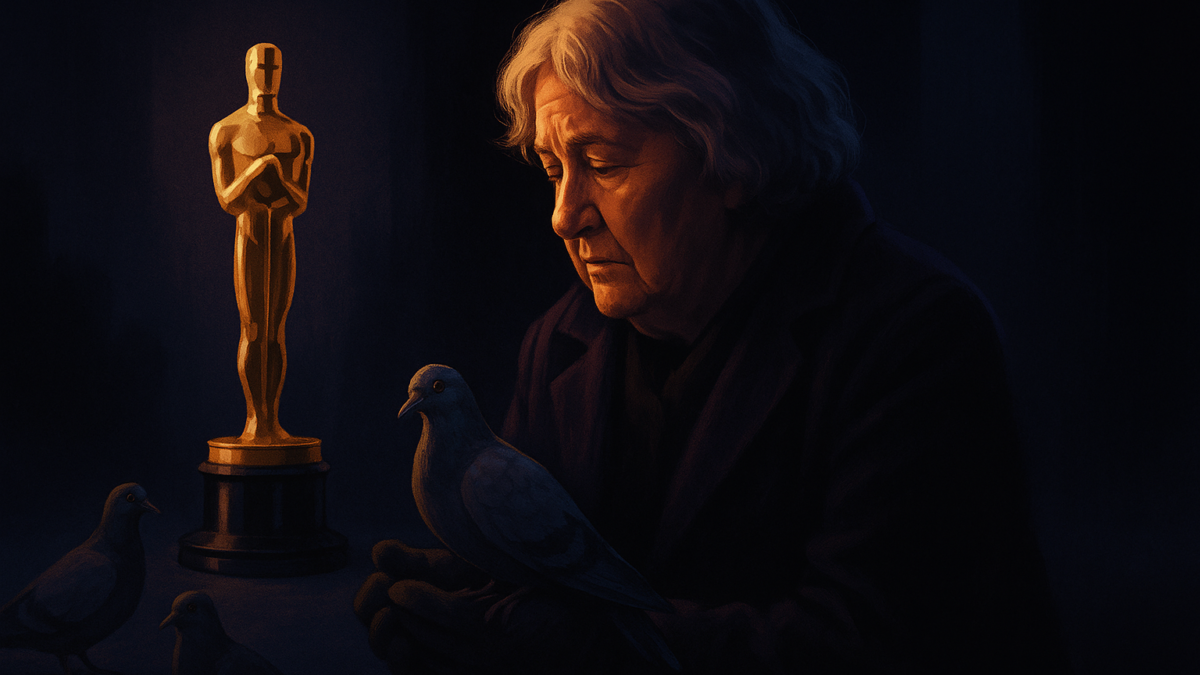
Her place in film history was secured in 1990, when she became the first Irish actress to win an Academy Award. The honor came for her performance in Jim Sheridan’s My Left Foot, in which she played Bridget Fagan Brown, the devoted mother of Christy Brown, the Irish writer and painter born with cerebral palsy. Opposite Daniel Day-Lewis, Fricker delivered a performance of restraint and force, grounding the film’s triumphs and hardships in the daily labor of maternal endurance.
It was the kind of role that could easily have been reduced to saintliness. Fricker resisted that. Her Bridget was exhausted, practical, loving, impatient and unshowy — a woman whose heroism was measured in repetition, sacrifice and stubborn faith. The Oscar recognized not only a performance but a tradition of acting rooted in observation rather than flourish.
For many viewers, however, Fricker’s screen legacy also includes a radically different kind of immortality: the “pigeon lady” in Home Alone 2: Lost in New York. Wrapped in heavy coats and surrounded by birds in Central Park, she gave the family comedy an unexpected note of loneliness and tenderness. Her scenes with Macaulay Culkin became a formative emotional memory for a generation that discovered her not through prestige cinema, but through holiday television rotation.
That dual recognition — Academy Award winner and beloved cult figure — explains why her passing resonates beyond Ireland and beyond awards history. Fricker belonged to the category of performer who could move between social realism, television drama and broad commercial entertainment without diluting her credibility. She brought a sense of interior life to characters who might otherwise have existed at the margins.
Industry Context
Fricker’s Oscar victory arrived at a pivotal moment for Irish cinema on the international stage. My Left Foot, released in 1989, helped announce a new global appetite for Irish stories told with specificity and seriousness. Sheridan’s film, propelled by Day-Lewis’ transformative lead performance and Fricker’s deeply grounded work, proved that Irish narratives could travel far beyond local audiences without sanding away their cultural texture.
Before the Oscar, Fricker had already built a substantial career in British and Irish television, most notably through work that emphasized ensemble discipline and character detail. She was never a performer who seemed interested in glamour for its own sake. Her screen presence suggested someone who understood the weight of ordinary lives — nurses, mothers, neighbors, women who carried private histories in their posture and silences.
That quality made her especially valuable in an era when film and television were expanding their appetite for socially conscious drama. Fricker’s performances often communicated the emotional cost of institutions, poverty, illness and family obligation without turning those subjects into melodrama. She could suggest resilience without sentimentality, pain without self-pity.
Her Academy Award also had symbolic importance within the Irish entertainment community. While Irish actors had long contributed to international theater and film, Fricker’s win marked a landmark for Irish actresses in Hollywood’s most visible arena. It helped widen the frame for performers who did not fit conventional leading-lady templates but whose work carried extraordinary dramatic weight.
In the years that followed, Fricker continued to move between film, television and stage-adjacent work with characteristic independence. She appeared in projects across genres and budgets, never seeming overly defined by the Oscar. That may be one reason her career feels unusually honest in retrospect. The award did not transform her into a Hollywood fixture, but it did confirm what casting directors and fellow actors already knew: she was an actor of formidable emotional intelligence.
Her turn in Home Alone 2 also demonstrates the unpredictable ways performers are remembered. For awards historians, Fricker is linked to one of the great Irish film breakthroughs. For families who rewatch the 1992 sequel every December, she is the mysterious woman in the park who teaches Kevin McCallister that fear and isolation can be softened by trust. Few actors manage to occupy both spaces so naturally.
What Happens Next?
In the immediate aftermath of her death, tributes are expected from across the Irish film and theater communities, as well as from international colleagues who worked with her during the height of her screen career. Her Oscar win will understandably be central to many remembrances, but the fuller appreciation will likely focus on the breadth of a career that favored truth over vanity.
Streaming platforms, broadcasters and repertory programmers may also revisit her defining performances, particularly My Left Foot, whose place in modern Irish cinema remains significant. The film’s legacy has always rested on the interplay between Day-Lewis’ physical transformation and Fricker’s emotional steadiness. Rewatching it now, her performance stands as the film’s moral anchor.
There may also be renewed attention on how Fricker navigated fame after winning the industry’s highest acting prize. She often appeared to keep celebrity at arm’s length, allowing the work rather than the persona to remain central. In an entertainment culture increasingly built around visibility, branding and perpetual public engagement, that choice now seems almost radical.
For younger audiences, her death may prompt a rediscovery of an actor they first encountered in a holiday classic without knowing the scale of her achievement. That is one of the more poignant aspects of her legacy: Brenda Fricker could be introduced to one viewer as an Oscar-winning dramatic performer and to another as a gentle, wounded figure feeding pigeons in Central Park, and both impressions would be true.
Her passing leaves Irish cinema with the loss of a trailblazer, but also with a durable example of what screen acting can be when stripped of ornament. Fricker’s best work did not announce itself loudly. It accumulated, scene by scene, until the emotional truth became unavoidable.