
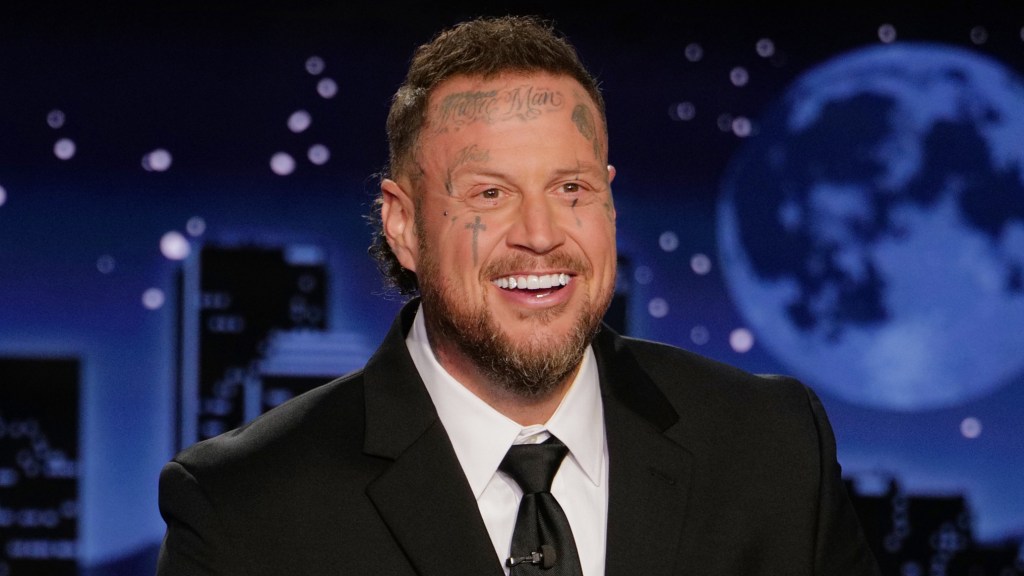
Jelly Roll has moved from political restraint to pointed criticism, using a public speech this week to call out elected officials across the ideological spectrum for what he described as a “sh*t job” in addressing the problems facing everyday Americans.
The country star, who has built one of music’s most unlikely second-act success stories out of songs about addiction, incarceration, recovery and redemption, did not frame his remarks as an endorsement of either party. Instead, he aimed his frustration broadly, arguing that leaders on both sides have failed communities that are dealing with poverty, substance abuse and a lack of meaningful support systems.
The moment marked a notable shift for the singer, who avoided getting drawn into partisan conversation at the Grammy Awards in February. At the time, Jelly Roll appeared determined to keep the focus on music, his family and the emotional significance of being recognized by the Recording Academy after years spent outside the traditional Nashville machine.
This week, however, he took a different route. Speaking with the kind of directness that has become central to his public image, Jelly Roll leaned into the discomfort of the subject rather than deflecting it. The message was less about party politics than accountability, and it was delivered in the plainspoken language that has helped him connect with fans well beyond country radio.
For Jelly Roll, whose real name is Jason DeFord, the issue is personal as much as political. His music and interviews frequently reference his past arrests, time behind bars and struggles with addiction. He has also become increasingly visible in conversations around recovery and criminal justice, using his platform to argue that people who have made mistakes should not be written off permanently.
Why It Matters
The comments land at a time when entertainers are under growing pressure to define where they stand, particularly in an election-cycle culture where silence can be interpreted as strategy and speech can trigger immediate backlash. For an artist like Jelly Roll, the calculation is especially delicate.
His fan base stretches across country, rock, hip-hop and pop audiences. He has become a rare consensus figure in a fragmented music business: embraced by Nashville institutions, streamed heavily by younger listeners and welcomed by audiences who respond to his underdog story as much as his songs. Taking aim at politicians without choosing a team allows him to speak forcefully while preserving the bipartisan appeal that has helped power his rise.
That balancing act is not accidental. Country music has long had a complicated relationship with politics. Some artists have embraced overt ideological identities, while others have paid a commercial price for speaking out. The modern marketplace is even more unforgiving, with social media turning a single quote into a brand-defining moment within minutes.
Jelly Roll’s approach reflects a growing lane for major entertainers: issue-based advocacy without party alignment. Rather than campaign-style messaging, he is focusing on themes that have shaped his career — addiction treatment, second chances, mental health, family instability and the failures of institutions that are supposed to help people before they fall through the cracks.
That makes the speech significant beyond its profanity-laced sound bite. Jelly Roll is not merely a celebrity weighing in from a distance. His entire commercial identity is rooted in lived experience. When he criticizes leaders for failing vulnerable people, it reinforces the authenticity that has made him one of the most compelling figures in contemporary country music.
Industry Context
Jelly Roll’s rise has been one of the most closely watched stories in the entertainment industry over the past several years. After years of building a following outside the mainstream, he broke through with a sound that blurred genre lines and a persona that felt unusually unfiltered for a major-label country act.
That authenticity has translated into awards attention, arena crowds and broad media interest. His Grammy visibility in February underscored how quickly he had moved from outsider to institution-approved contender. But with that kind of prominence comes a new level of scrutiny. Every comment is no longer just a personal opinion; it becomes part of a larger narrative about who he is as a public figure.
In that sense, his latest remarks may actually strengthen his position. Jelly Roll’s fans have rarely expected polish from him. They expect candor. His willingness to criticize politicians collectively rather than retreat into safe generalities fits the emotional contract he has established with listeners: he speaks like someone who has been through the system, not someone observing it from a VIP balcony.
At the same time, the entertainment business will be watching how far he pushes this lane. Advocacy can deepen an artist’s connection with fans, but it can also complicate relationships with sponsors, broadcasters and event organizers who prefer broad appeal over controversy. Jelly Roll’s challenge will be maintaining the raw honesty that defines him while navigating the machinery of mainstream stardom.
So far, he has shown an unusual ability to turn vulnerability into currency without making it feel calculated. That is why his political frustration is likely to resonate with many listeners even if they disagree on specific policy solutions. The speech was less a partisan declaration than a demand for competence from people in power.
What Happens Next
Jelly Roll is expected to continue using his growing platform to spotlight recovery, redemption and systemic failure, even as his career expands further into the mainstream. The question now is whether this sharper public tone becomes a regular part of his messaging or remains a rare moment of unfiltered frustration. Either way, his latest comments make clear that he is no longer content to keep politics entirely at arm’s length when the issues overlap so directly with the life story that made him a star.