
A great movie score can make an audience feel tension before anything frightening happens, turn a quiet scene into an emotional moment, or make a character instantly recognizable through just a few notes.
A great movie score can make an audience feel tension before anything frightening happens, turn a quiet scene into an emotional moment, or make a character instantly recognizable through just a few notes.
Yet the music audiences hear in a finished film is usually the result of months of collaboration between composers, directors, editors, musicians, orchestrators, sound teams, and producers.
Creating a movie score is one of the most important—and least visible—parts of filmmaking.
The Composer Joins the Production
A film composer may become involved at different stages of a project.
Sometimes composers are hired while a movie is still being filmed.
Other times, they begin working after the director and editor have assembled an early version of the film.
The composer studies the story, characters, pacing, and emotional tone before deciding what kind of music the film needs.
The goal is not simply to write memorable music.
The score has to serve the story.
The Director and Composer Decide Where Music Belongs
One of the first major steps is determining where the movie should have music.
The director, composer, editor, and music team may watch the film together and discuss individual scenes.
They decide:
- Where music should begin
- Where it should stop
- What emotion it should create
- Which characters need musical themes
- Which scenes may work better without music
This process is often called a spotting session.
A film does not necessarily need music everywhere.
Sometimes silence can be more powerful.
Musical Themes Help Tell the Story
Composers often create recurring musical ideas for important characters, relationships, places, or concepts.
A theme might first appear quietly and then return later in a completely different form.
For example, the same melody could be played:
- Softly during an emotional scene
- Dramatically during an action sequence
- Slowly during a moment of loss
- Triumphantly near the end of the film
These variations help connect different parts of the story without requiring dialogue.
Composers Work Closely With the Picture
Film music has to fit precise moments on screen.
A musical change may need to happen when:
- A character enters a room
- A secret is revealed
- An action sequence begins
- A joke lands
- The scene cuts to another location
- The credits start
That means composers are not simply writing standalone songs.
They are writing music to picture.
Timing is critical.
A few seconds can completely change how a scene feels.
Temporary Music Can Influence the Score
During editing, filmmakers often use existing music as a temporary soundtrack before the original score is finished.
This is commonly called a temp track.
Temporary music helps directors and editors understand how a scene might feel with music.
But it can also create challenges.
Filmmakers sometimes become attached to the temporary track, leaving the composer with the difficult job of creating something original that produces a similar emotional effect without copying the existing music.
Not Every Composer Works Alone
Major film scores can require an entire music department.
Depending on the project, that team may include:
- Composers
- Orchestrators
- Arrangers
- Music editors
- Copyists
- Conductors
- Recording engineers
- Musicians
- Vocalists
The composer usually creates the main musical ideas.
Orchestrators may then help translate those ideas into detailed parts for individual instruments and ensembles.
Large productions can involve full orchestras, while other films may rely heavily on electronic instruments or smaller groups of musicians.
The Sound of Every Film Is Different
There is no single formula for a movie score.
A historical drama might use a traditional orchestra.
A science-fiction film may combine orchestral music with synthesizers and electronic sounds.
A thriller might rely on unusual textures designed to create discomfort.
A comedy may use lighter instrumentation and precise musical timing.
Some films intentionally use very little music.
The score is shaped by the world of the movie.
Recording the Score
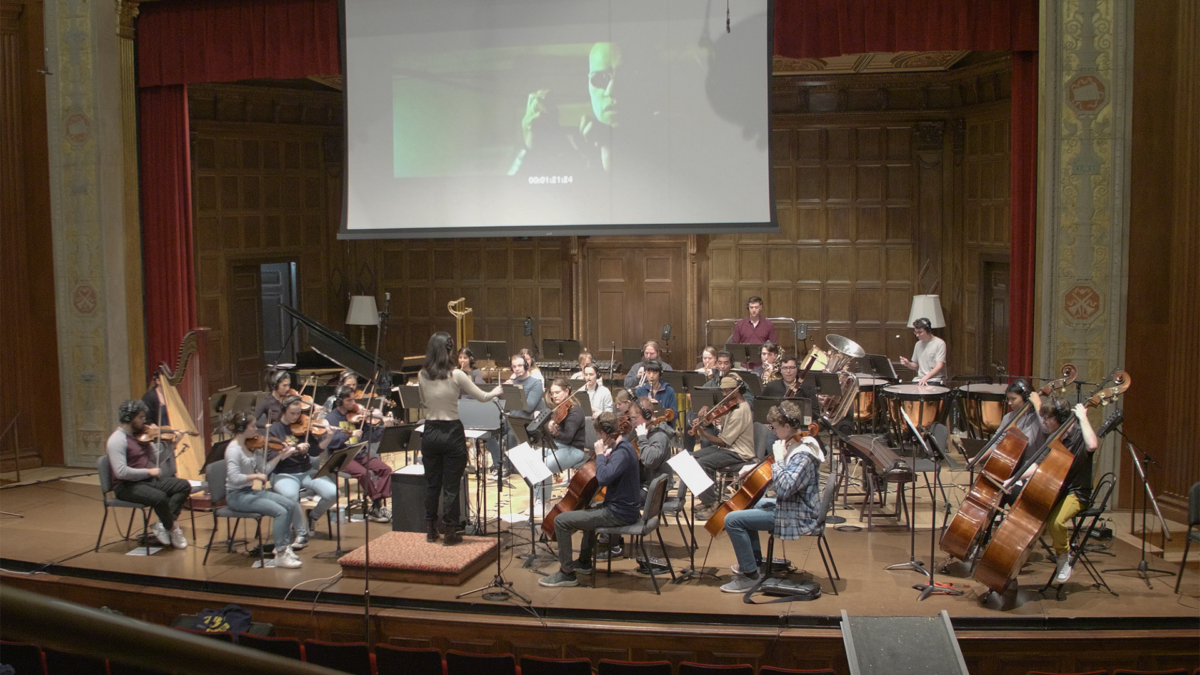
Once the music is ready, live musicians may record it in a scoring stage or recording studio.
The musicians often perform while the film or timing information is displayed so the music stays synchronized with the picture.
A conductor may lead the orchestra while the composer, director, music editor, and recording team listen from a control room.
Changes can still happen during these sessions.
A passage may be rewritten, shortened, extended, or performed differently after the filmmakers hear it alongside the finished scene.
Technology Has Changed Film Scoring
Modern composers have powerful digital tools that allow them to create extremely realistic musical demonstrations before anything is recorded.
Using specialized software and sampled instruments, a composer can build a detailed version of a score inside a computer.
This allows directors to hear how the music may work before an orchestra ever enters a studio.
Some productions use a combination of:
- Live musicians
- Synthesizers
- Sampled instruments
- Electronic sound design
Others may create their scores almost entirely digitally.
The technology has changed, but the basic purpose remains the same: support the story.
The Score Must Compete With Everything Else We Hear
Music is only one part of a film’s soundtrack.
The final movie may also contain:
- Dialogue
- Sound effects
- Background noise
- Songs
- Foley
- Environmental sounds
During the final sound mix, filmmakers balance all of these elements.
A dramatic piece of music may need to become quieter when a character speaks.
At another moment, the score may become one of the loudest elements in the movie.
The audience should experience all of these sounds as one complete soundtrack.
Movie Scores Can Have a Life Beyond the Film
Some scores become famous long after the movies are released.
Music originally written to support a scene may later appear on:
- Soundtrack albums
- Streaming services
- Concert programs
- Anniversary performances
- Compilation albums
Successful film themes can become permanently associated with characters or franchises.
In some cases, audiences can recognize a movie after hearing only a few notes.
Music Can Change What an Audience Feels
One of the remarkable things about film scoring is how strongly music can influence the way viewers interpret a scene.
The same images can feel romantic, frightening, tragic, or humorous depending on the music underneath them.
Great composers understand when to guide the audience emotionally and when to stay out of the way.
Often, the most effective score is one viewers feel without consciously noticing.
Behind Every Great Movie Score
By the time audiences hear music in a finished movie, countless creative decisions have already been made.
The composer has studied the story.
The director has helped establish the emotional direction.
Editors have shaped the timing.
Musicians and music teams have transformed ideas into finished recordings.
Sound mixers have blended the score with dialogue and effects.
The result is much more than background music.
A movie score is another form of storytelling—one capable of communicating emotion even when no character says a word.
Related ShowBiz Originals
- 20 Greatest TV Theme Songs Ever Recorded
- How Movie Trailers Became an Industry of Their Own
- How Blockbuster Movies Became Hollywood’s Biggest Business
- The Rise of AI in Hollywood Production
- How Entertainment Companies Decide Which Projects Get Greenlit
About ShowBiz Originals
ShowBiz Originals delivers exclusive analysis, commentary, and insights covering the business of entertainment across film, television, music, theatre, modeling, gaming, fashion, and live events.