
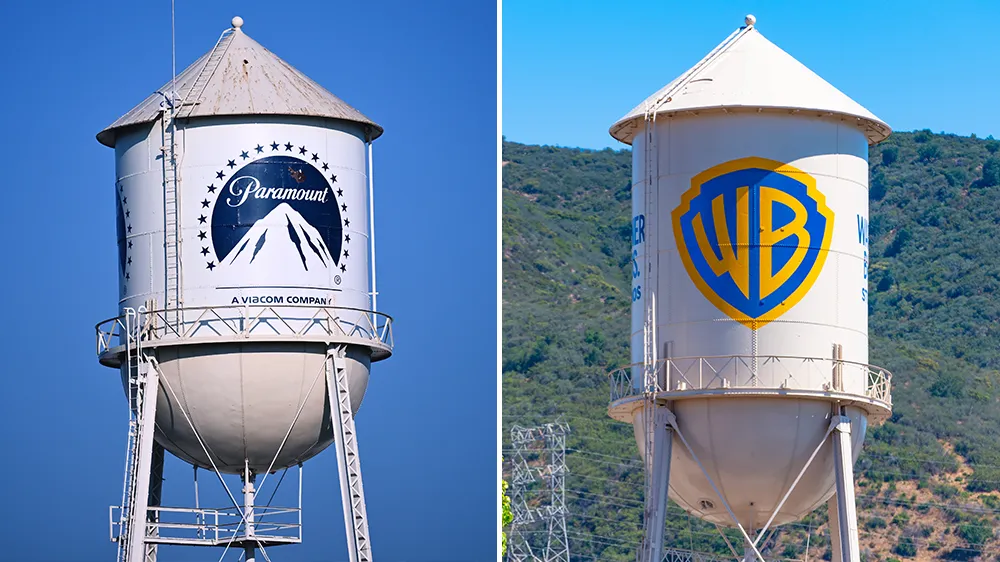
California Attorney General Rob Bonta is expected to press Paramount to sell off a portion of its cable television holdings and to keep its film studio operationally distinct from Warner Bros. as state officials scrutinize a proposed Paramount-Warner combination, according to people familiar with the anticipated position.
The expected request would mark one of the most significant state-level interventions yet in the latest wave of Hollywood consolidation, and it signals that California intends to take a close look not only at consumer pricing and distribution power, but also at the creative infrastructure that underpins the entertainment business in Los Angeles.
While the precise list of channels that could be targeted has not been finalized, the state is expected to focus on networks where regulators see potential overlap in advertising, carriage negotiations or programming categories. The broader concern, according to people with knowledge of the discussions, is that a combined company could wield too much leverage over distributors, advertisers and independent producers at a time when the traditional cable bundle is already under severe pressure.
Bonta’s office is also expected to seek assurances that Paramount Pictures would not simply be folded into Warner Bros. in a way that reduces the number of major studio buyers, greenlight committees and theatrical distributors in the market. Such a condition would be aimed at preserving competition for scripts, talent, production services and theatrical release slots.
A representative for the California attorney general’s office declined to comment. Paramount and Warner Bros. representatives did not immediately respond to requests for comment.
A State Review With National Implications
California does not need to be the only regulator at the table to matter. In media mergers, federal agencies such as the Department of Justice or the Federal Trade Commission typically take the lead on antitrust review. But state attorneys general can bring their own claims, coordinate with federal regulators or negotiate commitments that directly affect jobs, facilities and business practices inside their states.
That gives California an unusually important role in any transaction involving two historic Hollywood companies. Paramount and Warner Bros. are not just corporate assets; they are central pieces of the state’s entertainment economy, with deep ties to production crews, soundstage facilities, guild labor, vendors, postproduction houses and theatrical distribution.
The expected push from Bonta reflects a growing view among regulators that media consolidation should be evaluated beyond the old question of whether cable subscribers might pay more. In today’s market, scale touches everything: which shows get made, where films are released, how much leverage creators have, and whether distributors have enough alternatives when negotiating carriage or streaming placement.
For California, the studio-separation issue may be just as important as any cable-channel sale. The number of traditional major studios has already narrowed over the past two decades through mergers and strategic retrenchment. Disney’s acquisition of 21st Century Fox removed one major supplier from the marketplace. WarnerMedia’s path through AT&T and Discovery reshaped another. Paramount has undergone its own strategic upheaval as linear TV revenue declined and streaming losses forced hard choices across the sector.
In that environment, regulators are increasingly sensitive to the possibility that fewer studio decision-makers could mean fewer bids for projects, fewer risks taken on theatrical films and fewer opportunities for emerging filmmakers and producers. A requirement that Paramount’s studio remain separate from Warner Bros. would be designed to preserve some measure of independent decision-making, even if the companies share ownership or back-office functions.
Why Cable Channels Are in the Crosshairs
The cable-channel business is no longer the growth engine it once was, but it remains a major source of cash flow and negotiating power. Legacy entertainment companies still depend on carriage fees from pay-TV providers, even as cord-cutting continues to shrink the subscriber base. Networks also remain important advertising platforms, promotional vehicles and content pipelines for streaming services.
A combined Paramount-Warner entity would bring together a large collection of entertainment, news, sports-adjacent and lifestyle brands. Even if individual channels have lost audience share, regulators may view the package as powerful when sold collectively to cable, satellite and digital distributors.
That is where divestitures could come in. Selling certain channels to a third party could reduce concentration in specific programming categories and create a more viable competitor in the marketplace. It could also ease concerns that distributors would face an all-or-nothing negotiation with a company controlling too many must-have networks.
Still, channel sales would not be simple. Buyers for linear cable assets are more limited than they were a decade ago, and many private-equity firms and strategic acquirers are wary of declining subscriber revenue. Any divestiture package would need to be attractive enough to sustain the channels as real competitors, not merely offload weaker assets.
That issue has become a recurring challenge in media antitrust remedies. Regulators increasingly want divested assets to remain viable, with sufficient programming rights, management resources and distribution agreements to compete after a deal closes. A sale in name only would be unlikely to satisfy serious concerns.
The Bigger Hollywood Picture
The expected California position arrives at a pivotal moment for the entertainment industry. Major studios are trying to rebalance after years of heavy streaming spending, a weakened theatrical marketplace, advertising volatility and labor disruptions that exposed deep mistrust between talent and management.
Executives argue that consolidation can create the scale needed to compete with Netflix, YouTube, Apple and Amazon, companies with global reach and enormous technology budgets. They say legacy studios need larger libraries, stronger streaming bundles and more efficient operations to survive in a marketplace where consumers are canceling cable and rotating subscriptions.
Opponents counter that Hollywood’s answer to disruption cannot simply be fewer companies. Writers, directors, actors, producers and theater owners have all expressed concerns in recent years that consolidation narrows the marketplace and makes it harder for original projects to break through. Independent producers, in particular, worry that fewer buyers will mean lower fees and tougher terms.
That tension is likely to define the regulatory debate. A Paramount-Warner combination could be framed by the companies as a necessary response to technological and financial pressure. California, however, appears prepared to argue that preserving competition inside the creative economy is itself a public interest.
What Happens Next
Bonta’s office is expected to continue evaluating the transaction alongside federal regulators and other state officials. If California formally seeks divestitures or studio-separation commitments, the companies would have to decide whether to negotiate remedies, challenge the demands or restructure parts of the deal to reduce legal risk.
The process could stretch for months, particularly if regulators request extensive data on carriage agreements, advertising markets, production spending, employment and studio greenlighting practices. Any final outcome will depend on the exact structure of the transaction and whether federal enforcers align with California’s concerns.
For Hollywood, the message is already clear: the next major media merger will not be judged only by Wall Street’s appetite for scale. Regulators are preparing to ask whether the deal leaves enough room for competition, creative risk and independent decision-making in the town that still makes much of the world’s entertainment.