
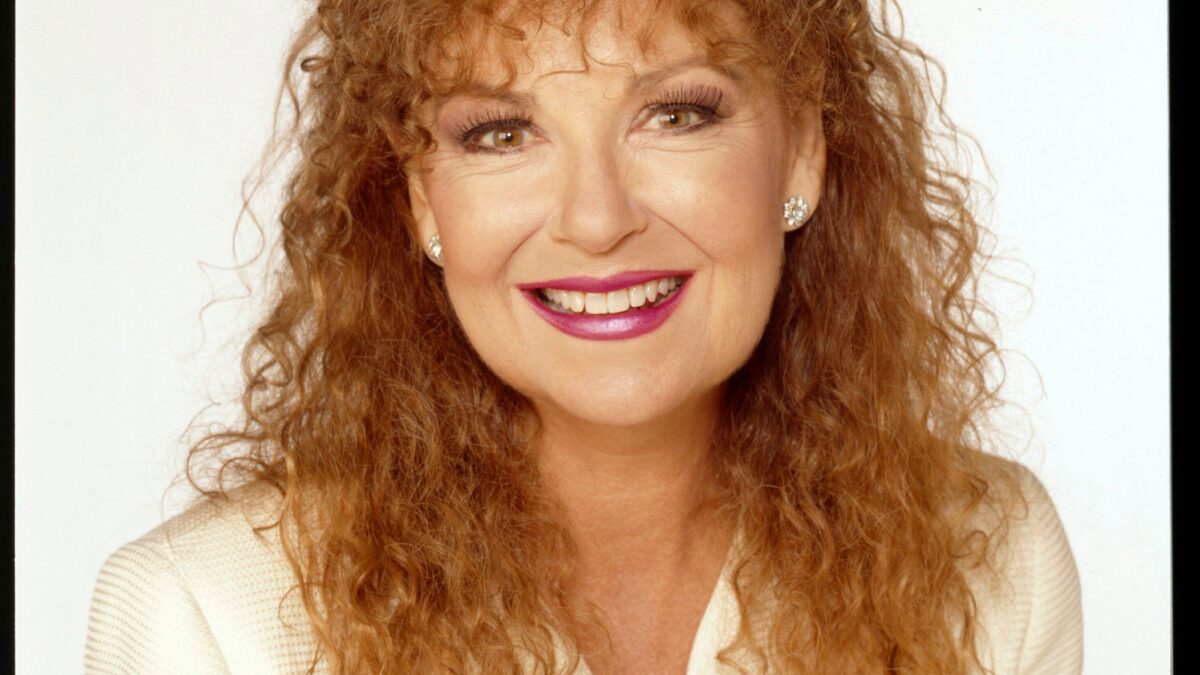
Shelley Fabares, the actor and singer whose career traced a remarkable arc across postwar television, 1960s pop culture and the network sitcom boom of the 1980s and ’90s, has died. She was 82.
Fabares died Saturday in Los Angeles, her family said in a statement to The Associated Press. No cause of death was given.
For multiple generations of viewers, Fabares was one of television’s most familiar faces: first as Mary Stone, the poised teenage daughter on “The Donna Reed Show”; later as Francine Webster on “One Day at a Time”; and then as Christine Armstrong, the sharp, steady partner to Craig T. Nelson’s Hayden Fox on “Coach.” In between, she became an unexpected pop sensation with “Johnny Angel,” a clean-cut 1962 hit that reached No. 1 on the Billboard Hot 100 and became permanently associated with the early-’60s teen idol era.
Her death marks the loss of a performer who helped define the grammar of American television comedy at several key moments. Fabares was not merely a nostalgic figure from black-and-white TV. She was a working actor whose presence bridged the family sitcom, the star-driven musical movie and the workplace comedy — three pillars of the entertainment business before streaming fractured viewing habits into niches.
Born Michele Ann Marie Fabares in Santa Monica, Calif., she began acting as a child and entered television at a time when the medium was still establishing its stars as weekly household companions. “The Donna Reed Show,” which premiered in 1958, turned Fabares into a teenage favorite. As Mary, she embodied a particular ideal of midcentury American adolescence: polished, dutiful, sometimes mischievous and always framed within the rhythms of family life.
That image was amplified when “Johnny Angel” became a national hit. The song, performed by Fabares on “The Donna Reed Show” before its commercial release, was a reminder of how tightly television and music could reinforce each other in the pre-MTV era. A sitcom appearance could create a pop star overnight, and Fabares’ single became one of the defining examples of that kind of cross-platform stardom long before the phrase existed.
Fabares never seemed entirely comfortable being defined as a singer, and her acting career ultimately proved far more durable. In the 1960s she appeared opposite Elvis Presley in a trio of films — “Girl Happy,” “Spinout” and “Clambake” — placing her within another major branch of the decade’s youth-entertainment machinery. Those films were built around Presley’s music and persona, but Fabares brought a bright, grounded quality that fit the era’s breezy studio comedies.
Her later television work showed a performer capable of growing with the medium. On “One Day at a Time,” she appeared as Francine Webster, a confident and sometimes cutting professional foil in a series that was itself part of Norman Lear’s broader reinvention of the sitcom. The show dealt with divorce, single motherhood, work and changing social expectations, and Fabares’ recurring presence helped sharpen its depiction of adult ambition and competition.
Then came “Coach,” the ABC comedy that ran from 1989 to 1997 and became one of the most durable hits of its era. As Christine Armstrong, Fabares played a television anchor whose relationship with Hayden Fox gave the series much of its emotional balance. Christine was not simply the girlfriend or wife positioned at the edge of a male-driven sports comedy; she was articulate, self-possessed and often the most reasonable person in the room.
The role brought Fabares renewed visibility and critical recognition, including Emmy nominations, and introduced her to viewers who may have had no direct connection to her earlier work. That kind of multi-decade relevance is increasingly rare in television, particularly in an industry that often sorts performers by age, genre and audience demographic. Fabares had the kind of career that could only be built by adapting without losing the qualities that made viewers trust her.
Her professional life also reflected a less-publicized reality of Hollywood longevity: the value of reliability. Fabares was not a tabloid-driven star, and she did not need reinvention through scandal or provocation. Producers used her because she could land a joke, hold a dramatic beat and bring credibility to a scene without overwhelming it. In network television, where chemistry and consistency can determine whether a series lasts six episodes or six seasons, that skill set is invaluable.
Fabares also became known for her resilience away from the screen. She underwent a liver transplant in 2000 after being diagnosed with autoimmune hepatitis, later speaking publicly about organ donation and the importance of medical awareness. Her experience added another chapter to a public life that had begun in childhood and continued through decades of personal and professional change.
In an entertainment culture now dominated by reboots, legacy casting and algorithm-driven rediscovery, Fabares’ body of work remains a map of how television created enduring relationships with audiences. “The Donna Reed Show” represented the medium’s early promise as a family ritual. “One Day at a Time” captured the sitcom’s turn toward contemporary social issues. “Coach” proved that broad network comedy could still produce characters viewers invited into their homes for years.
That is why her death resonates beyond nostalgia. Fabares belonged to a generation of performers who made television feel intimate, dependable and alive. She moved from teenage ingénue to adult comic actor without turning her career into a museum piece, and she did it during an era when the weekly series was one of the most powerful cultural forces in American life.
What Happens Next
Tributes from former colleagues, fans and television historians are expected to continue as the industry reassesses Fabares’ unusually wide-ranging career. Her best-known work remains available through classic-TV platforms, home entertainment releases and streaming libraries, where new viewers can trace the evolution of a performer who grew up with television and helped shape it along the way.
Memorial details have not yet been announced. For now, Fabares leaves behind a legacy defined by warmth, professionalism and a rare continuity across eras — from “Johnny Angel” to prime-time sitcom stardom, and from black-and-white television to the modern age of rediscovery.