
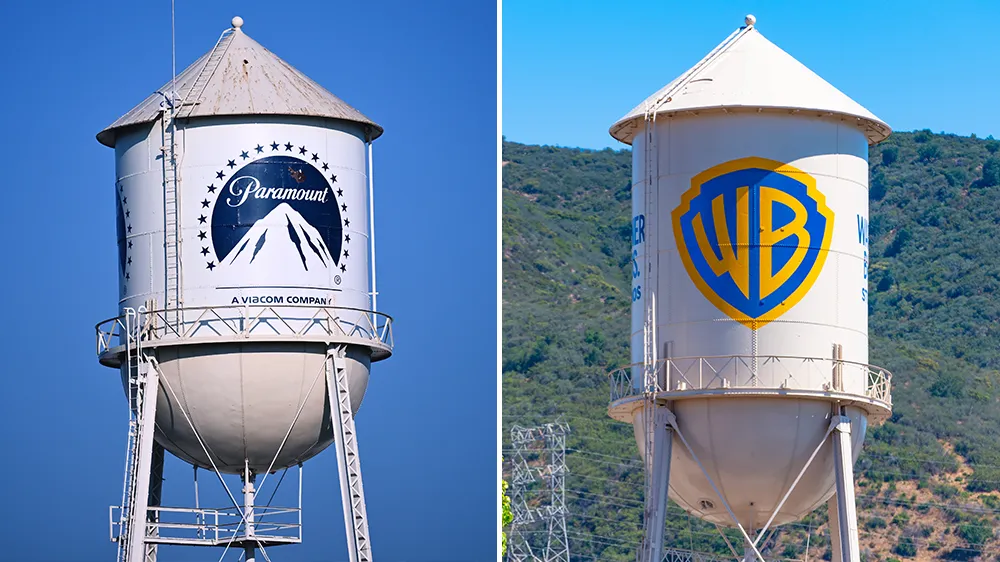
Paramount has escalated its public fight over its proposed Warner Bros. merger by accusing Mark Ruffalo of trafficking in “antisemitic tropes,” a sharp turn in rhetoric that lands just as Paramount Skydance Chief Executive David Ellison and California Atty. Gen. Rob Bonta are due to enter court-ordered mediation over the state’s antitrust challenge.
The accusation, made on the eve of a mediation session scheduled for Monday, injects a volatile cultural and political dimension into what had already become one of the most closely watched entertainment industry legal battles in years. The talks are intended to determine whether Paramount and Bonta’s office can find a path to settle a lawsuit that has stalled the company’s pursuit of Warner Bros. and raised broader questions about consolidation in Hollywood.
Ruffalo, an Oscar-nominated actor long known for progressive activism and outspoken positions on labor, climate and Middle East issues, has emerged as a public critic of the deal. Paramount’s response suggested that the actor’s commentary had gone beyond standard merger criticism and into language the company views as discriminatory. The studio did not signal that the accusation would alter its legal position in mediation, but the timing underscores how quickly the dispute has moved beyond balance sheets and market-share analysis.
Representatives for Ruffalo did not immediately respond to a request for comment. Bonta’s office has not publicly indicated that Ruffalo’s remarks are part of its case against the merger.
The immediate legal fight remains centered on antitrust concerns. Bonta has argued that Paramount’s proposed combination with Warner Bros. would give the enlarged company too much leverage across film, television, streaming, licensing and talent negotiations. The attorney general has said meaningful business concessions are necessary before the state would consider resolving its suit. Paramount has countered that the merger is essential to compete in a media landscape increasingly dominated by global technology platforms, deep-pocketed streamers and declining linear television revenue.
People following the case expect the mediation to focus on structural and behavioral remedies rather than public statements by celebrity critics. Possible areas of discussion could include commitments around content licensing, protections for independent producers, limits on bundling practices, labor-related assurances and safeguards designed to keep the combined company from disadvantaging rivals or consumers. Whether those measures would be enough for Bonta remains uncertain.
A high-stakes moment for Hollywood consolidation
The Paramount-Warner Bros. standoff matters because it sits at the center of a larger question facing the entertainment business: how much consolidation regulators will allow as legacy studios try to survive the streaming reset. For years, Hollywood companies chased scale to compete with Netflix, Amazon and Apple. But the strategy has produced mixed results, with debt burdens, layoffs, subscriber churn and shrinking theatrical slates reshaping the economics of the business.
A Paramount-Warner Bros. combination would unite two historic studio libraries, major television assets and significant streaming operations. Supporters of the transaction argue that a larger entity would be better positioned to finance movies, maintain franchises, negotiate distribution and weather the decline of cable. Critics contend that another mega-merger would reduce competition for creative talent, squeeze smaller suppliers and leave consumers with fewer meaningful choices.
California’s involvement raises the stakes. The state is not just another jurisdiction reviewing a corporate transaction; it is the home base of the entertainment workforce and a political battleground for issues including jobs, production spending, residuals and market power. Bonta’s office has framed the case as a defense of competition in an industry that remains central to California’s economy and identity.
That is why the mediation session has drawn attention far beyond the courthouse. A settlement could revive momentum for Ellison’s merger campaign and signal that state regulators are willing to accept negotiated restrictions rather than seek to block the deal outright. A breakdown, by contrast, would prolong uncertainty for employees, talent agencies, producers and rival distributors already trying to forecast how the next wave of studio consolidation will reshape the market.
Ruffalo’s role adds political heat
Ruffalo’s entry into the debate reflects the degree to which studio dealmaking is now inseparable from public politics. Actors, writers and directors have become more willing to challenge corporate strategy, particularly after the 2023 labor strikes sharpened scrutiny of executive pay, artificial intelligence, residuals and the power of streaming-era conglomerates.
Paramount’s decision to accuse Ruffalo of invoking antisemitic tropes is an unusually aggressive move against a major performer, especially one with a long record of activism. It also risks shifting attention away from the merger’s competitive implications and toward a broader argument over speech, identity and the boundaries of political criticism in Hollywood.
For Ellison, the controversy arrives at a delicate time. As the head of Paramount Skydance, he has sought to present the proposed Warner Bros. deal as a forward-looking rescue plan for legacy entertainment assets rather than a power grab. A public feud with a high-profile actor could complicate that message, particularly if it galvanizes additional opposition from talent or advocacy groups.
At the same time, Paramount may believe it needs to draw a firm line against rhetoric it considers offensive, especially amid heightened sensitivity around antisemitism in the entertainment community and on college campuses. The company’s challenge will be making that argument without appearing to use the issue as a tactic in a regulatory fight.
For Bonta, the political pressure is also increasing. The attorney general must weigh legal leverage against the practical risks of delaying or derailing a transaction that Paramount says is necessary to remain competitive. Any settlement would likely face scrutiny from consumer advocates, labor interests and rival companies looking for clues about how aggressively California intends to police media consolidation.
What Happens Next
Monday’s mediation is unlikely to end the dispute unless both sides arrive prepared to move significantly. Paramount needs enough certainty to keep its merger timeline alive, while Bonta needs concessions substantial enough to justify backing away from litigation.
If the talks produce progress, the parties could continue negotiating a settlement framework in the days or weeks ahead. If they fail, the antitrust case will remain a major obstacle to the Warner Bros. bid, extending uncertainty across an industry already bracing for more layoffs, fewer buyers and another round of strategic realignment.
For now, the legal questions remain unresolved, the political temperature is rising and Hollywood is watching to see whether one of its biggest proposed mergers can survive both regulatory scrutiny and the increasingly combustible public debate surrounding it.