
Why This Matters
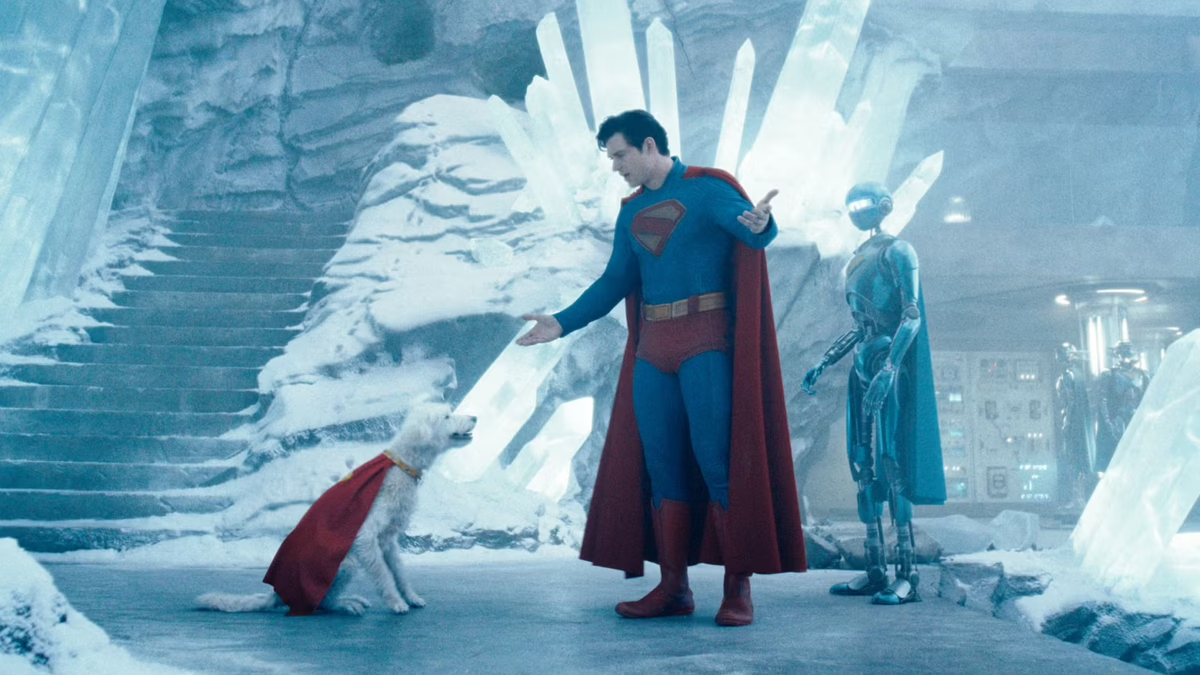
Nicholas Hoult’s move from comic-book villainy to wizarding-world showmanship gives HBO’s developing “Harry Potter” series one of its most recognizable new faces for Season 2. The actor, who is already set to be widely seen as Lex Luthor in James Gunn’s “Superman,” has been announced as Gilderoy Lockhart, the flamboyant celebrity author and Defense Against the Dark Arts professor introduced in the second book of J.K. Rowling’s saga.
The casting is significant because Lockhart is one of the franchise’s most theatrical supporting characters: vain, camera-ready, opportunistic and polished to a shine. On the page and in the earlier film adaptation, he functions as both comic relief and a pointed satire of fame culture. Bringing in Hoult, an actor comfortable toggling between charm and menace, suggests HBO is looking beyond simple nostalgia and aiming for performances that can reframe familiar characters for a serialized format.
Hoult’s recent career makes the choice especially interesting. He has built a reputation as a performer who can disappear into heightened worlds without losing a sense of human absurdity, from “The Great” to “Mad Max: Fury Road” and “The Menu.” Lockhart, who thrives on public admiration while hiding a far less heroic truth, is a role that requires a precise balance: too broad and he becomes a caricature; too subtle and the joke loses its sparkle. Hoult’s screen persona gives HBO room to make the character funny, slippery and faintly unsettling.
For fans, the announcement is also an early signal of how the series may approach each school year. HBO has positioned the adaptation as a longer-form retelling, giving the writers time to explore material the films necessarily compressed. Lockhart’s role in the second installment could benefit from that additional space, particularly if the show leans into the media circus around him, his publishing career and his influence over Hogwarts students and staff.
The timing of the reveal is also useful for HBO. The “Harry Potter” reboot has been watched closely since it was first announced, with every creative decision scrutinized by a fan base that spans generations. Casting a name actor in a key adult role helps keep the project in the entertainment conversation while the network continues the long process of assembling a new ensemble around some of the most recognizable characters in modern fantasy.
Industry Context
HBO’s “Harry Potter” series arrives at a moment when legacy intellectual property remains central to the streaming economy, but audiences have become more discerning about reboots. Viewers are no longer satisfied with brand recognition alone. They expect a clear creative reason for revisiting a franchise, especially one that already has a hugely successful film series attached to it.
That puts pressure on HBO to distinguish the show from the Warner Bros. movies without alienating the audience that grew up with them. One advantage of television is scale. A season built around a single book can devote more time to classroom dynamics, secondary characters, magical history and the emotional development of the central trio. The challenge is to make that expansion feel essential rather than padded.
Lockhart is a revealing test case. In a feature film, he has to make an immediate impression and then move quickly through the plot. In a series, the character can be layered into the fabric of Hogwarts over multiple episodes. His public image, his fan following, his questionable credentials and his relationship with the faculty could become a recurring source of comedy and tension. That kind of character deepening is exactly what a television adaptation must deliver if it hopes to justify its existence.
Hoult’s casting also reflects a broader strategy increasingly common in high-profile streaming projects: surrounding younger or newer leads with established actors who can bring credibility, publicity and tonal control. Fantasy series depend heavily on world-building, but they also need performers who can ground stylized material. A recognizable adult cast can help stabilize a show while its younger stars grow into the center of the narrative.
For Warner Bros. Discovery, the stakes are substantial. The “Harry Potter” brand remains one of the studio’s most valuable assets, spanning books, films, theme parks, stage productions, games and merchandise. A successful HBO series could become a decade-long programming pillar, capable of driving subscriptions and sustaining global engagement. A misfire, however, would be costly, not just financially but reputationally, given the emotional attachment many viewers have to the original films.
There is also the matter of franchise fatigue. Hollywood has spent years revisiting familiar worlds, and not every return has been embraced. The projects that tend to break through are those that offer either a new perspective or a noticeable elevation in craft. HBO’s brand carries expectations of premium storytelling, and the network will be judged on whether it can bring dramatic texture to material many audiences know almost by heart.
What Happens Next?
With Hoult now attached as Gilderoy Lockhart, attention will turn to the broader Season 2 ensemble and how HBO plans to stage the second chapter of the story. The character’s arrival marks a natural escalation from the first year at Hogwarts, introducing a more public-facing, reputation-driven figure into the school’s ecosystem at the same time darker forces begin to surface.
Production details, additional casting and release timing will likely continue to roll out in carefully managed waves. HBO has every incentive to keep the conversation active while avoiding overexposure. For a property this closely watched, each announcement functions as both news and a message about tone. Hoult’s casting communicates a willingness to recruit actors with strong contemporary profiles while leaning into the wit and theatricality of the source material.
The bigger question is how the series will use him. If the writers treat Lockhart simply as a punchline, they risk missing what makes the character so durable. He is not merely vain; he is a performer who understands the machinery of celebrity better than the people around him. In a modern television version, that angle could feel newly relevant, particularly in a culture obsessed with image management, personal branding and public mythmaking.
For Hoult, the role offers a different kind of franchise opportunity. After playing Lex Luthor, he is stepping into another iconic universe, but with a character whose power comes from charisma rather than brute force. If handled well, Lockhart could become one of the show’s early breakout adult roles, giving viewers a fresh reason to engage with a story they already know.
As HBO builds toward the next stage of its wizarding-world rollout, the casting underscores the network’s central task: honoring a beloved franchise while making it feel alive again. Hoult’s arrival is a promising step in that direction, and now the scrutiny shifts to whether the series can turn familiar magic into appointment television for a new era.