
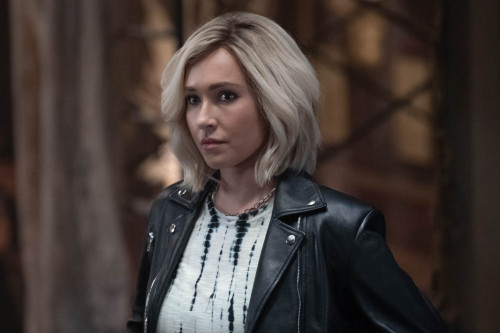
Nancy Nayor, the casting director behind Scream 4, is honoring Hayden Panettiere by explaining why the actress was the ideal choice to play Kirby Reed, the horror-loving survivor who became one of the franchise’s most beloved later-era characters.
Panettiere, who died Sunday at age 36, joined the Scream universe in the 2011 sequel directed by Wes Craven. In the years after the film’s release, her performance as Kirby took on a life of its own among fans, helping turn what could have been a one-film supporting role into a signature part of the franchise’s modern mythology.
Nayor said Panettiere stood out during the casting process because she brought more than quick timing and genre savvy to the role. What made her right for Kirby, Nayor recalled, was a “fierce warrior nature” that came through beneath the character’s sarcasm, wit and pop-culture confidence.
That quality proved essential. Kirby Reed was written as a teen horror obsessive who could go toe-to-toe with the self-aware rules of the Scream franchise. But the part required more than someone who could deliver references with attitude. Kirby had to feel smart enough to understand the danger, funny enough to cut through it and emotionally grounded enough for audiences to care whether she survived it.
Panettiere’s performance delivered that balance. In Scream 4, Kirby quickly became a standout among a new generation of Woodsboro characters introduced alongside franchise veterans Neve Campbell, Courteney Cox and David Arquette. Her scenes mixed sharp humor with a real sense of vulnerability, especially as the film moved from playful meta-commentary into its more brutal final act.
For many viewers, Kirby represented the rare horror character who felt both like a fan and a fighter. She knew the rules, loved the movies and still found herself trapped inside one. Panettiere played that contradiction with the kind of energy that made audiences lean in, and it is a major reason the character remained part of fan conversations long after Scream 4 left theaters.
The ambiguity surrounding Kirby’s fate became one of the franchise’s most persistent talking points. Although the character appeared to be gravely wounded in the 2011 film, fans spent years arguing that she had survived. That speculation eventually became a campaign, with viewers repeatedly calling for Panettiere’s return whenever the franchise showed signs of revival.
Those calls were answered in 2023’s Scream VI, where Panettiere returned as an older Kirby, now an FBI agent investigating a new Ghostface killing spree. The comeback was more than a nostalgic cameo. It formally confirmed Kirby’s survival and reframed her as someone who had turned trauma into purpose, a development that aligned with the strength Nayor saw in Panettiere from the beginning.
The significance of Nayor’s tribute lies in what it says about casting in a franchise built on tone. Scream has always depended on performers who can navigate horror, comedy and emotional stakes without tipping the balance too far in any one direction. The wrong actor can make the self-awareness feel smug or the danger feel weightless. Panettiere made Kirby feel alive inside a world that constantly comments on its own construction.
That is why the character mattered so much to fans. Kirby arrived at a time when the franchise was attempting to bridge its original 1990s identity with a new generation of horror audiences raised on remakes, reboots and online fandom. Scream 4 was, in many ways, ahead of the industry curve, arriving before legacy sequels became one of Hollywood’s dominant strategies. Kirby became one of its clearest arguments for why new characters could earn a place beside established icons.
Panettiere’s broader career also gave Kirby added resonance. By the time she entered Woodsboro, she was already known for Heroes, where she played Claire Bennet, a cheerleader whose regenerative powers made her both vulnerable and nearly indestructible. She later showed a different side of her range on Nashville, earning acclaim for her work as Juliette Barnes, a country star navigating fame, ambition and personal turmoil.
Across those roles, Panettiere often played women whose public personas masked deeper wounds and resilience. Kirby fit naturally into that pattern. She was funny, guarded, intelligent and tougher than people around her expected. Nayor’s description of a “fierce warrior nature” speaks not only to why Panettiere won the part, but also to why audiences continued to recognize something lasting in it.
Her return in Scream VI was greeted as one of the film’s major fan-service moments, but it also served the franchise’s ongoing evolution. By bringing Kirby back, the series acknowledged the power of its audience while expanding the survivor community beyond Sidney Prescott, Gale Weathers and the newer Carpenter sisters. It gave the franchise another character shaped by Ghostface but not defined solely by victimhood.
In the wake of Panettiere’s death, that legacy is being reconsidered with added poignancy. For horror fans, Kirby Reed was not simply another potential casualty in a slasher sequel. She became a symbol of survival, intelligence and defiance — qualities Panettiere communicated with an ease that helped the role endure for more than a decade.
What Happens Next
As tributes continue from colleagues, fans and the wider entertainment community, Panettiere’s work in the Scream franchise is likely to receive renewed attention. Paramount and Spyglass have not announced any immediate plans tied to Kirby Reed’s future, but the character’s impact is already secure.
For now, Nayor’s remembrance adds an important behind-the-scenes perspective to that legacy: Kirby worked because Panettiere brought fight, humor and heart to every moment. In a franchise built around survival, she made one character impossible to forget.