
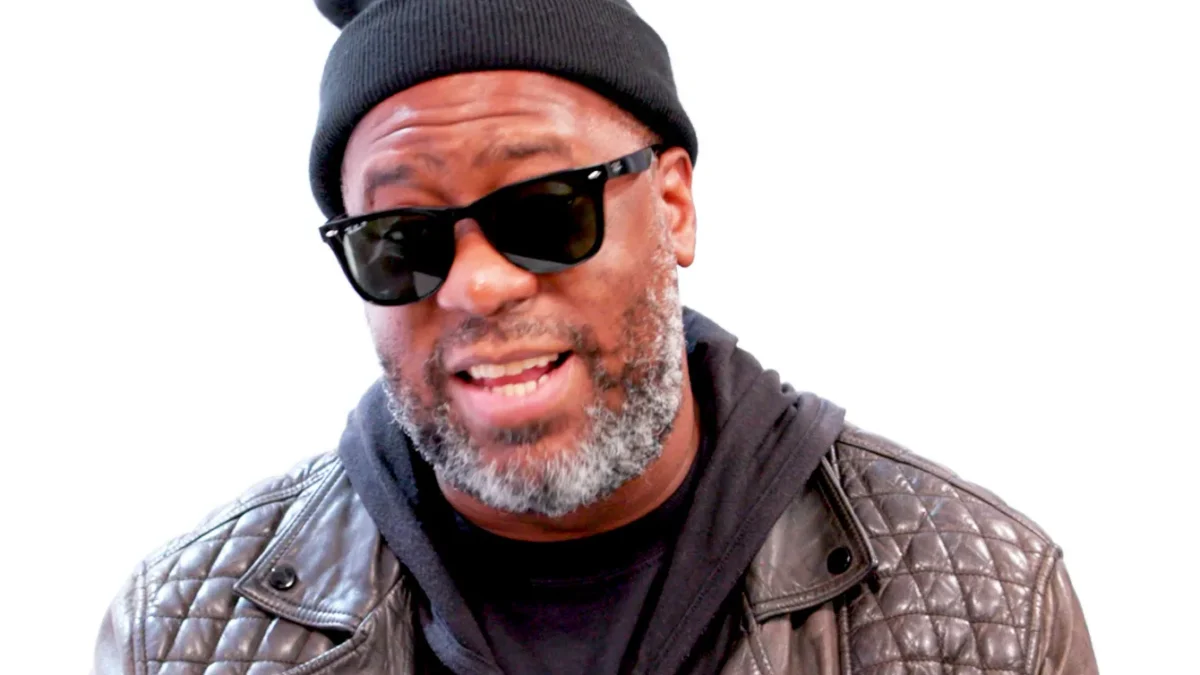
Robert Glasper says artificial intelligence still cannot reproduce one of music’s most essential human qualities: the imperfections that make a performance feel real.
Glasper made his position clear with a playful challenge aimed directly at the technology.
“AI can’t copy this,” he said. “You want some of this, AI? Huh? AI ain’t got nothing on me!”
That declaration anchors a broader conversation about musicianship, creativity and an industry that Glasper believes too often prioritizes what can be marketed easily. He also discusses why many contemporary R&B songs can sound alike and what distinguishes an accomplished performer from an artist capable of changing music’s direction.
Moving Between Musical Worlds
Glasper’s rejection of rigid creative categories is central to his outlook. Asked whether the industry has caught up with his work connecting jazz, hip-hop, R&B and soul, he said progress is happening, although it remains incomplete.
“I feel like it’s catching up,” Glasper said. “We’re not all the way there, but I think that door is open to where people are more open to exploring different genres of music and artists not feeling like they have to be a monolithic thing.”
His guiding phrase for that freedom is to “go room to room in the house of Black music.” For Glasper, artists should feel able to move among genres because many of them draw inspiration from more than one musical tradition.
The point reaches beyond genre labels. Glasper’s comments frame versatility as a natural expression of an artist’s influences, rather than something that must be confined to a single category. His assessment is cautiously optimistic: listeners and artists may be increasingly open to exploration, but the industry has not fully arrived there yet.
Great Musicians Versus Culture Changers
Glasper also drew a line between musicians who perform exceptionally within an established form and the rarer figures who alter how audiences understand that form.
“Great musicians are great with fitting into what was already there,” he explained. “They don’t reinvent the machine, but they just make sure the machine’s oiled and works.”
By contrast, he said certain artists can “totally change your perception” of their field. He placed Erykah Badu and Kendrick Lamar in that category, identifying both as people who have brought about that kind of shift.
The distinction helps clarify Glasper’s larger argument about human creativity. Technical ability can sustain an existing musical framework, but cultural impact requires something more disruptive: the capacity to make listeners reconsider what the music can be.
The interview also finds Glasper reflecting on his work with Lamar on To Pimp a Butterfly. Elsewhere in the conversation, he explains why H.E.R. excites him and addresses his concerns about sameness in modern R&B.
Together, those subjects place the AI discussion inside a wider examination of artistic individuality. Glasper is not simply arguing for technical musicianship over technology. He is emphasizing the unpredictable choices, genre-crossing instincts and human imperfections that allow music to develop its own identity.
ShowBiz Take
Glasper’s comments matter because they connect two debates that are often treated separately: the rise of AI and the pressure on artists to fit recognizable, marketable categories.
His argument suggests that the qualities most difficult to package may also be the ones that make an artist distinctive. A great musician can help an existing machine operate beautifully, as Glasper puts it. A culture-changing artist, however, can challenge the design of that machine altogether.
That is also where his defense of human “mistakes” carries weight. Imperfection is not presented as a flaw to be corrected, but as part of the personality and spontaneity that make a performance believable. For Glasper, technology may be able to imitate elements of music, but it cannot copy the full human experience behind those choices.
His message to artists is equally direct: they should not feel required to remain one thing. Whether moving through jazz, hip-hop, R&B or soul, Glasper sees creative freedom—and the unmistakably human decisions that come with it—as essential to music that does more than simply fit in.