Why This Matters
Amazon’s genre ambitions came into sharper focus at Comic-Con as “The Lord of the Rings: The Rings of Power” and “Blade Runner 2099” offered early looks at two of the streamer’s most expensive and closely watched fantasy and science-fiction bets.
For “The Rings of Power,” the message was clear: the journey into Middle-earth is getting more perilous. Executive producer Patrick McKay said Season 3 moves the series into a darker and more dangerous chapter, signaling a tonal shift as the show continues to build toward the conflicts that define J.R.R. Tolkien’s Second Age.
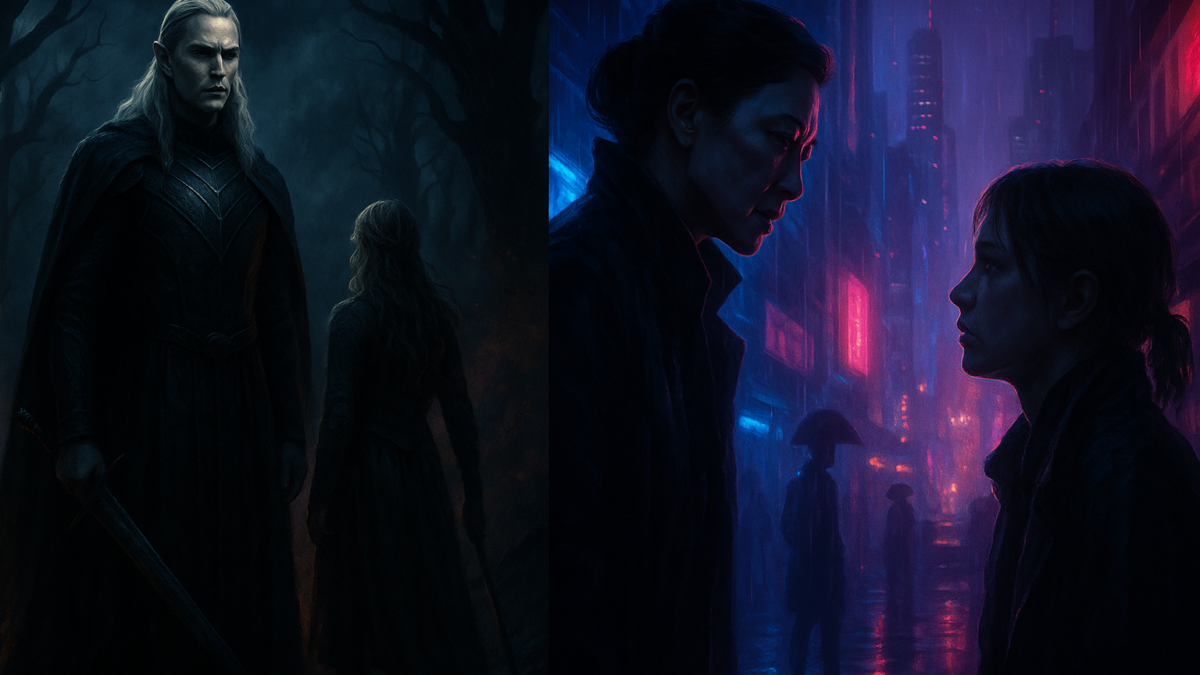
The new season will also introduce a major figure from Tolkien lore, with Jamie Campbell Bower joining the cast as Celeborn, Galadriel’s husband. The casting adds a long-anticipated character to a series that has often balanced familiar mythology with original storylines created for television.
Celeborn’s arrival is significant because Galadriel has been one of the emotional and narrative anchors of “The Rings of Power.” Bringing her husband into the story has the potential to reshape her arc, deepen the political fabric of the Elven world and address questions fans have had since the show’s first season.
Meanwhile, “Blade Runner 2099” used its Comic-Con moment to tease a future that appears to honor the franchise’s noir DNA while pushing the timeline forward. Footage shown from the miniseries featured Michelle Yeoh as a Replicant interrogating a fugitive character played by Hunter Schafer, a pairing that immediately positioned the show as one of Prime Video’s most intriguing upcoming prestige plays.
The project carries unusual weight because “Blade Runner” is not simply another recognizable title. It is one of science fiction’s most influential screen worlds, built on questions of identity, memory, artificial life and the moral limits of technological power. Any new installment must satisfy longtime fans while also making the material accessible to viewers who may know the universe more by reputation than by detail.
Industry Context
The Comic-Con presentations arrive at a moment when streamers are under increasing pressure to prove that costly franchise television can deliver more than name recognition. In the early years of the streaming arms race, splashy IP was often treated as an automatic advantage. Now, studios are looking for shows that can sustain engagement, justify premium budgets and expand global subscriber appeal.
Prime Video has been especially aggressive in that space. “The Rings of Power” remains one of the most prominent examples of a streaming platform investing heavily in a world already associated with blockbuster cinema. The series exists in the shadow of Peter Jackson’s Oscar-winning films, but it also occupies a different narrative lane, focusing on an earlier era rather than retelling the journeys of Frodo, Aragorn and the Fellowship.
That distinction has always been both an opportunity and a challenge. The show has the advantage of iconic names, places and themes, but it must also persuade audiences to embrace characters and storylines that are less familiar to casual viewers. A darker Season 3 could help sharpen the stakes and move the drama closer to the epic scale many fans associate with the brand.
The addition of Bower also reflects a broader strategy common to franchise television: refreshing an ensemble with performers who bring their own fan followings. Bower, known to younger genre audiences for his work in fantasy and horror-adjacent projects, arrives with a profile that fits the Comic-Con ecosystem and could energize conversation around the series.
“Blade Runner 2099,” by contrast, is entering a franchise with less volume but enormous cultural cachet. The miniseries draws on the legacy of Philip K. Dick’s novel “Do Androids Dream of Electric Sheep?” as well as Ridley Scott’s 1982 “Blade Runner” and Denis Villeneuve’s 2017 sequel “Blade Runner 2049.” That lineage gives the show a deep thematic foundation, but it also raises expectations for visual sophistication and philosophical ambition.
Yeoh’s presence is a major asset. Following a run of acclaimed film and television work, she brings international star power and dramatic authority to a genre space that has long benefited from actors capable of grounding high-concept material. Schafer, meanwhile, represents a newer generation of performers with strong cultural visibility and a connection to younger audiences.
Together, the two projects illustrate the evolving role of Comic-Con in the streaming era. The convention is no longer just a launchpad for superhero films and network genre shows. It has become a proving ground for premium television franchises, where brief footage, casting announcements and executive comments can shape months of online discussion before a season or series arrives.
What Happens Next?
The immediate task for “The Rings of Power” is to convert its darker Season 3 tease into renewed momentum. As the series advances, viewers will be watching for how the show handles Celeborn’s introduction, how Galadriel’s story changes in response and how quickly the narrative accelerates toward the larger struggle against Sauron.
For Amazon, the season represents another test of long-form franchise stewardship. The streamer does not simply need a visually impressive return to Middle-earth; it needs a season that feels dramatically urgent, emotionally clear and essential to the larger Tolkien timeline it is building.
“Blade Runner 2099” faces a different kind of scrutiny. Because the franchise has been defined by atmosphere as much as plot, fans will be looking closely at tone, production design, moral complexity and whether the series can translate a cinematic world into episodic storytelling without diluting its mystery.
More footage, release details and supporting cast information are likely to shape expectations in the months ahead. For now, the Comic-Con previews suggest that Prime Video is leaning into ambitious world-building on two fronts: one rooted in mythic fantasy, the other in dystopian science fiction.
If both projects land, they could strengthen Amazon’s position as a home for large-scale genre storytelling. If they stumble, they will underscore the central challenge facing every streamer with expensive intellectual property: familiar worlds can open the door, but only compelling television keeps audiences inside.