
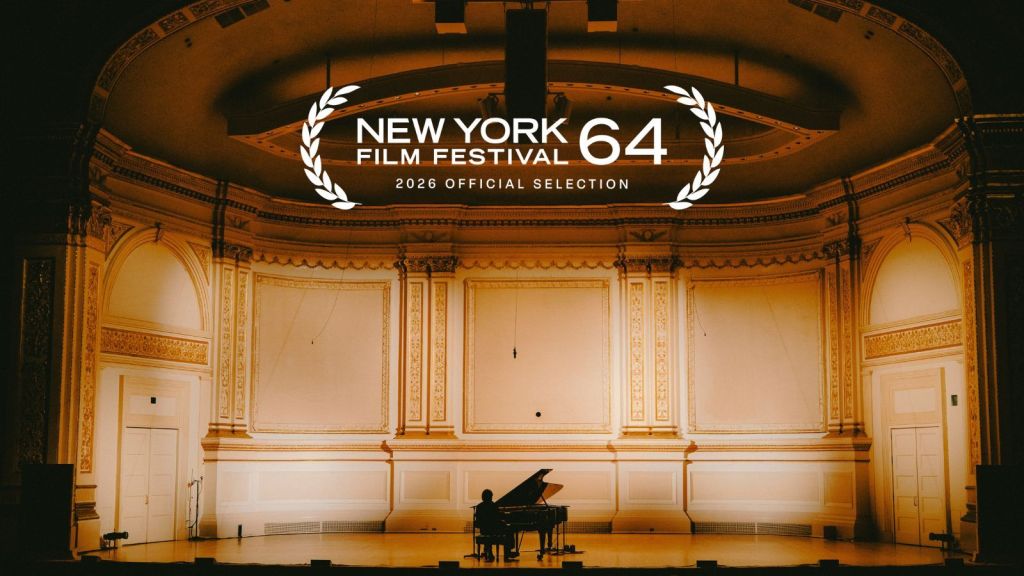
Paul Thomas Anderson’s latest project, the concert film Cameron Winter At Carnegie Hall, will receive its world premiere at the 64th New York Film Festival, giving the Lincoln Center showcase a high-profile auteur entry with a distinctly musical bent.
The film captures Cameron Winter, the magnetic singer and songwriter best known as the frontman of the Brooklyn rock band Geese, in performance at Carnegie Hall. Additional details about the running time, format and release plans have not yet been announced, but the pairing of Anderson and Winter immediately positions the film as one of the more closely watched nonfiction titles on the festival calendar.
For New York Film Festival programmers, the premiere lands at the intersection of several lanes the event has increasingly embraced: major American filmmakers, performance-based cinema and projects that blur the line between concert document, portrait film and art-house event. NYFF has long been a favored platform for directors with a strong authorial signature, and Anderson’s involvement gives the 64th edition a cultural talking point beyond the traditional awards-season conversation.
Anderson, one of the defining American filmmakers of his generation, is best known for features including Boogie Nights, Magnolia, There Will Be Blood, The Master, Phantom Thread and Licorice Pizza. But music has never been a side interest in his filmography. His work has often been shaped by rhythm, performance and collaboration with musicians, from his longtime creative partnership with Jonny Greenwood to his music videos for artists including HAIM and Radiohead.
He has also moved directly into music-centered filmmaking before. Junun, his 2015 documentary following Greenwood, Shye Ben Tzur and the Rajasthan Express during a recording session in India, premiered at the New York Film Festival and later reached viewers through streaming. Anderson also directed Anima, the short film built around Thom Yorke’s music, which became a distinctive example of how filmmakers and musicians can create work that sits outside conventional feature or music-video categories.
Cameron Winter At Carnegie Hall appears to continue that trajectory, giving Anderson another opportunity to approach live performance not merely as documentation but as cinematic material. The title alone suggests a stripped-down focus: an artist, a room, and a storied stage whose cultural weight carries its own mythology.
Winter’s presence makes the project especially intriguing. As Geese’s lead vocalist, he has become known for an elastic, theatrical style that can swing from raw rock intensity to something more intimate and mercurial. His solo work has broadened that profile, introducing audiences to songwriting that foregrounds character, voice and atmosphere. For an artist still in the process of moving from indie-rock notoriety to wider recognition, a Carnegie Hall concert film directed by Anderson represents a significant elevation.
That is part of why the announcement matters. Concert films have been enjoying renewed attention across the business, though not all of them are built the same way. At the commercial end, Taylor Swift and Beyoncé helped reassert the theatrical value of music events by bringing massive fan bases directly into cinemas. At the auteur end, filmmakers have continued to treat performance as a way to explore persona, space and the act of artistic creation itself. Anderson’s film appears more aligned with the latter tradition, where the draw is not spectacle at scale but the promise of close observation.
The New York Film Festival is a natural place for that kind of work to debut. Unlike festivals built around a market, NYFF has traditionally operated as a curated showcase, emphasizing selectivity and critical prestige. A world premiere there can help frame a film as an artistic statement rather than simply a content offering, particularly when the project falls outside familiar distribution categories.
For distributors and exhibitors, the premiere will also be watched as a signal of how boutique concert films might travel in the current marketplace. Theatrical audiences have shown they will turn out for music-driven cinema when the event feels singular. At the same time, streaming platforms remain eager for filmmaker-led projects that can cut through a crowded documentary field. With Anderson attached, Cameron Winter At Carnegie Hall could plausibly attract interest across both lanes.
The film also arrives at a moment when established directors are increasingly using shorter, more flexible forms to experiment between feature projects. Concert films, shorts and performance pieces allow filmmakers to work quickly, collaborate with musicians and engage audiences without the machinery of a major studio production. For Anderson, whose narrative features often arrive after years of development and anticipation, a concert film offers a different kind of immediacy.
NYFF’s world-premiere slot will likely shape the first critical conversation around the film. Anderson’s camera choices, the treatment of Carnegie Hall as a visual space and the degree to which the film engages with Winter beyond the stage will all be closely parsed. The central question is whether the movie functions primarily as a record of a notable performance or as a fuller cinematic encounter between filmmaker and musician.
Either way, the announcement gives the festival an early burst of cinephile and music-world attention. It also underscores Anderson’s continuing interest in artists whose work is rooted in performance but resistant to easy categorization. Winter, in turn, gains an unusually prominent screen platform at a pivotal point in his career.
What Happens Next
Film at Lincoln Center is expected to reveal additional scheduling details for the 64th New York Film Festival as the lineup takes shape, including the premiere date and ticketing information for Cameron Winter At Carnegie Hall. The next major question will be distribution: whether Anderson’s concert film heads to theaters, a streaming platform, a limited event run, or some combination of all three after its New York debut.