FEATURED ENTERTAINER OF THE WEEK
Paul Thomas Anderson
Filmmaker
August 31, 2026
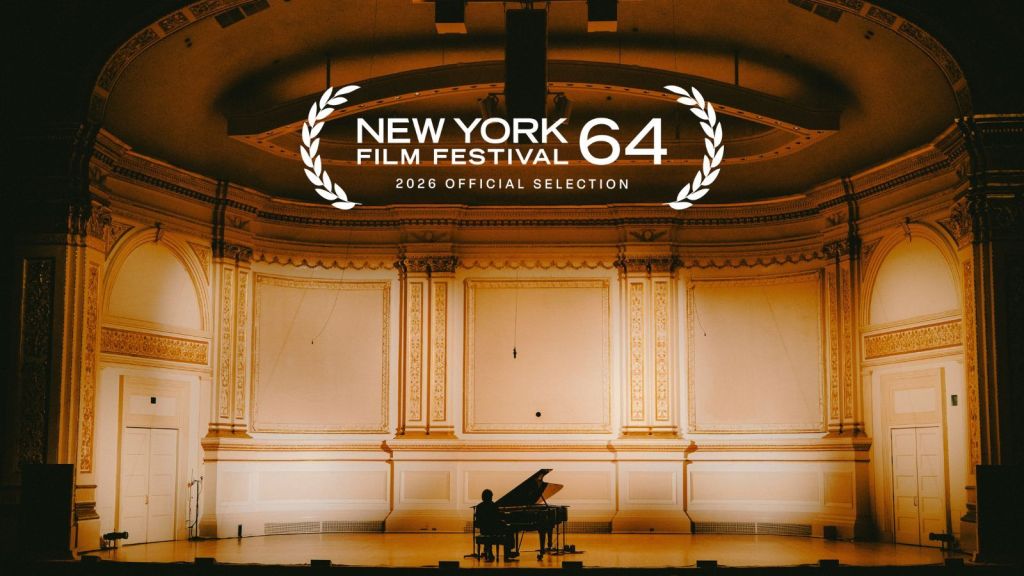
Paul Thomas Anderson Concert Film ‘Cameron Winter At Carnegie Hall’ Sets NYFF World Premiere
Paul Thomas Anderson has spent much of his career making movies that feel as if they were discovered rather than manufactured: a San Fernando Valley epic hiding inside the adult-film business, an oilman’s rise staged like an American horror story, a postwar spiritual drama that refuses to explain itself, a teenage memory piece that wanders with the confidence of someone who knows every block. This week, the director is back in a different register. His concert film “Cameron Winter At Carnegie Hall” has secured a world premiere at the 64th New York Film Festival, a fitting stage for a filmmaker whose curiosity has never stayed politely inside one category. Anderson’s move into a Carnegie Hall concert film is not a detour so much as a reminder. Long before he became one of American cinema’s most scrutinized auteurs, he was a filmmaker who listened intensely: to pop songs, to voices, to the rhythm of a nervous salesman, to the silence before a character ruins his own life. Music has always been one of his secret engines. Aimee Mann helped shape the emotional weather of “Magnolia.” Jonny Greenwood became one of his defining collaborators. His music videos for Fiona Apple, Radiohead, HAIM, Joanna Newsom and others are not side projects in the usual celebrity-director sense; they are miniature proof that Anderson understands performance as something physical, unstable and alive. That is why “Cameron Winter At Carnegie Hall” makes him the Featured Entertainer this week. It connects the revered festival filmmaker to the restless experimenter who has always moved between cinema, music, Los Angeles mythology and performance. Anderson matters because his work still feels handmade in an era that often rewards the frictionless. He builds movies around mood, behavior and obsession, then trusts audiences to lean in. A world premiere at the New York Film Festival is news. The larger story is that, more than three decades into his career, Paul Thomas Anderson is still changing the room he walks into.
Quick Facts
| Born | June 26, 1970 |
| Birthplace | Studio City, Los Angeles, California, United States |
| Nationality | American |
| Years Active | 1988–present |
| Residence | Los Angeles area |
| Spouse | Not married; longtime partner Maya Rudolph |
| Children | Four |
Early Life
Anderson grew up in the San Fernando Valley, a place that became more than a hometown in his movies. It became terrain: commercial strips, restaurants, small houses, recording studios, teenagers drifting into adulthood, adults pretending they are not lost. His father, Ernie Anderson, was a Cleveland television personality known as horror host Ghoulardi and later became one of the most recognizable voice-over announcers in American television, including for ABC. That combination of show-business proximity and slightly off-center performance clearly left a mark. Paul Thomas Anderson did not come from the distant, theoretical wing of filmmaking. He came from a home where television voices, stage names, broadcast timing and the strangeness of entertainment work were part of the atmosphere. As a teenager, he made “The Dirk Diggler Story,” a mock-documentary short inspired by the life and mythology surrounding adult-film star John Holmes. That teenage film later became the seed for “Boogie Nights,” but its real importance is broader: Anderson was already interested in invented families, backstage economies and performers who confuse applause with love. He attended several schools and briefly studied at Emerson College and New York University, but formal film school never became his route. The more decisive education came from watching movies, making short work, and finding a way to turn ambition into production. His short “Cigarettes & Coffee” reached the Sundance Film Festival shorts program and helped open the door to what became his first feature, “Hard Eight.” That path says much about Anderson’s career. He did not arrive as a polished industry product. He arrived as a young filmmaker with a distinctive ear, a fascination with damage, and the nerve to write characters who speak as if they are trying to talk themselves into becoming someone else.
Family
Parents
- Ernie Anderson, television and radio personality, horror host known as Ghoulardi, and prominent voice-over announcer
- Edwina Gough Anderson
Siblings
- Paul Thomas Anderson is one of nine children
Career
The first thing to understand about Paul Thomas Anderson’s career is that his breakthroughs rarely behaved like tidy breakthroughs. “Hard Eight,” released in 1996 after production and editing disputes, introduced him as a gifted young director, but it also taught him early how vulnerable a film can be once it leaves the director’s hands. The movie, a cool, melancholy gambling-world drama starring Philip Baker Hall, John C. Reilly, Gwyneth Paltrow and Samuel L. Jackson, already contains Anderson signatures: lonely people forming transactional families, men who carry old sins like unpaid debts, and conversations that turn ordinary rooms into pressure chambers. Then came “Boogie Nights,” the 1997 film that made him impossible to ignore. Based on material he had first explored as a teenager, it followed Eddie Adams, later Dirk Diggler, into the adult-film world of the 1970s and 1980s. The subject made it sound sensational; the execution made it unexpectedly generous. Anderson filmed the characters not as punchlines but as workers, dreamers and casualties inside a business that promised intimacy while producing alienation. The film also announced his gift for ensemble casting. Mark Wahlberg, Julianne Moore, Burt Reynolds, Don Cheadle, Heather Graham, John C. Reilly, William H. Macy and Philip Seymour Hoffman were not simply arranged around a lead; they formed a society. Burt Reynolds received some of the strongest reviews of his later career, and Anderson received his first Academy Award nomination for original screenplay. “Magnolia,” released in 1999, pushed the ensemble idea into something operatic. It is sprawling, emotional and deliberately excessive, with Tom Cruise giving one of his most revealing performances as Frank T.J. Mackey, a motivational speaker whose bravado masks a wound. The film’s intersecting stories, Aimee Mann-infused melancholy and infamous rain of frogs made it a defining late-1990s statement: ambitious, earnest, unruly and unwilling to apologize for feeling too much. It won the Golden Bear at the Berlin International Film Festival and confirmed that Anderson was not going to shrink his impulses to fit industry comfort. “Punch-Drunk Love” followed in 2002 and startled audiences in a different way. Instead of another sprawling ensemble, Anderson made a compact, anxious romantic comedy starring Adam Sandler as Barry Egan, a novelty-plunger salesman whose rage and loneliness are met by Emily Watson’s mysterious warmth. The film mattered because it saw something in Sandler that mainstream comedies had often disguised: an intensity that could tilt toward tenderness or violence in the same breath. Anderson won Best Director at Cannes, and Sandler’s dramatic credibility changed. With “There Will Be Blood” in 2007, Anderson entered another phase entirely. Loosely inspired by Upton Sinclair’s “Oil!,” the film transformed Daniel Day-Lewis’s Daniel Plainview into one of modern cinema’s great monsters of appetite. It was less a period drama than a founding myth poisoned at the source, scored with unnerving force by Jonny Greenwood. The film earned eight Academy Award nominations and won for Day-Lewis’s performance and Robert Elswit’s cinematography. For Anderson, it marked a shift from youthful maximalism to something harsher, more sculptural and more terrifying. “The Master,” released in 2012, deepened his fascination with belief, control and damaged men. Joaquin Phoenix’s Freddie Quell and Philip Seymour Hoffman’s Lancaster Dodd circle each other in a drama about charisma, dependence and the need to be remade. Shot in 65mm, it became one of the decade’s most debated American films and earned acting Oscar nominations for Phoenix, Hoffman and Amy Adams. Anderson then took a turn few expected by adapting Thomas Pynchon’s “Inherent Vice” in 2014. The result was hazy, funny and purposefully slippery, with Joaquin Phoenix’s Doc Sportello wandering through a Los Angeles mystery that seems to dissolve as he approaches it. “Phantom Thread” in 2017 appeared at first to be Anderson’s elegant British chamber piece, but under the couture surfaces was one of his strangest love stories: a battle of appetite, control and surrender between Daniel Day-Lewis’s Reynolds Woodcock and Vicky Krieps’s Alma. The film became Daniel Day-Lewis’s final screen role to date and brought Anderson more Oscar nominations. “Licorice Pizza,” released in 2021, returned him to the Valley, younger characters and a warmer sense of drift. Starring Alana Haim and Cooper Hoffman, son of Anderson’s late collaborator Philip Seymour Hoffman, it had the texture of memory without pretending memory is innocent. Its Academy Award nominations for best picture, director and original screenplay proved that Anderson’s personal mode could still command awards-season attention. Running alongside the features has been another career in music. Anderson’s videos and music films are central to understanding him. He has directed for Fiona Apple, Radiohead, HAIM, Joanna Newsom and others, often stripping performance down to movement, proximity and gaze. “Junun,” his 2015 documentary with Jonny Greenwood, Shye Ben Tzur and Indian musicians, showed his interest in recording as a communal act. “Anima,” made with Thom Yorke, used choreography, transit spaces and dream logic to turn an album companion into a short cinematic experience. That history makes “Cameron Winter At Carnegie Hall” feel less like an unexpected turn than the latest visible point on a long line. Anderson has always filmed people as if rhythm reveals character. At Carnegie Hall, with a concert film premiering at NYFF, he returns to one of his oldest questions: what happens when a performer steps into the light and lets the room decide what is real?
Television
- Saturday Night Live (2000) — Director of filmed segment
Filmography
- The Dirk Diggler Story (1988) — Writer-director
- Cigarettes & Coffee (1993) — Writer-director
- Hard Eight (1996) — Writer-director
- Boogie Nights (1997) — Writer-director
- Magnolia (1999) — Writer-director-producer
- Punch-Drunk Love (2002) — Writer-director-producer
- There Will Be Blood (2007) — Writer-director-producer
- The Master (2012) — Writer-director-producer
- Inherent Vice (2014) — Writer-director-producer
- Junun (2015) — Director
- Phantom Thread (2017) — Writer-director-producer
- Anima (2019) — Director
- Licorice Pizza (2021) — Writer-director-producer-cinematographer
- Cameron Winter At Carnegie Hall (2026) — Director
Awards & Honors
- 1998 — Academy Awards (Best Original Screenplay) — Nominated
- 1998 — Academy Awards (Best Supporting Actor) — Nominated for Burt Reynolds
- 1998 — Academy Awards (Best Supporting Actress) — Nominated for Julianne Moore
- 2000 — Berlin International Film Festival (Golden Bear) — Won
- 2000 — Academy Awards (Best Original Screenplay) — Nominated
- 2000 — Academy Awards (Best Supporting Actor) — Nominated for Tom Cruise
- 2002 — Cannes Film Festival (Best Director) — Won
- 2008 — Academy Awards (Best Picture) — Nominated
- 2008 — Academy Awards (Best Director) — Nominated
- 2008 — Academy Awards (Best Adapted Screenplay) — Nominated
- 2008 — Academy Awards (Best Actor) — Won for Daniel Day-Lewis
- 2008 — Academy Awards (Best Cinematography) — Won for Robert Elswit
- 2012 — Venice Film Festival (Silver Lion for Best Director) — Won
- 2013 — Academy Awards (Best Actor) — Nominated for Joaquin Phoenix
- 2013 — Academy Awards (Best Supporting Actor) — Nominated for Philip Seymour Hoffman
- 2013 — Academy Awards (Best Supporting Actress) — Nominated for Amy Adams
- 2015 — Academy Awards (Best Adapted Screenplay) — Nominated
- 2018 — Academy Awards (Best Picture) — Nominated
- 2018 — Academy Awards (Best Director) — Nominated
- 2018 — Academy Awards (Best Actor) — Nominated for Daniel Day-Lewis
- 2018 — Academy Awards (Best Supporting Actress) — Nominated for Lesley Manville
- 2018 — Academy Awards (Best Costume Design) — Won for Mark Bridges
- 2022 — BAFTA Film Awards (Best Original Screenplay) — Won
- 2022 — Academy Awards (Best Picture) — Nominated
- 2022 — Academy Awards (Best Director) — Nominated
- 2022 — Academy Awards (Best Original Screenplay) — Nominated
Business Ventures
- Ghoulardi Film Company, Anderson’s production company, is named after his father Ernie Anderson’s Cleveland horror-host persona.
- Anderson has frequently worked as producer on his own films, maintaining unusually strong authorial control across writing, directing and production.
- His films have been released through major and specialty distributors including New Line Cinema, Paramount Vantage, The Weinstein Company, Warner Bros., Focus Features, Annapurna Pictures, Metro-Goldwyn-Mayer and Universal Pictures.
Current Projects
- “Cameron Winter At Carnegie Hall,” Anderson’s concert film, is set for a world premiere at the 64th New York Film Festival.
- Anderson continues to direct film, music-film and music-video projects, keeping a rare career balance between major narrative features and intimate performance pieces.
Interesting Facts
- His production company, Ghoulardi Film Company, takes its name from the horror-host character made famous by his father, Ernie Anderson.
- Anderson made “The Dirk Diggler Story” as a teenager, years before he turned the idea into “Boogie Nights.”
- “Cigarettes & Coffee,” his early short, was developed into his debut feature “Hard Eight.”
- “Hard Eight” was originally known as “Sydney,” a title Anderson preferred, before its release title changed.
- Philip Baker Hall, John C. Reilly and Philip Seymour Hoffman became key early members of Anderson’s recurring acting circle.
- Aimee Mann’s music had a major creative influence on “Magnolia,” helping define the film’s emotional tone.
- “Punch-Drunk Love” helped reframe Adam Sandler as a dramatic actor without requiring him to abandon the volatility that made him famous.
- Jonny Greenwood’s score for “There Will Be Blood” began one of the most important director-composer collaborations in contemporary American film.
- “The Master” was shot in 65mm, an unusual choice for a modern character drama and a major part of its visual identity.
- Anderson became the first filmmaker to adapt a Thomas Pynchon novel for the screen with “Inherent Vice.”
- “Phantom Thread” is Daniel Day-Lewis’s final screen performance to date.
- “Licorice Pizza” stars Cooper Hoffman, the son of Anderson’s longtime collaborator Philip Seymour Hoffman.
- Anderson has directed music videos for artists including Fiona Apple, Radiohead, HAIM, Joanna Newsom and Michael Penn.
- His long relationship with the San Fernando Valley makes the region feel less like a setting in his films and more like a recurring character.
- He often builds films around unconventional families: porn crews, salesmen, spiritual movements, fashion houses, teenage hustlers and musical communities.
Why ShowBiz Selected This Entertainer
Paul Thomas Anderson is featured this week because “Cameron Winter At Carnegie Hall” has landed a world premiere slot at the 64th New York Film Festival. That placement matters. NYFF has long been a home for major auteur cinema, and Anderson’s presence there signals that the concert film is being treated not as a disposable performance document but as a serious cinematic event. The timing also illuminates a broader truth about his career. Anderson has never been only the director of dense prestige dramas. He is one of the rare American filmmakers whose music-related work feels organically connected to his features. Whether filming Thom Yorke in “Anima,” following Jonny Greenwood in “Junun,” or shaping the visual identity of HAIM performances, he treats musicians the way he treats actors: as bodies in motion, personalities under pressure, people whose smallest gestures can alter the meaning of a scene. A Carnegie Hall concert film extends that fascination onto one of the world’s most storied stages. It also arrives at a point when Anderson’s place in American cinema is secure but not static. The Oscar nominations, festival prizes and celebrated collaborations tell one story. This week’s news tells another: he is still following sound, performance and risk wherever they lead.
Watch Next
- Boogie Nights
- Magnolia
- Punch-Drunk Love
- There Will Be Blood
- The Master
- Inherent Vice
- Phantom Thread
- Licorice Pizza
- Junun
- Anima