Why This Matters
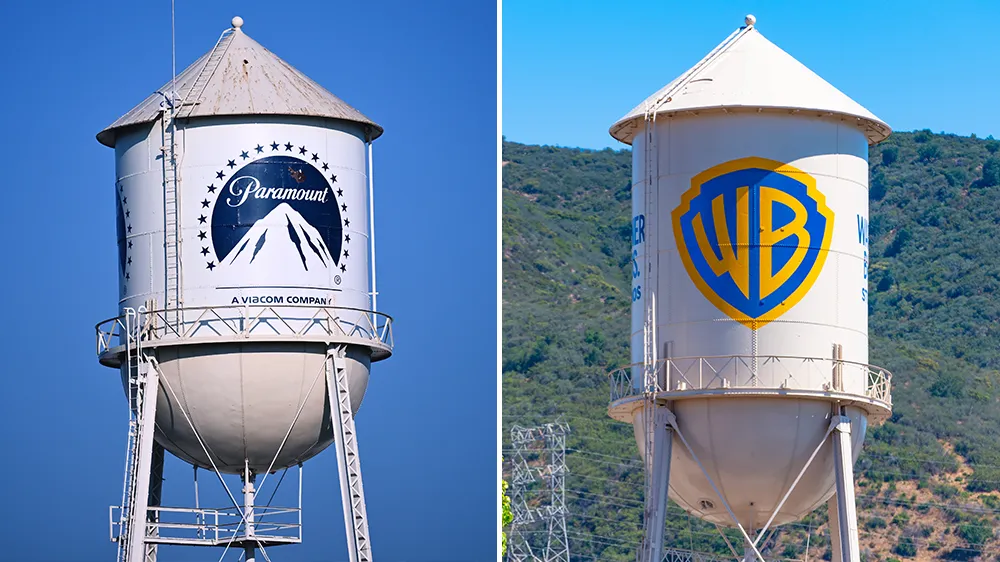
A looming multistate antitrust challenge to Paramount Skydance’s proposed $110 billion combination with Warner Bros. Discovery would mark one of the most consequential legal confrontations over Hollywood consolidation in years. Attorneys general from California, New York and other states are preparing to argue that fusing two of the industry’s largest content engines would give the combined company too much leverage over film distribution, television production, streaming, sports rights, news programming and the broader creative labor market.
The action, expected to be led by California Attorney General Rob Bonta, would put state regulators at the center of a deal that has already become a proxy fight over the future shape of the entertainment business. The merger would unite Paramount’s studio, CBS, Nickelodeon, MTV, Comedy Central and Paramount+ with Warner Bros., HBO, Max, CNN, Discovery, TNT Sports and a deep library of film and television assets. For regulators, the question is not simply whether the merged company would be large. It is whether its scale would allow it to reduce competition in ways that ultimately affect consumers, workers and independent producers.
State officials are expected to contend that the combination could leave buyers and sellers across the entertainment ecosystem with fewer alternatives. The concerns are likely to include bargaining power over writers, directors, actors and below-the-line crews; competition for scripted and unscripted programming; licensing terms for television stations and cable providers; and the future availability of content across competing streaming platforms. A company with that much must-have programming, critics argue, could steer more titles exclusively to its own platforms, raise prices or make it harder for rivals to build compelling services.
The potential lawsuit also carries major political weight because California remains the symbolic and practical center of the entertainment economy. Reports of pressure suggesting that David Ellison’s Paramount Skydance could move operations out of the state if officials oppose the transaction have only sharpened the stakes. For California regulators, any implication that a company might use relocation threats to influence antitrust enforcement could become part of the broader narrative: that a merged giant would possess leverage not only in the marketplace, but also in dealings with governments that depend on entertainment jobs.
Industry Context
The proposed merger arrives after a brutal recalibration in Hollywood. Traditional media companies have watched cable television revenue decline, theatrical attendance remain uneven and streaming transform from a growth-at-all-costs gold rush into a margin-focused survival contest. Executives across the sector argue that legacy studios need scale to compete with Netflix, Amazon, Apple and YouTube, each of which has either global distribution, enormous cash reserves or both.
That argument has fueled a decade of major combinations: Disney buying most of 21st Century Fox, AT&T acquiring and later spinning off WarnerMedia, Discovery taking control of Warner Bros., and Skydance moving to reshape Paramount. Each transaction has been pitched as a necessary response to technological disruption. But regulators have become increasingly skeptical of the idea that every challenged media company should be allowed to bulk up simply because Silicon Valley platforms are bigger.
For antitrust enforcers, the entertainment industry is not one single market. It is a web of overlapping markets, and that complexity gives state attorneys general multiple avenues of attack. They may examine competition in theatrical releases, premium television, children’s programming, sports-adjacent cable networks, streaming subscriptions, advertising inventory and studio services. They may also scrutinize the labor side of the equation, a growing area of antitrust focus after years of concern that consolidation has reduced the number of meaningful employers for creative professionals.
The labor issue could prove especially resonant after the strikes by the Writers Guild of America and SAG-AFTRA, which exposed deep anxiety about compensation, residuals, artificial intelligence and the shrinking number of buyers willing to take risks on original work. If regulators argue that a combined Paramount-WBD would further narrow the field for pitches, overall deals and production orders, that case may find a receptive audience among guild members and independent producers, even if proving the theory in court is far more complicated.
The companies, for their part, are expected to defend the merger as pro-competitive and essential to building a stronger American media company. They are likely to argue that the entertainment marketplace has changed dramatically, that consumers have more viewing options than ever and that the merged entity would still face intense competition from global streamers, digital video platforms, social media companies and tech-backed content operations. They may also contend that a stronger balance sheet would allow greater investment in films, series, news and sports at a time when many traditional studios are cutting back.
Still, the optics are challenging. A Paramount-WBD combination would be easily understood by the public as the joining of two famous Hollywood brands with immense libraries and powerful distribution channels. Antitrust cases often turn on market definitions and economic modeling, but public perception matters, particularly when state officials frame the dispute around consumer choice, local jobs and cultural diversity. The more the transaction appears to concentrate storytelling power in fewer hands, the harder it becomes to sell as merely an efficiency play.
What Happens Next?
If the attorneys general file as soon as Monday, the lawsuit would likely seek to block the merger before closing rather than unwind it later. That would set up a fast-moving legal and public relations battle, with the states pushing for discovery into internal strategy documents, deal assumptions and projected cost savings. The companies would move quickly to rebut claims of market harm and may attempt to narrow the case by challenging how regulators define the relevant markets.
Federal regulators could also become a factor, depending on how the transaction is being reviewed and whether the Justice Department or Federal Trade Commission chooses to act separately or coordinate with the states. Even without immediate federal action, a strong multistate coalition can materially slow a deal, raise financing uncertainty and force concessions. Potential remedies could range from behavioral commitments on licensing and access to more aggressive demands for divestitures, though regulators who believe the transaction is fundamentally harmful may resist settlement.
For Hollywood, the immediate impact will be uncertainty. Agents, producers, distributors, guilds and rival studios will watch closely for signs of whether the deal remains viable, is delayed into a prolonged court fight or becomes too politically expensive to complete. If the states prevail, it could chill the next wave of media mega-mergers. If Paramount Skydance and Warner Bros. Discovery defeat the challenge, it may open the door to another round of consolidation among companies trying to survive the streaming era on a global scale.
Either way, the case is poised to become a defining test of how much concentration regulators are willing to tolerate in the modern entertainment business. The courtroom fight may be framed in legal terms, but its consequences will be felt on studio lots, in writers’ rooms, on streaming menus and in the balance of power between Hollywood’s creative community and the corporations that decide what gets made.