
FEATURED ENTERTAINER OF THE WEEK
Tom Cruise
Actor
July 13, 2026
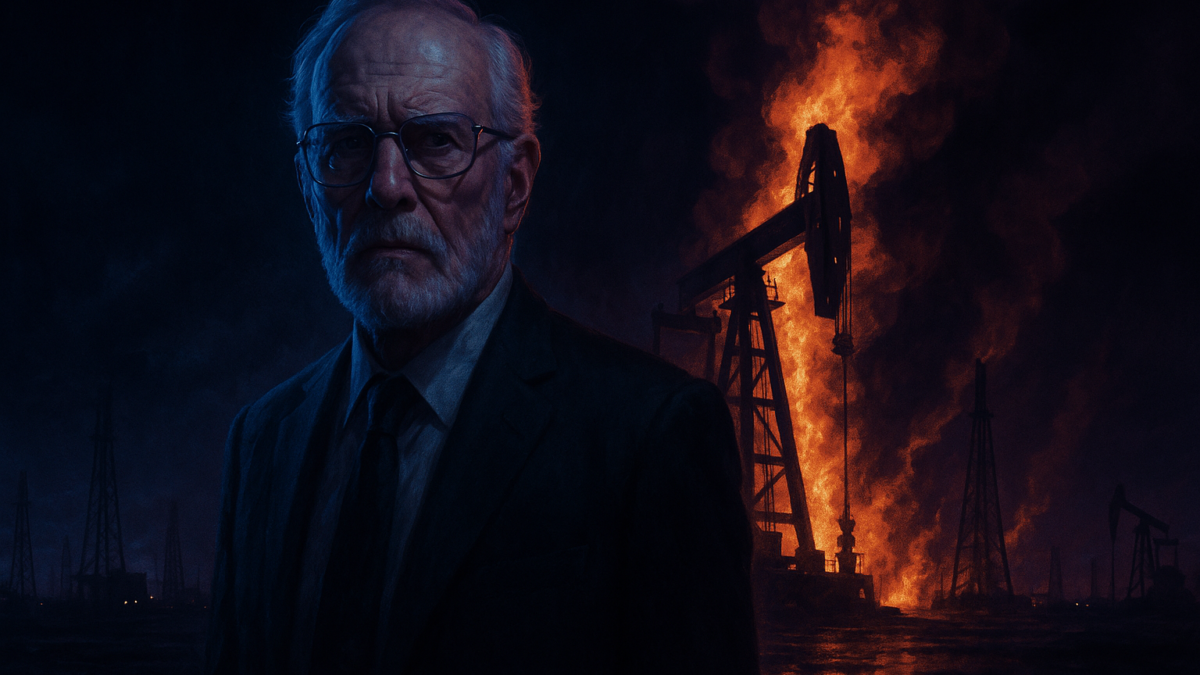
Tom Cruise Transforms for Alejandro G. Iñárritu’s ‘Digger’
Tom Cruise has spent much of his career trying to make the impossible look practical. He has hung from skyscrapers, flown fighter jets, sprinted through cities as if chased by time itself, and turned movie-star intensity into a kind of physical grammar. That is why the new trailer for Alejandro G. Iñárritu’s apocalyptic comedy “Digger” lands with such force: it offers the rare sight of Cruise not simply performing danger, but disappearing into age, authority and decay as an elderly oil-industry titan. The moment matters because Cruise’s career has always been a negotiation between control and risk. He is one of Hollywood’s last true global movie stars, yet his most interesting work often arrives when he lets a director bend that star image into something stranger. Iñárritu, a filmmaker drawn to ego, mortality and collapsing systems, is exactly the sort of collaborator who can turn Cruise’s precision into unease. This week’s trailer has revived awards-season conversation because it reminds audiences of something sometimes obscured by the spectacle: Cruise is not only a daredevil producer-star. He is a three-time Oscar-nominated actor whose best performances have often come when the smile falters, the confidence curdles and the man at the center begins to lose his grip.
Quick Facts
| Born | July 3, 1962 |
| Birthplace | Syracuse, New York, U.S. |
| Nationality | American |
| Years Active | 1981–present |
| Residence | Clearwater, Florida, has been widely reported as a primary residence |
| Spouse | Not currently married; previously married to Mimi Rogers, Nicole Kidman and Katie Holmes |
| Children | Three: Isabella Jane Cruise, Connor Cruise and Suri Cruise |
Early Life
Before he became the actor most associated with motion, Tom Cruise had an unusually unsettled childhood. Born Thomas Cruise Mapother IV in Syracuse, New York, he moved frequently because of his father’s work and his parents’ changing circumstances. The family spent time in Canada when his father worked as a defense consultant, and Cruise later attended schools in several American cities. That constant relocation helped shape a performer who learned early how to read rooms quickly, adapt to new groups and project confidence before he necessarily felt it. Cruise has spoken publicly about struggling with dyslexia as a child, a challenge that made school difficult and gave him an early understanding of frustration, discipline and performance under pressure. He was also athletic, particularly drawn to wrestling, but a knee injury helped redirect his ambitions. Acting entered his life in school productions, and he moved toward it with the kind of commitment that would later define his career. For a brief period, he attended a Franciscan seminary in Cincinnati, an often-cited detail because it stands in such contrast to the rest of his life. Yet even that chapter fits the larger pattern: Cruise was searching for structure, meaning and a way to focus intensity. By the early 1980s, the focus had shifted decisively to film. He arrived in Hollywood without the polish of a conservatory-trained actor, but with a camera-ready urgency that casting directors noticed almost immediately.
Family
Parents
- Mary Lee Pfeiffer, a special education teacher
- Thomas Cruise Mapother III, an electrical engineer
Siblings
- Lee Anne DeVette
- Marian Henry
- Cass Mapother
Career
Cruise’s first screen appearances arrived quickly: a small role in Franco Zeffirelli’s “Endless Love” in 1981, then a more visible part in “Taps” the same year. Even in limited screen time, he projected a watchfulness that made him feel older than his years. By 1983, he had two defining youth-culture films on opposite ends of the emotional spectrum. In Francis Ford Coppola’s “The Outsiders,” he was part of a remarkable ensemble of rising actors. In “Risky Business,” he became the face of a generation’s anxious ambition. The image of Cruise sliding across the floor in socks is famous, but the film’s real revelation is how carefully he plays Joel Goodsen’s transformation from sheltered suburban teenager to calculating operator. It was charm with a nervous system underneath.
“Top Gun” in 1986 turned him into a global star. The film’s commercial impact was enormous, but just as important was what it established about Cruise’s screen identity: speed, competition, grief, romance and self-mastery. He could play arrogance because he made audiences believe it was armor. Rather than coast on that persona, he spent the late 1980s and early 1990s complicating it. Opposite Paul Newman in “The Color of Money,” Cruise learned from one of the great American stars while playing a brash young hustler. In “Rain Man,” he took the less showy role beside Dustin Hoffman and gave the film its emotional movement. In Oliver Stone’s “Born on the Fourth of July,” he made the first major dramatic turn of his career, playing Vietnam veteran Ron Kovic from youthful certainty into trauma, rage and political awakening. The performance earned Cruise his first Academy Award nomination and proved that the actor inside the movie star wanted to be taken seriously.
The 1990s may be the most revealing decade of Cruise’s career. He moved between prestige directors and commercial power with unusual discipline: “A Few Good Men” with Rob Reiner, “The Firm” with Sydney Pollack, “Interview with the Vampire” with Neil Jordan, “Jerry Maguire” with Cameron Crowe, and “Eyes Wide Shut” with Stanley Kubrick. The collaborations mattered. Cruise did not merely attach himself to bankable projects; he sought out filmmakers with distinct rhythms. Kubrick slowed him down. Crowe loosened him. Stone radicalized the public image. Paul Thomas Anderson, in “Magnolia,” detonated it. As Frank T.J. Mackey, Cruise weaponized charisma into something ugly, wounded and theatrical. The role earned him another Oscar nomination and a Golden Globe, and it remains one of the clearest examples of how potent he can be when he lets vanity become the subject rather than the selling point.
At the same time, Cruise was building a second career as one of Hollywood’s most influential producers. With the first “Mission: Impossible” in 1996, he did something that now looks obvious but was then a calculated gamble: he converted a television property into an elegant, director-driven espionage franchise built around reinvention. Brian De Palma’s original film was cool, paranoid and intricate. John Woo’s sequel was operatic action. Later entries brought in J.J. Abrams, Brad Bird and Christopher McQuarrie, each reshaping the series while preserving Cruise’s central promise that the spectacle would be anchored in physical commitment. The franchise became a long-running argument for theatrical scale.
Cruise’s 2000s work shows his range more clearly than it is sometimes remembered. “Minority Report” paired him with Steven Spielberg in a sleek science-fiction noir about surveillance and grief. “The Last Samurai” positioned him inside an epic about cultural collision and personal discipline. Michael Mann’s “Collateral” gave him one of his sharpest transformations: silver-haired, predatory and eerily calm as Vincent, a contract killer moving through Los Angeles by night. It is one of the rare Cruise performances in which he withdraws warmth completely. Spielberg’s “War of the Worlds” then recast him as a frightened, imperfect father, a useful break from heroic certainty.
The public turbulence of the mid-2000s affected his image, but Cruise’s response was not retreat. It was work. He appeared in the ensemble satire “Tropic Thunder,” nearly unrecognizable as the profane studio executive Les Grossman, and reminded audiences that he could be genuinely funny when he attacked comedy with the same commitment he gave stunts. In the 2010s and 2020s, he leaned into action authorship: “Mission: Impossible — Ghost Protocol,” “Rogue Nation,” “Fallout” and “Dead Reckoning” emphasized practical filmmaking at a time when much of blockbuster cinema moved deeper into digital abstraction. “Top Gun: Maverick” then became something larger than a sequel. Released in 2022 after pandemic delays, it was embraced as a theatrical revival story, a film that drew older and younger audiences back into cinemas and earned a Best Picture Oscar nomination for Cruise as one of its producers.
That is the context that makes “Digger” intriguing. Cruise has not lacked scale; he has made scale his signature. What he has done less often in recent years is step into a heavily character-driven transformation under a filmmaker known for psychological and tonal volatility. Iñárritu’s work, from “Birdman” to “The Revenant,” often examines men trapped by their own mythologies. Cruise’s mythology is one of the strongest in modern film. Placing that mythology inside the body of an aging oil titan in an apocalyptic comedy is not just a change of costume. It is a collision between a star who has spent decades outrunning collapse and a director fascinated by what happens when collapse finally catches up.
Television
- Saturday Night Live (1983) — Host
- Fallen Angels (1993) — Director
- Inside the Actors Studio (1999) — Guest
- Stanley Kubrick: A Life in Pictures (2002) — Narrator
- The Late Late Show with James Corden (2022) — Guest
Filmography
- Endless Love (1981) — Billy
- Taps (1981) — Cadet Captain David Shawn
- The Outsiders (1983) — Steve Randle
- Risky Business (1983) — Joel Goodsen
- Top Gun (1986) — Pete “Maverick” Mitchell
- The Color of Money (1986) — Vincent Lauria
- Rain Man (1988) — Charlie Babbitt
- Born on the Fourth of July (1989) — Ron Kovic
- A Few Good Men (1992) — Lt. Daniel Kaffee
- The Firm (1993) — Mitch McDeere
- Interview with the Vampire (1994) — Lestat de Lioncourt
- Mission: Impossible (1996) — Ethan Hunt
- Jerry Maguire (1996) — Jerry Maguire
- Eyes Wide Shut (1999) — Dr. Bill Harford
- Magnolia (1999) — Frank T.J. Mackey
- Minority Report (2002) — Chief John Anderton
- The Last Samurai (2003) — Nathan Algren
- Collateral (2004) — Vincent
- War of the Worlds (2005) — Ray Ferrier
- Tropic Thunder (2008) — Les Grossman
- Mission: Impossible — Ghost Protocol (2011) — Ethan Hunt
- Edge of Tomorrow (2014) — Major William Cage
- Mission: Impossible — Fallout (2018) — Ethan Hunt
- Top Gun: Maverick (2022) — Pete “Maverick” Mitchell
- Mission: Impossible — Dead Reckoning Part One (2023) — Ethan Hunt
Awards & Honors
- 1990 — Academy Award (Best Actor) — Nominated
- 1990 — Golden Globe Award (Best Actor in a Motion Picture — Drama) — Won
- 1990 — BAFTA Award (Best Actor in a Leading Role) — Nominated
- 1997 — Academy Award (Best Actor) — Nominated
- 1997 — Golden Globe Award (Best Actor in a Motion Picture — Musical or Comedy) — Won
- 2000 — Academy Award (Best Supporting Actor) — Nominated
- 2000 — Golden Globe Award (Best Supporting Actor in a Motion Picture) — Won
- 2004 — Golden Globe Award (Best Actor in a Motion Picture — Drama) — Nominated
- 2009 — Golden Globe Award (Best Supporting Actor in a Motion Picture) — Nominated
- 2022 — Cannes Film Festival (Honorary Palme d’Or) — Won
- 2023 — Academy Award (Best Picture) — Nominated
- 2023 — Producers Guild of America Award (Outstanding Producer of Theatrical Motion Pictures) — Nominated
Business Ventures
- Co-founded Cruise/Wagner Productions with Paula Wagner, a company that helped produce the “Mission: Impossible” franchise and other Cruise-led projects.
- Served as producer on multiple “Mission: Impossible” films, helping shape the franchise’s director choices, stunt identity and global marketing strategy.
- Partnered with Paula Wagner in a 2006 arrangement to revive United Artists, giving Cruise a significant role in a historic Hollywood label.
- Entered a strategic partnership with Warner Bros. Motion Picture Group, announced in 2024, to develop and produce original and franchise theatrical films.
- Operates through production banners associated with his film work, including Tom Cruise Productions.
Philanthropy
- Has participated in major entertainment-industry charity efforts, including the post-9/11 benefit broadcast “America: A Tribute to Heroes.”
- Has publicly supported Make-A-Wish Foundation activities connected to children and families.
- Has been associated with literacy advocacy, a subject linked to his own public comments about overcoming dyslexia.
- Has taken part in charitable and humanitarian events through the entertainment industry over the course of his career.
Current Projects
- “Digger,” Alejandro G. Iñárritu’s apocalyptic comedy for Warner Bros., with Cruise shown in the trailer as an elderly oil-industry titan.
- Ongoing producing and development work through his Warner Bros. partnership.
- Continuing association with the “Mission: Impossible” franchise as star and producer.
Interesting Facts
- Tom Cruise’s birth name is Thomas Cruise Mapother IV.
- He spent part of his childhood in Ottawa, Canada, where his father’s work took the family.
- He has spoken publicly about dyslexia and how it affected his education before acting became his focus.
- A wrestling injury helped push him away from athletics and toward performing.
- He briefly attended a Franciscan seminary before pursuing acting.
- “Risky Business” made him a star, but “Born on the Fourth of July” changed the industry’s perception of him as a dramatic actor.
- He has been nominated for acting Oscars three times but has not won a competitive Academy Award.
- He received a Best Picture Oscar nomination as a producer of “Top Gun: Maverick.”
- Cruise narrated “Stanley Kubrick: A Life in Pictures,” a documentary about the director of “Eyes Wide Shut.”
- His cousin William Mapother appeared with him in films including “Born on the Fourth of July,” “Magnolia,” “Mission: Impossible II” and “Vanilla Sky.”
- The “Mission: Impossible” franchise is unusual because it has repeatedly changed directors and visual styles while keeping Cruise’s Ethan Hunt at the center.
- His role as Les Grossman in “Tropic Thunder” was kept heavily disguised in marketing, adding to the surprise when audiences recognized him.
- He returned his three Golden Globe trophies in 2021 amid industry controversy surrounding the Hollywood Foreign Press Association.
- “Top Gun: Maverick” became one of the key films credited with helping restore confidence in theatrical moviegoing after pandemic-era disruptions.
- Cruise is known for performing many of his own stunts, a practice that has become central to the marketing and identity of his later action films.
Why ShowBiz Selected This Entertainer
Tom Cruise is featured this week because the full trailer for Alejandro G. Iñárritu’s “Digger” gave audiences their clearest look at a performance that appears to push him away from the sleek physical command of his recent action era and toward a more grotesque, character-driven transformation. The trailer’s image of Cruise as an elderly oil-industry titan has immediately become an awards-season talking point, not simply because of makeup or novelty, but because it connects to an older thread in his career. His most acclaimed performances — “Born on the Fourth of July,” “Jerry Maguire,” “Magnolia,” even “Collateral” — all examine men whose confidence hides damage. “Digger” seems positioned to test that quality again, with Iñárritu’s appetite for ego, absurdity and collapse making the pairing especially charged. Cruise remains a defining movie star because he has protected the big-screen experience with unusual intensity. But he remains an interesting actor because, every so often, he lets filmmakers turn that intensity against him.
Watch Next
- Risky Business
- Top Gun
- Rain Man
- Born on the Fourth of July
- A Few Good Men
- Jerry Maguire
- Eyes Wide Shut
- Magnolia
- Minority Report
- Collateral
- Mission: Impossible — Ghost Protocol
- Edge of Tomorrow
- Mission: Impossible — Fallout
- Top Gun: Maverick