
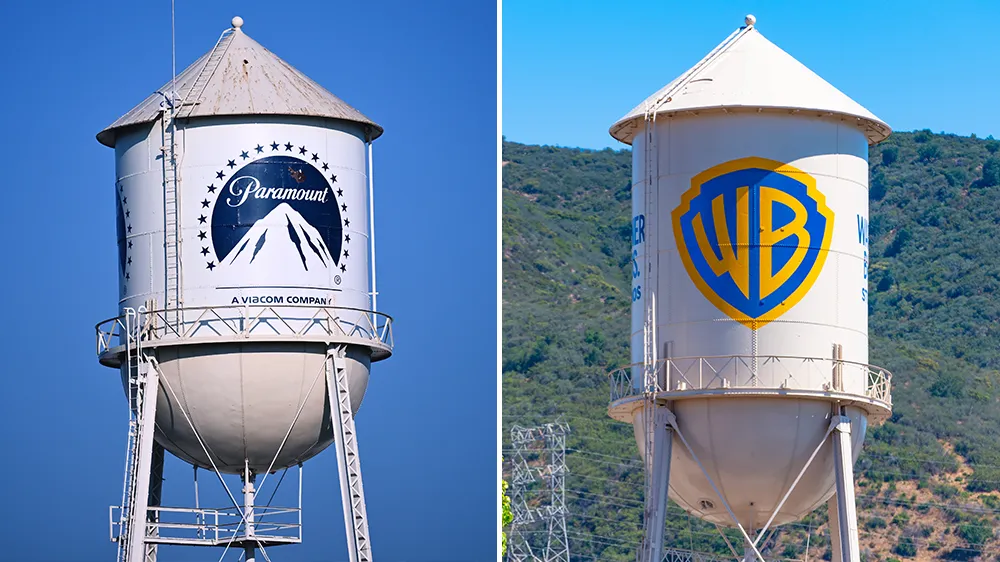
Paramount Skydance has signaled that CNN could be sold as part of an effort to salvage its proposed $110 billion acquisition of Warner Bros. Discovery, an extraordinary concession that would place one of television’s best-known news brands at the center of a high-stakes antitrust fight.
Chief Legal Officer Makan Delrahim said a CNN divestiture is “on the table” as the company looks for a path through a state antitrust lawsuit seeking to block the transaction, according to Reuters. The remark is significant not only because of CNN’s visibility, but because merger remedies in Hollywood are usually built around assets considered easier to separate: local stations, regional networks, distribution rights or limited business units.
This is different. CNN is not a spare part. It is one of Warner Bros. Discovery’s most globally recognized brands, a cable news pioneer with a four-decade history, a vast international footprint and a role in American public life that extends far beyond the balance sheet.
The willingness to discuss a sale underscores the pressure facing Paramount Skydance as it attempts to persuade regulators and state officials that combining two legacy media empires would not give the enlarged company too much power over news, entertainment, sports and distribution. It also reflects the new reality of media consolidation: even the most famous brands can become bargaining chips when the deal is large enough.
A Bigger Test for Hollywood Consolidation
The proposed acquisition would bring together a sprawling collection of assets across film, television, streaming and cable. Warner Bros. Discovery controls Warner Bros. Pictures, HBO, Max, the Discovery cable portfolio and CNN. Paramount brings Paramount Pictures, CBS, Paramount+, Nickelodeon, MTV, Comedy Central and a major broadcast news operation through CBS News.
That combination would create a company with enormous reach across scripted entertainment, unscripted programming, live news, sports rights and streaming distribution. For regulators, the central question is whether the merged entity would have too much leverage over advertisers, distributors, consumers and competitors.
In past media mergers, companies have often eased regulatory concerns by offering targeted divestitures. Those remedies can be meaningful, but they are typically designed to preserve the broader strategic logic of the deal while sacrificing assets that are not essential to the combined company’s long-term plan.
Putting CNN into that conversation raises the stakes. The brand carries political sensitivity, international recognition and major journalistic infrastructure. It also sits in a sector facing intense economic disruption, as traditional cable subscriptions continue to decline and news organizations search for sustainable digital models.
For Paramount Skydance, the calculation may be that losing CNN would be painful but survivable if it clears the way for a much larger combination built around studios, streaming scale, franchise libraries and broader distribution power. For regulators, the offer could become a test of whether a marquee divestiture is enough to address concerns about consolidation across the rest of the business.
Why CNN Matters
CNN’s value is not merely financial. While the cable news business has been pressured by cord-cutting and audience fragmentation, CNN remains a globally identifiable news operation with correspondents, bureaus and brand equity that would be difficult to recreate from scratch.
That makes a potential sale unusually consequential. A new owner would inherit not only a business, but a newsroom with influence over political coverage, international reporting and public discourse. Any buyer would face immediate scrutiny over editorial independence, investment levels and strategic direction.
The pool of plausible buyers could also be complicated. A sale of CNN would likely attract interest from strategic media companies, wealthy individuals, private equity firms or international investors. Each option would come with regulatory, political and reputational questions. News ownership is rarely treated like ordinary entertainment commerce, and CNN’s prominence would magnify every decision.
There is also a competitive wrinkle. Paramount already owns CBS News, a historic broadcast news division with its own streaming and digital ambitions. Regulators may view the combination of CBS News and CNN under one corporate roof as a particular area of concern, especially in a political climate where media influence is a frequent target of public debate.
A CNN divestiture could therefore be positioned as a direct remedy to worries about news concentration. But it would not automatically resolve broader questions about scripted production, theatrical distribution, streaming competition or the future of cable networks under a single enlarged company.
The Deal Economy Behind the Move
Hollywood’s biggest companies are under pressure to get larger while also spending more carefully. Streaming has reshaped the industry, but it has not delivered the easy profits once promised. Linear television remains lucrative in pockets, yet its long-term decline has forced media conglomerates to rethink everything from programming budgets to corporate structure.
That tension has fueled a wave of consolidation talk. Scale can help companies negotiate with distributors, compete for sports rights, market global franchises and build streaming platforms with deeper libraries. But scale also invites antitrust scrutiny, especially when consolidation reduces the number of major studios and news suppliers.
The Paramount Skydance-Warner Bros. Discovery proposal sits squarely in that debate. Supporters may argue that legacy media companies need to combine to compete with tech giants that dominate digital advertising, streaming distribution and consumer attention. Critics may counter that merging already powerful entertainment companies risks weakening competition, limiting creative opportunities and concentrating too much cultural influence in too few hands.
That is why the CNN signal matters. It suggests Paramount Skydance is prepared to make a dramatic concession to keep the larger transaction alive. It also shows how vulnerable even iconic cable assets have become in an industry increasingly organized around streaming scale, franchises and balance-sheet flexibility.
What Happens Next
The next phase will likely turn on whether state officials and regulators consider a potential CNN sale sufficient, or whether they demand additional remedies before allowing the acquisition to proceed. Paramount Skydance will need to define what “on the table” means in practical terms: a full sale, a spin-off, a structured divestiture or another arrangement designed to separate CNN from the merged company.
If talks advance, attention will quickly shift to possible buyers and the conditions attached to any transaction. Regulators could seek commitments involving editorial independence, employment protections, distribution access or limits on future ownership combinations.
For now, CNN’s future remains unresolved. But the message from Paramount Skydance is clear: in the battle to close one of the biggest media deals in recent memory, even a crown jewel may be negotiable.