
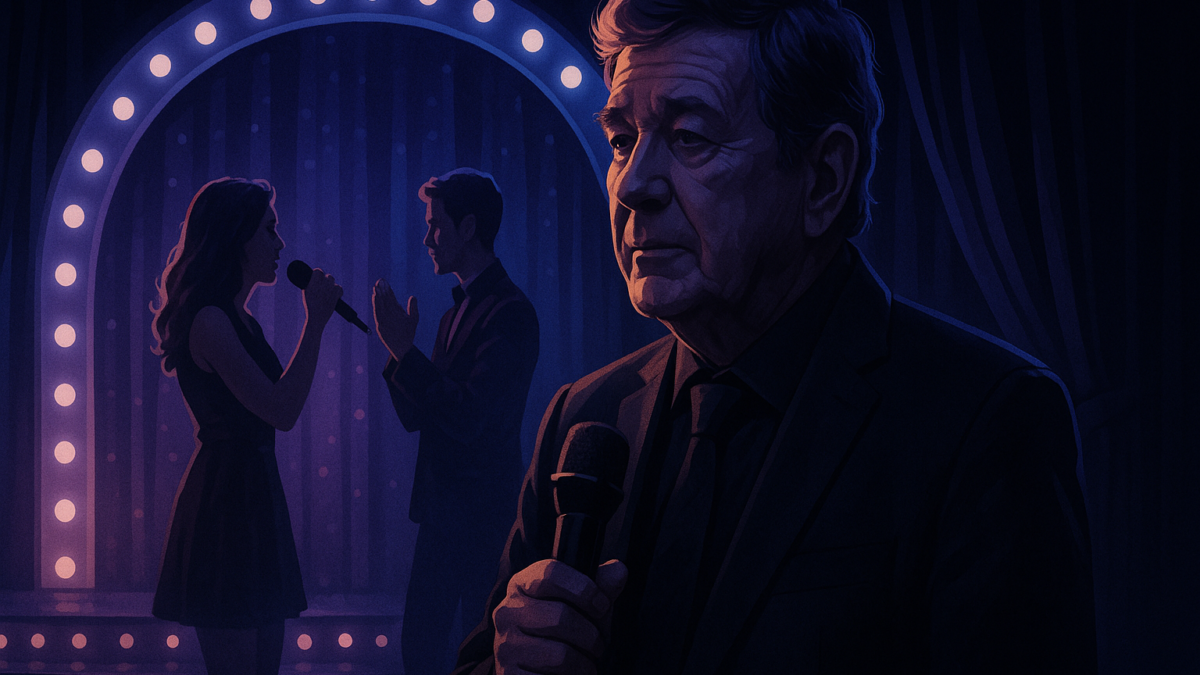
Johnny Young, the Australian pop performer, songwriter and television host whose long-running variety series Young Talent Time became a launchpad for generations of performers, has died. He was 79.
Young’s family confirmed Friday that the entertainer, born Johnny Benjamin De Jong, died following a brief illness with pancreatic cancer. In a statement, the family remembered him as “the creator, host and producer of the much loved television show Young Talent Time,” and acknowledged his decades of work as a writer and producer behind some of Australia’s most familiar pop hits.
For many Australians, Young was not simply a television personality but a fixture of family viewing: the smiling, reassuring host who introduced young singers and dancers to a national audience at a time when broadcast television could still create household names almost overnight. His death marks the loss of one of the defining figures of Australian variety television and a key architect of the country’s homegrown entertainment pipeline.
A television institution
Young Talent Time, which premiered in the early 1970s and ran for years as a Saturday-night staple, was built around a deceptively simple format: a troupe of young performers singing, dancing and presenting polished pop numbers for a broad family audience. Under Young’s guidance, the show became a training ground as much as a showcase, offering children and teenagers rare access to professional production, choreography, vocal coaching and live-performance discipline.
The program helped introduce or elevate a number of performers who would go on to major careers, including Tina Arena and Dannii Minogue. Arena, in particular, became one of the show’s signature success stories, graduating from child performer to internationally respected recording artist. Minogue’s emergence on the series also connected Young Talent Time to a wider pop-cultural lineage that would extend well beyond Australia.
Young’s role on the show was unusually expansive. He was not just the on-camera host but also a producer and creative force, shaping the tone of a program that balanced wholesome accessibility with the polish of a professional revue. In an era before reality competitions and social media talent discovery, Young Talent Time offered a visible path for young Australian performers to reach national recognition.
From pop charts to television history
Before he became one of Australian television’s most recognizable faces, Young had already established himself in music. He emerged in the 1960s as a pop singer and songwriter, scoring success as a performer while also writing material that helped define the sound of the local pop scene. His career reflected a period when Australian music was beginning to assert its own identity, even as it drew from British and American influences.
That dual career — performer in front of the microphone and writer behind the scenes — gave Young a rare understanding of the mechanics of show business. He knew what it meant to court an audience, to craft a hook and to survive the rapid churn of popular taste. Those instincts later informed Young Talent Time, where he packaged youthful enthusiasm into a format that could be broadcast into living rooms across the country.
Young’s contribution matters because Australian entertainment has often depended on figures able to build institutions as well as individual careers. His work helped normalize the idea that young local performers could be trained, presented and celebrated on national television without needing to first seek validation overseas. Long before talent franchises became global business models, Young understood the appeal of watching new performers grow in public.
The show also arrived at a time when Australian broadcasters were under increasing pressure to produce local content and cultivate national stars. Young Talent Time answered that need with a format that was affordable, repeatable and emotionally resonant. It gave audiences a sense of ownership over its performers, many of whom seemed to mature alongside the viewers who tuned in each week.
A legacy beyond nostalgia
While Young Talent Time is often remembered through the warm lens of nostalgia, its industry impact remains significant. The program helped establish a template for youth-oriented entertainment that later found echoes in talent competitions, children’s performance series and reality formats designed to discover and develop emerging artists.
It also helped demonstrate the commercial value of family-friendly music television, a space that has shifted dramatically in the streaming era. Today, young performers often build audiences through TikTok, YouTube and global competition shows. Young worked in a far more centralized media landscape, but his instinct was similar: find talent early, give it structure and allow viewers to form a bond.
For former cast members and fans, Young’s death is likely to prompt a wave of memories tied not only to the man himself but to a particular era of Australian broadcasting. His presence represented continuity — the host who guided nervous young performers through their routines and made the machinery of television feel approachable.
His passing also comes at a moment when the entertainment industry is reassessing the value of legacy formats and the stars they produced. As streaming platforms chase youth audiences across fragmented digital spaces, Young’s career is a reminder that some of the most durable entertainment brands are built on consistency, mentorship and emotional familiarity.
What Happens Next
Tributes from across the Australian entertainment community are expected to continue as colleagues, former performers and viewers reflect on Young’s influence. Given the number of careers touched by Young Talent Time, industry remembrances are likely to span music, television and live performance.
Details regarding memorial arrangements have not yet been publicly announced. Young leaves behind a legacy that reaches well beyond a single television show: he helped shape the way Australia discovered young talent, and his impact can still be felt in the performers who followed the path he helped create.