
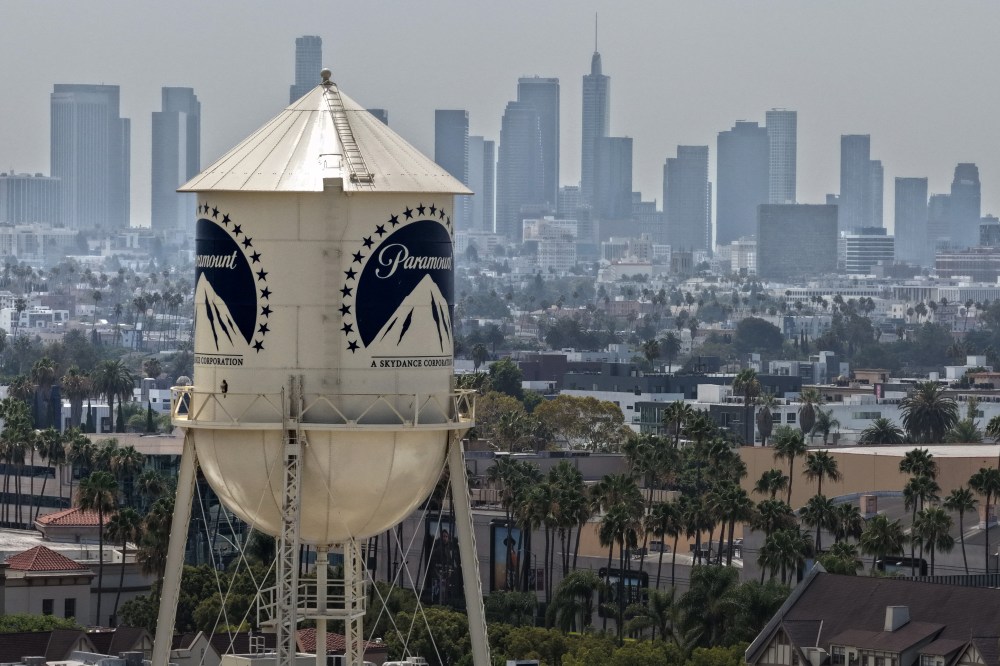
Paramount Skydance representatives are expected to meet Monday with the California Attorney General’s office to discuss a potential settlement of the states’ antitrust challenge to the company’s proposed $111 billion merger with Warner Bros. Discovery, according to two sources familiar with the situation.
The meeting could mark a pivotal moment for one of the most consequential media transactions in recent Hollywood history. The deal, which would combine Paramount’s film and television assets with Warner Bros. Discovery’s sprawling studio, cable and streaming portfolio, is currently stalled as the parties await a March trial in federal court in Oakland.
California Attorney General Rob Bonta has previously indicated that his office is open to settlement negotiations, and Monday’s expected discussion suggests both sides are exploring whether the litigation can be resolved before a courtroom fight begins. The sources cautioned that a meeting does not guarantee an agreement and that the states could still proceed to trial if the parties cannot bridge their differences.
For Paramount Skydance, time is a critical factor. The company has been pushing aggressively to secure a deal that would allow the merger to close, arguing that scale is essential in a marketplace increasingly dominated by deep-pocketed tech platforms, global streamers and legacy media consolidation. A prolonged trial would add uncertainty around financing, integration planning and investor expectations at a moment when traditional entertainment companies are under pressure to streamline costs and prove that their streaming strategies can become sustainably profitable.
The states’ antitrust case has placed a major roadblock in front of the transaction. While the precise terms under discussion are not yet known, settlements in merger challenges often involve behavioral commitments, divestitures, restrictions on bundling or licensing practices, or guarantees intended to preserve competition in specific markets. Any agreement would likely require careful calibration, given the breadth of assets involved across theatrical distribution, television production, cable networks, sports rights, news, streaming and advertising sales.
Why the Meeting Matters
The Paramount-Warner Bros. Discovery combination would reshape the entertainment landscape at a time when Hollywood is still adjusting to the long-term fallout from cord-cutting, streaming losses, labor unrest and a slower theatrical recovery. A merged company would bring together two of the industry’s most storied studio libraries, including franchises, production pipelines and distribution arms that touch nearly every corner of film and television.
That is precisely why antitrust enforcers are scrutinizing the transaction. State officials are expected to focus on whether the merger would reduce competition for consumers, advertisers, creators or distributors. In recent years, state attorneys general have become more visible in major antitrust fights, often working alongside or independently from federal regulators to challenge deals they believe could concentrate market power.
California’s role is especially significant. The state is not merely another jurisdiction in this dispute; it is the center of the U.S. entertainment business. Decisions made by studios in Los Angeles and Burbank reverberate through production workers, talent agencies, theaters, vendors, technology partners and consumers nationwide. Any settlement with California’s attorney general could carry practical and symbolic weight for the broader coalition of states pursuing the case.
A settlement would not necessarily mean an easy path to closing. Depending on its structure, the agreement could require court approval, coordination with other state plaintiffs or compliance mechanisms that take months to implement. Still, even a framework deal would represent meaningful progress for Paramount Skydance after weeks of uncertainty surrounding the merger’s fate.
Industry Context
The push for consolidation reflects the harsh economics confronting legacy media companies. Cable television, once the engine that funded much of Hollywood’s growth, continues to decline as households abandon traditional pay-TV bundles. Streaming has delivered global reach but also high content costs, intense churn and investor impatience. At the same time, Apple, Amazon, Netflix and YouTube have changed audience expectations and raised the competitive bar for technology, data and distribution.
Paramount and Warner Bros. Discovery each bring distinct strengths to the proposed merger. Paramount has broadcast reach, recognizable franchises and a deep film and television history. Warner Bros. Discovery controls a vast library, premium cable brands, major unscripted assets and one of the industry’s most valuable studio operations. Together, the companies would have greater leverage in licensing, marketing, international distribution and direct-to-consumer packaging.
But that same leverage is at the center of the antitrust concern. Regulators are likely to ask whether the combined company could disadvantage rival distributors, limit access to must-have programming, weaken bargaining power for creative partners or reduce consumer choice. In an industry where content libraries and distribution platforms are increasingly intertwined, the boundaries of competition are more complicated than in previous eras of studio mergers.
The March trial date gives both sides a clear deadline. For regulators, trial offers a chance to test the merger under the spotlight of federal court and potentially secure precedent for future media deals. For Paramount Skydance, trial carries risk, cost and delay — all of which could complicate the company’s broader strategic plan. That dynamic often creates incentives for settlement, particularly when both parties can claim that negotiated conditions protect competition while allowing a transaction to proceed.
Still, the politics of settling a high-profile entertainment merger are delicate. Bonta and other state officials will be under pressure to show that any agreement produces concrete protections rather than cosmetic concessions. Paramount Skydance, meanwhile, will want terms that do not undermine the business rationale for the deal or make integration unworkable.
What Happens Next
Monday’s meeting is expected to determine whether there is a realistic path toward settlement before the March trial in Oakland. If the discussions are productive, the sides could move into more detailed negotiations over remedies and enforcement terms. If they stall, the case will continue toward trial, keeping one of Hollywood’s biggest pending mergers in legal limbo.
For now, the industry will be watching closely. A settlement could unlock the next phase of media consolidation and set a template for how regulators handle large-scale entertainment deals. A breakdown, however, would send Paramount Skydance and the states toward a courtroom battle with major implications for the future structure of the studio business.