
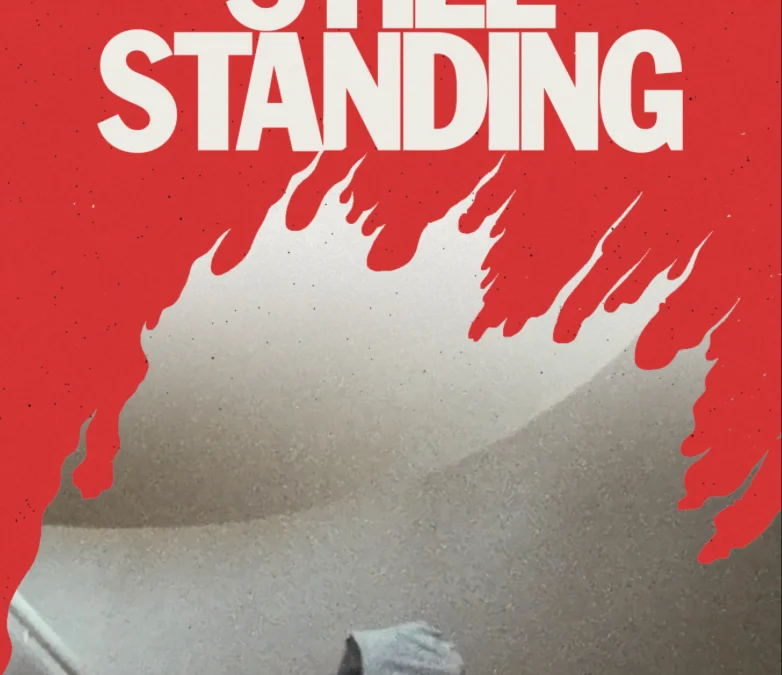
Oscar hopeful Still Standing is bringing a less visible aftermath of the Eaton fire into focus: homes that survived the January 2025 disaster in Altadena but were left contaminated by toxic ash.
Directed by Los Angeles-based filmmaking couple Víctor Tadashi Suárez and Livia Albeck-Ripka, the documentary examines the difficult choice facing residents whose houses remained intact. The fire destroyed thousands of homes in Altadena, while some owners of surviving properties had to weigh returning against potential health risks.
A synopsis for the film says thousands of homes remained standing after the Los Angeles wildfires, despite contamination, and that many insurers told residents their properties were habitable. Filmed from inside affected houses on 16mm, Still Standing asks what survival means when one emergency gives way to another.
The production required significant precautions. “To enter toxic homes, we wore hazmat suits and masks, and covered our car in plastic sheeting,” the directors wrote in a statement.
Inside the homes that survived
Suárez and Albeck-Ripka live approximately 10 miles from one of the Los Angeles neighborhoods that burned. As rebuilding began and other parts of the city moved toward normality, they said residents of still-standing homes were confronting a “quieter” and, in some respects, “more horrifying” situation.
The filmmakers first became aware of the issue through their close friend Roy Werner, who composed the documentary’s score. Werner, his wife and their infant daughter had been unable to return to their house for months. Their property became the first home Suárez and Albeck-Ripka filmed.
According to the directors, there was little published reporting about toxicity in surviving homes when production began. Over the following six months, they interviewed more than two dozen residents, researchers and environmental consultants. They also filmed inside more than a dozen houses.
Those interiors had been effectively suspended at the moment residents fled. The filmmakers found Christmas decorations still in place and tables prepared for family gatherings. They compared the scenes to “Pompeii or Chernobyl,” while describing residents as trapped between an undefined sense of grief and the practical burden of repeated calls to insurers and adjusters.
Still Standing is the second wildfire film the directors have made together. They met in January 2020 while working on a film about the Australian bushfires for The New York Times Presents.
Awards and festival screenings
The documentary has built considerable awards momentum, winning Oscar-qualifying honors at Full Frame, the Seattle International Film Festival and Aspen Shortsfest.
It also received Best Documentary Short at Oregon’s Bend Film Festival last month. At the Nevada City Film Festival, it won Best Cinematography after being considered alongside films from every genre in competition.
Its screening schedule has continued across several cities and countries. Still Standing screened at SFFILM’s Doc Stories in San Francisco and is set to play the San Diego Asian Film Festival on Sunday. Additional screenings are scheduled for UnionDocs in Queens, New York, on Monday and Cameraimage in Toruń, Poland, on Friday, alongside other festival appearances this month.
The film is executive produced by Kevin Iwashina, the former head of documentary at Fifth Season and former president of the IDA board of directors, and Bernardo Ruiz, a three-time Emmy-nominated filmmaker.
ShowBiz Take
Still Standing finds its central story not in what the Eaton fire visibly erased, but in what remained behind. A house that survived might appear to represent good fortune, yet the documentary shows why an intact structure did not necessarily mean a safe or uncomplicated return.
That perspective gives the film’s title a pointed double meaning. The homes are physically present, but residents still face displacement, health concerns and extended dealings with insurers and adjusters. By entering those spaces in protective equipment and recording their preserved interiors on 16mm, Suárez and Albeck-Ripka place viewers inside an aftermath that could otherwise remain out of sight.
The film’s Oscar-qualifying awards and additional festival wins have already given that subject substantial recognition. Its next step will take it beyond the festival circuit and make the documentary available to an online audience.
What Happens Next?
Following its current run of festival screenings, Still Standing will premiere online on November 19 as part of the ninth season of the PBS series POV.