
Spoiler warning: This article discusses major developments in You Can See Everything.
You Can See Everything has gone from a closely guarded A24 production to a North American box office breakout in less than two months, emerging as one of the most successful documentaries ever released in the market.
The three-hour film, directed by Nathan Fielder and Lance Oppenheim, has also made a strong case to become the first documentary nominated for the best picture Oscar. Its rapid rise follows a secret screening at the Telluride Film Festival over Labor Day weekend, where audiences began discovering a movie whose biggest turns had remained largely concealed.
At one of their first public Q&As since the theatrical release, Fielder, known for The Rehearsal, and Oppenheim, known for Primetime, discussed the unusual production at the SCAD Savannah Film Festival — from the decision to put Fielder on camera to the late arrival of Amanda Seyfried.
Inside the documentary’s month with Elizabeth Holmes
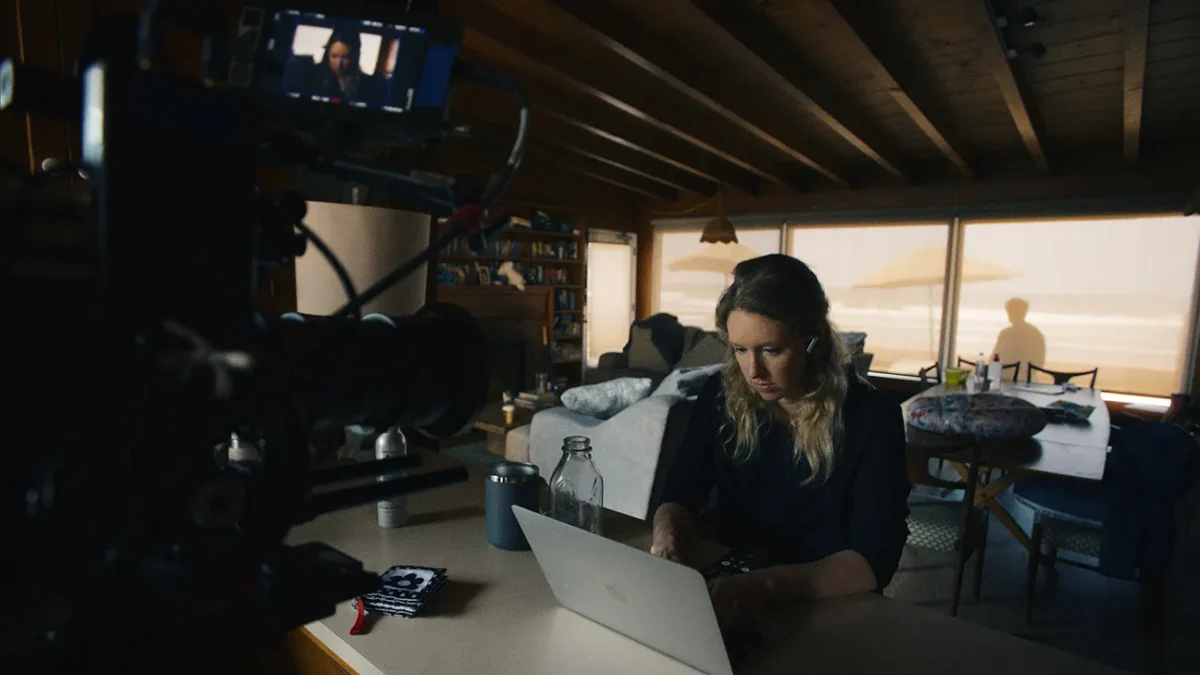
The filmmakers documented the final month Elizabeth Holmes spent with her husband, Billy Evans, and their children before she began an 11-plus-year prison sentence for fraud. What viewers could not have anticipated was the dynamic among Holmes, Evans and Fielder, or the degree to which the filmmaking process itself would become part of the story.
Oppenheim said the original plan did not include Fielder appearing on camera. That changed as Holmes and Evans repeatedly directed questions toward him during filming. Camera operator Jonathan Mitchell eventually panned over to Fielder, giving Oppenheim the idea that his co-director could function as an “accidental investigator” trying to understand the everyday interactions unfolding around them.
The production’s shooting strategy also expanded as the directors realized that a single camera could not capture crucial reactions. Although the first stint involved a seven-person crew, Fielder said that only two or three people besides the directors were inside the house at any given time. Two operators managed three cameras, including a wide shot covering the house and zoom lenses capable of capturing close images from a distance.
For Fielder, the reaction before an answer could be as revealing as the answer itself. He said facial responses were important when attempting to evaluate honesty and sincerity.
The team also began recording the conversations that occurred before the day’s planned filming. According to Fielder, Holmes and Evans would sometimes tell the crew what they wanted documented. The filmmakers considered those requests relevant because they revealed what the couple believed should be included in the movie. Fielder said the crew eventually arrived before the household woke and set up wide cameras; he noted that the home’s door was not locked.
Questions the filmmakers still cannot resolve
Fielder and Oppenheim spent a month continuously observing the family, but they said many incidents only regained their full significance when they reviewed the footage during editing. Fielder described certain moments as compelling precisely because the filmmakers could not make sense of them.
He also said Holmes knew early in the process how he felt about her guilt. At the same time, the directors remained conscious that they were filming a mother’s last month with her children before prison. Whenever tensions rose or the crew sensed its presence might no longer be wanted, Fielder said he offered to end the production and leave.
Holmes and Evans instead asked them to remain, according to the filmmakers. That response only deepened Fielder’s questions about why they had been invited into such a consequential period.
Oppenheim said watching the completed film with audiences has changed his own response to it, comparing the experience to an evolving Rorschach test. At times, he views Holmes’ behavior as unconscious; at others, he believes she appears fully aware. Fielder similarly said reactions outside the production’s isolated environment have given him new ways to consider the material, while also showing how much individual viewers bring to what they see.
How Amanda Seyfried reshaped the final act
The movie’s most dramatic structural shift came after the filmmakers’ access to Holmes, now incarcerated, began disappearing. They continued following Evans and waited to see what would happen with a business project. Evans initially told Fielder he would have something to show within 365 days, but Oppenheim said the process took two years.
The directors also approached people outside Holmes’ immediate circle. Many declined to participate because they considered her a toxic personality, Oppenheim said. That path eventually brought them to Seyfried, who won an Emmy for portraying Holmes in Hulu’s The Dropout.
Fielder and Oppenheim did not know Seyfried before contacting her. Her response was direct: “Come over, bring cameras.” The first apartment scene in the documentary captures their first substantial in-person conversation with her.
Although Seyfried initially said she had no interest in playing Holmes again, she began imitating her while reviewing footage. That moment opened the door to the reenactments of important scenes and conversations from the filmmakers’ earlier access.
Fielder said the ending ultimately emerged through the editing process. Once the film had conveyed the off-camera information shaping the directors’ discussions, they felt audiences possessed essentially the same material they did. It did not necessarily provide a definitive resolution, but it marked the furthest point the filmmakers believed they could reach.
ShowBiz Take
The breakout matters because You Can See Everything did not arrive through a conventional, fully disclosed rollout. Its secret Telluride appearance, tightly protected surprises and theatrical discovery became part of the audience experience, while its intimate access and formal shifts fueled the conversation around it.
Just as importantly, the film’s success is tied to its refusal to remain one kind of documentary. It moves from observational footage to an on-camera director and then to reenactments as access changes. That evolution, combined with its box office performance and unprecedented best picture potential for a documentary, has turned a once-hidden project into a significant movie-season contender.