
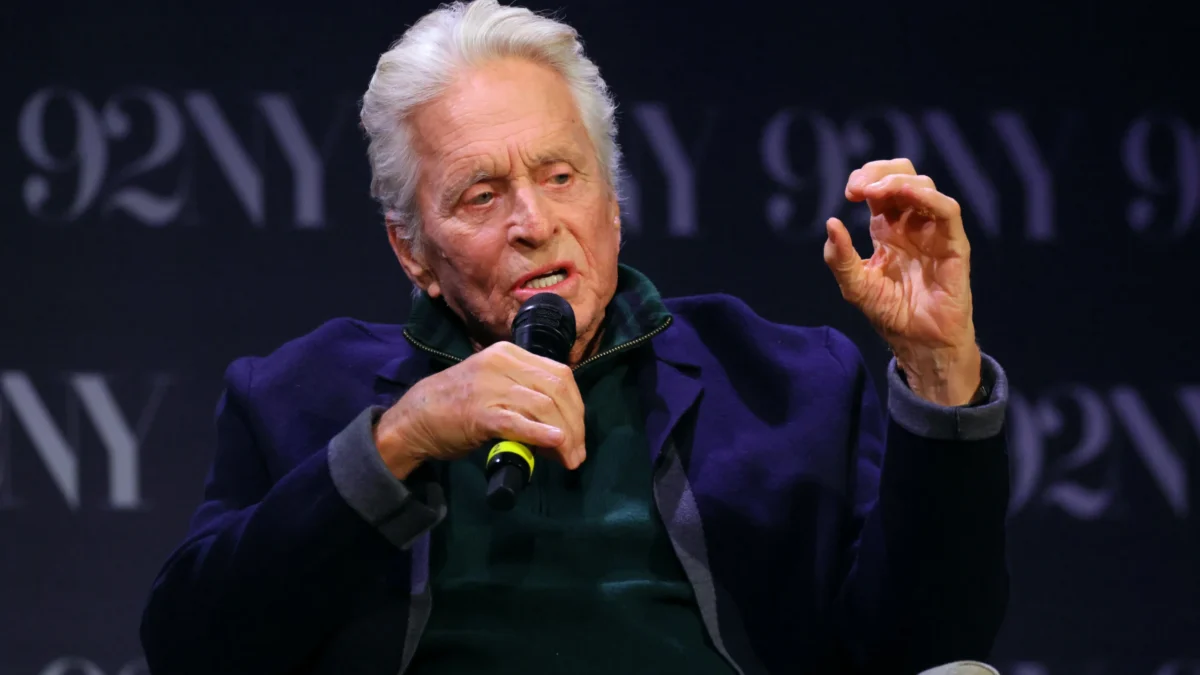
Michael Douglas revisited an eyebrow-raising chapter of his college years during a Friday night appearance on “Real Time with Bill Maher,” revealing that he once transported marijuana across the country in luxury suitcases given to him by his father, actor Kirk Douglas.
The actor and producer shared the story while promoting his memoir, “One Helluva Ride.” The book traces Douglas’ path through Hollywood, including his Best Picture Oscar for producing “One Flew Over the Cuckoo’s Nest” and his Best Actor Oscar for “Wall Street,” while also addressing what he described as “sex, drugs and rock and roll.”
Douglas told Maher that marijuana sales helped him cover expenses during college. Maher recognized some common ground between them, joking that buying pot in one place and selling it somewhere else could produce a useful financial difference.
“Especially between East Coast and West Coast,” Douglas replied.
Douglas details his suitcase operation
According to Douglas, the financial pressure increased after he turned 21. His father gave him a $10,000 check and told him, “Great son, you’re on your own.” Douglas said he appreciated the money but still had a couple of years of school tuition to pay.
That led him to find an unconventional use for two Christmas gifts from his father: Italian soft-leather suitcases. Douglas recalled later telling Kirk that he had discovered each suitcase could carry 22 kilos of marijuana.
“I would go back east to see my mom with the clothes on my back and two suitcases,” Douglas told Maher, adding that this happened in what he called “BD: Before Dogs.”
The anecdote placed a strikingly specific episode inside the broader story Douglas is telling in “One Helluva Ride.” His memoir covers both the professional milestones of his acting and producing career and the more provocative experiences that preceded them.
Taking on the ‘nepo baby’ debate
The conversation later moved from Douglas’ college finances to the advantages associated with having a successful parent in Hollywood. Maher noted that Douglas had worked ordinary jobs to earn money despite being the son of a wealthy actor.
Among those jobs was a position at a Mobil gas station in Connecticut when Douglas was 20. He said he was named “Mobil Man of the Month.”
That background prompted Douglas to push back on the criticism surrounding so-called “nepo babies,” a term used in debates about the advantages received by children of established Hollywood figures.
“With this ‘nepo baby’ thing, doesn’t every single business, doesn’t a father or a mother want their son or daughter to go into the business?” Douglas asked.
He pointed to family businesses that advertise themselves using a parent’s name followed by “and sons,” questioning why entertainment families should be treated differently. “So why pick on show business?” he said.
Douglas’ comments did not erase the role his father played in his early life: Kirk gave him the $10,000 check and the Italian luggage at the center of his marijuana story. Instead, Douglas emphasized the ways he also worked and generated money for himself, from pumping gas at 20 to the illegal college-era enterprise he described to Maher.
ShowBiz Take
Douglas’ appearance brought together two very different pieces of his personal history: the undeniable proximity to a successful actor-father and his insistence that he still had to find ways to support himself.
That tension is precisely what makes his answer to the “nepo baby” debate notable. Douglas did not argue that family ties are absent from show business. He defended them as something that also exists in other family-run professions, while using stories about tuition, gas-station work and marijuana sales to illustrate the less polished side of his own path.
For “One Helluva Ride,” the result is a candid promotional moment that extends beyond Douglas’ Oscar-winning highlights. His conversation with Maher presented a memoir willing to place major career honors alongside an account of carrying 22 kilos of marijuana in each of two suitcases—and to confront the ongoing argument over what it means to follow a parent into Hollywood.