
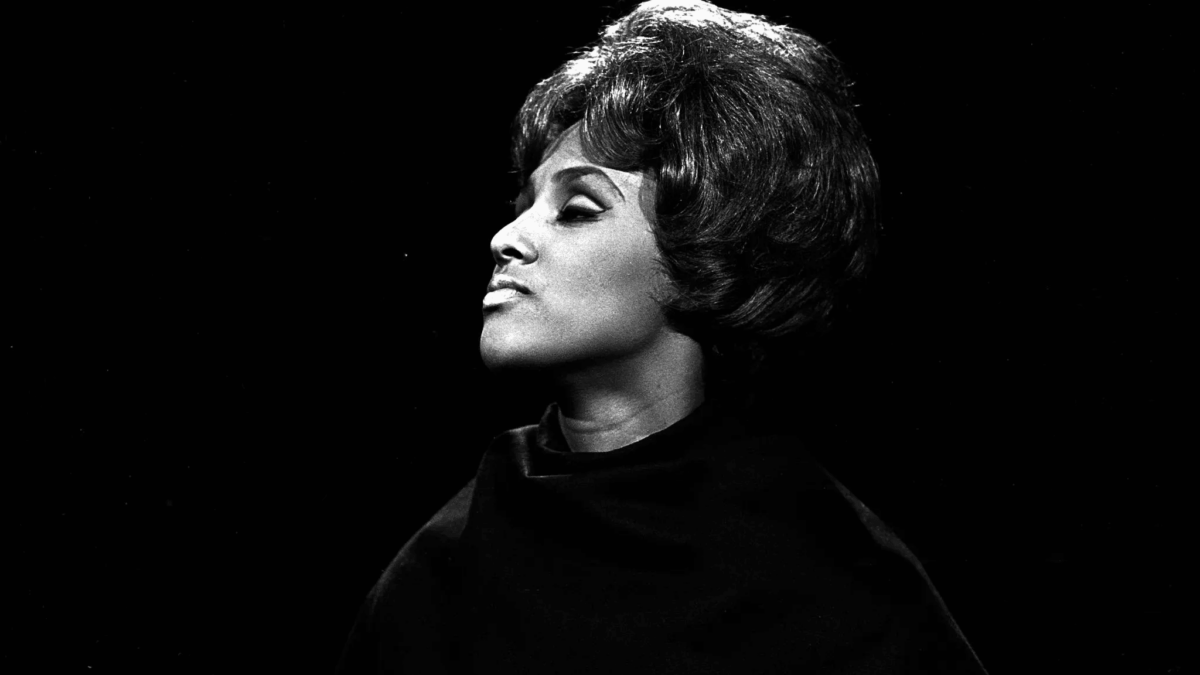
Darlene Love is finally getting the feature-length spotlight treatment that her admirers have long wanted.
Darlene Love: I Know Where I’ve Been, a new documentary directed by Barry Avrich and produced with Taraji P. Henson’s TPH Entertainment, is premiering Sunday night at the Toronto International Film Festival. The film centers fully on Love’s life, voice and career after her story was previously touched on in the 2013 Oscar-winning documentary 20 Feet From Stardom.
The new film arrives as a more expansive portrait of an artist whose voice has been familiar to generations of listeners, even when her name was not always as widely recognized. Love’s renewed fame was sustained in part by her annual performances of “Christmas (Baby Please Come Home)” on David Letterman’s late-night programs, but the documentary also digs into the breadth of songs on which she sang lead or background vocals.
Avrich spent two years on the project, which includes interviews, family material and newly filmed performance sequences. Among the film’s key set pieces are studio performances recorded at Power Station in New York, where Love is backed by a band led by Paul Shaffer. The footage is designed to show Love still commanding the room in her 80s.
“The audience needed to see that this incredible icon… still has the performance chops,” Avrich said of bringing Love into the studio for the film.
Taraji P. Henson joins the story
Henson came aboard after Avrich sent a short sizzle reel outlining the film’s arc. He later screened a rough cut in a private room in New York City with Henson and Love watching together, a moment he described as one of the most memorable experiences across the roughly 70 films he has made.
For Henson, joining the documentary was immediate. She described herself as drawn to stories about “hidden figures” and said she was struck by the gap between how recognizable Love’s voice is and how many people may not know the woman behind it.
“How can we all know her voice and not know who this woman is?” Henson said. “I was compelled to help in any way I could tell this woman’s story.”
Henson also connected Love’s journey to her own experience as a mother working in the industry and said the film fits the mission of her production company: telling stories that inspire. She added that viewers may be surprised by how powerful Love’s voice remains today.
The emotional center of the film, according to those involved, is not only Love’s music but her resilience. Henson recalled sitting beside Love during the rough-cut screening and watching her respond to difficult passages in her life with laughter rather than tears. Love told her that response came from her father, who taught her to “laugh at the devil before the devil can get up in the corner and laugh at you.”
A career of setbacks, survival and comeback
The documentary revisits Love’s career highs and lows, including a period when her professional life stalled so dramatically that she worked as a house cleaner in Beverly Hills. Steven Van Zandt later encouraged her to move to New York and rebuild her career, a turning point that led to a costarring role in the Lethal Weapon films and a starring role on Broadway in Hairspray. The documentary’s title is drawn from a key lyric in the civil rights-themed anthem she performed in that Broadway production.
Love also speaks in the film and in conversation about the faith that has grounded her since the start of her career. She recalled criticism directed at her pastor father by church members who questioned how he could allow his daughter to sing what they called “devil’s music.” According to Love, her father pushed back by saying God created music and asking why those critics were watching her on television if they disapproved.
“I’ve had to always dig down into my spiritual beliefs from the time I started singing ‘Da Doo Ron Ron’ up till today, because that’s the only glue that holds me together,” Love said. The source material notes that “Da Doo Ron Ron” was credited to the Crystals but actually sung by Love.
Love also reflects on the relationships she built while working across the industry, including making records for the Beach Boys and Jan and Dean and spending 10 years as a background singer for Dionne Warwick. She said many of those long-standing connections made it possible to ask people to participate in the documentary.
The voices around Love
Avrich said the film’s interview subjects were chosen carefully to illuminate different chapters of Love’s life rather than simply offer praise. Participants include David Letterman, Dionne Warwick, Cher and Marc Shaiman. Van Zandt is presented as one of the film’s most important commentators, speaking about Love’s vocal technique, her range and the obstacles she faced in the business.
One section features Van Zandt analyzing “River Deep, Mountain High,” comparing Love — who Avrich said was originally slated by Phil Spector to record the song — with Tina Turner. Avrich said that sequence was edited almost note by note.
The documentary also includes a later-life clip of Spector saying that the singers he worked with, including Love, were interchangeable. Henson said she booed during that moment at a screening, while Love responded with her characteristic laugh.
For Love, who was at the podium when 20 Feet From Stardom won the Academy Award for best documentary and sang a cappella during that moment, the new film represents a different kind of recognition: one focused solely on her. She called it time for the acknowledgment Henson has described as giving Love her flowers.
“This film, I think, immortalizes something forever,” Love said.