
Why This Matters
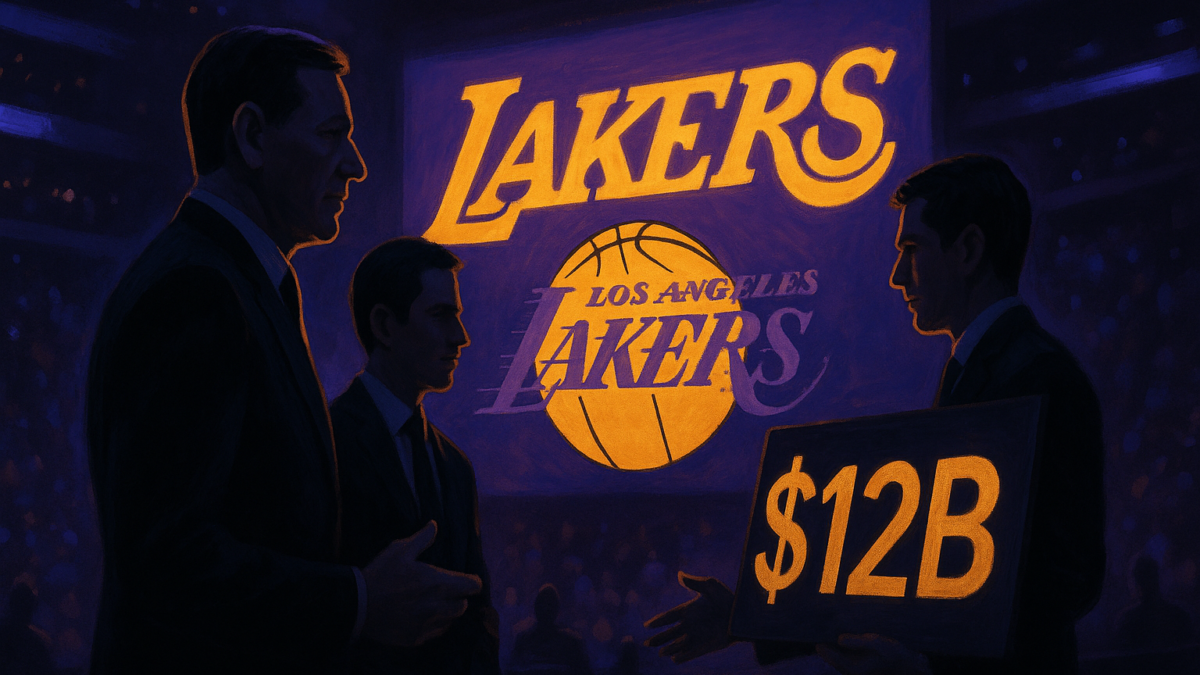
The planned $12 billion transfer of a controlling interest in the Los Angeles Lakers to Bob Iger and Josh Kushner would represent far more than a trophy-asset transaction. It would be a defining moment in the accelerating merger of sports, media, technology and celebrity capital.
Few teams occupy the cultural real estate of the Lakers. The franchise is not merely an NBA club; it is a global entertainment property with deep ties to Hollywood, fashion, music, streaming audiences and international fandom. A change in control at this valuation signals that blue-chip sports teams are increasingly being priced like premium content libraries, not traditional athletic organizations.
The deal also brings two very different but highly consequential figures into the center of one of sports’ most visible brands. Iger, the longtime Walt Disney Co. leader, spent decades shaping the modern entertainment economy through acquisitions, franchise management and global distribution. Kushner, the venture capitalist behind Thrive Capital, represents the Silicon Valley and private-market money that has become increasingly interested in sports as a durable, high-attention asset class.
For the NBA, the valuation is another sign that franchise economics have entered a new era. Media rights, international growth, legalized sports betting, team-controlled content and arena-adjacent real estate have all expanded what ownership groups believe these teams can become. The Lakers, with their history of championships and superstar rosters, sit at the very top of that pyramid.
Hollywood will be watching closely because the Lakers have long functioned as one of Los Angeles’ most reliable meeting points between sports and show business. Courtside at Crypto.com Arena is a visibility platform, a networking room and a cultural signal all at once. New owners with deep experience in media and investment could further professionalize how that platform is monetized across content, partnerships and global fan engagement.
Industry Context
The proposed transaction arrives during a period in which sports assets have become among the most coveted holdings in the entertainment economy. As scripted television faces cost pressure and theatrical box office volatility remains uneven, live sports continue to command real-time attention at scale. That makes elite teams especially valuable to investors who see reliable audiences as increasingly scarce.
Iger’s involvement is particularly notable given Disney’s long relationship with the NBA through ESPN and ABC. During his tenure, Disney leaned heavily into major brands and recurring audience behavior, from Marvel and Star Wars to live sports. The Lakers would fit neatly into that worldview: a globally recognized franchise with built-in narrative, legacy stars, archival value and year-round media relevance.
Kushner’s presence points to a complementary strategy. Venture investors have become more aggressive in identifying sports franchises as platforms for technology, data, direct-to-consumer products and global community building. Teams are no longer valued only on ticket sales, local broadcasts and sponsorships. They are increasingly seen as operating systems for fan identity.
The reported sale also underscores how quickly ownership stakes in iconic franchises can move as valuations climb. Mark Walter, already a major force in sports through his wider investment portfolio, acquired control of the Lakers in a previous transaction less than a year ago. A subsequent sale at this level would illustrate both the scarcity premium attached to the franchise and the appetite among high-net-worth buyers for rare sports properties.
The Lakers’ brand power helps explain the number. The team has decades of championship history, from Magic Johnson and Kareem Abdul-Jabbar to Kobe Bryant, Shaquille O’Neal and LeBron James. It is one of the few NBA franchises with household-name recognition far beyond basketball’s core audience. That kind of awareness is difficult to manufacture and nearly impossible to replicate.
At the same time, the economics of team ownership are changing rapidly. The NBA’s next media cycle, expansion discussions and international strategy are expected to shape franchise values for years. A buyer stepping in now is not simply purchasing today’s revenue but betting on what premium sports content will be worth in a fragmented media landscape where streamers and legacy networks are competing for must-watch programming.
The Lakers also sit inside the larger Los Angeles entertainment ecosystem, where athletes, producers, musicians, executives and brand founders intersect constantly. That proximity creates opportunities beyond basketball operations, including documentaries, branded content, live events, merchandise collaborations and global tours. Under owners with Iger and Kushner’s backgrounds, those opportunities could become even more central to the franchise’s business plan.
What Happens Next?
The immediate next step is expected to be the formal review and approval process, which would include league scrutiny of financing, governance structure and ownership composition. NBA franchise sales of this magnitude are complex, and the league will want clarity on who holds decision-making authority, how the ownership group is capitalized and whether the transaction meets league standards.
For fans, the most pressing question will be whether a change at the top affects the basketball side. The Lakers are judged by championships, not balance sheets, and any new control group will inherit a fan base with little patience for long rebuilds. Ownership will be expected to support competitive payrolls, invest in player development and maintain the franchise’s reputation as a destination for stars.
There will also be scrutiny around the role of existing Lakers leadership and how much continuity remains in place. Transitions involving iconic teams often require careful management of legacy, particularly for an organization so closely associated with the Buss family era and the mythology of Showtime, Kobe and the modern superstar model.
If completed, the transaction could become a benchmark for future sales across the NBA and beyond. Owners of other major-market franchises will use the valuation as a reference point, while investors may see it as confirmation that elite sports brands remain among the safest long-term bets in media.
For Iger and Kushner, the opportunity is clear but demanding: preserve the emotional identity of one of basketball’s most beloved franchises while expanding its commercial reach in a marketplace that increasingly rewards global scale. The Lakers have always been more than a team. Under new control, they may become an even more explicit model for what a 21st-century sports-and-entertainment company can be.