
Why This Matters
Brenda Fricker’s death at 81 marks the loss of one of Ireland’s most quietly formidable screen performers, an actor whose work moved fluidly between prestige drama, television, and a Christmas-season blockbuster that made her instantly recognizable to generations of viewers.
Her agent, Phil Belfield, announced that Fricker died Thursday in her native Ireland. For many filmgoers, she will forever be associated with her Academy Award-winning performance in “My Left Foot,” the 1989 drama that brought international attention to both Fricker and Daniel Day-Lewis. For others, she remains the mysterious and tender-hearted woman surrounded by birds in “Home Alone 2: Lost in New York,” a role that turned a relatively small appearance into one of the film’s most emotionally remembered moments.
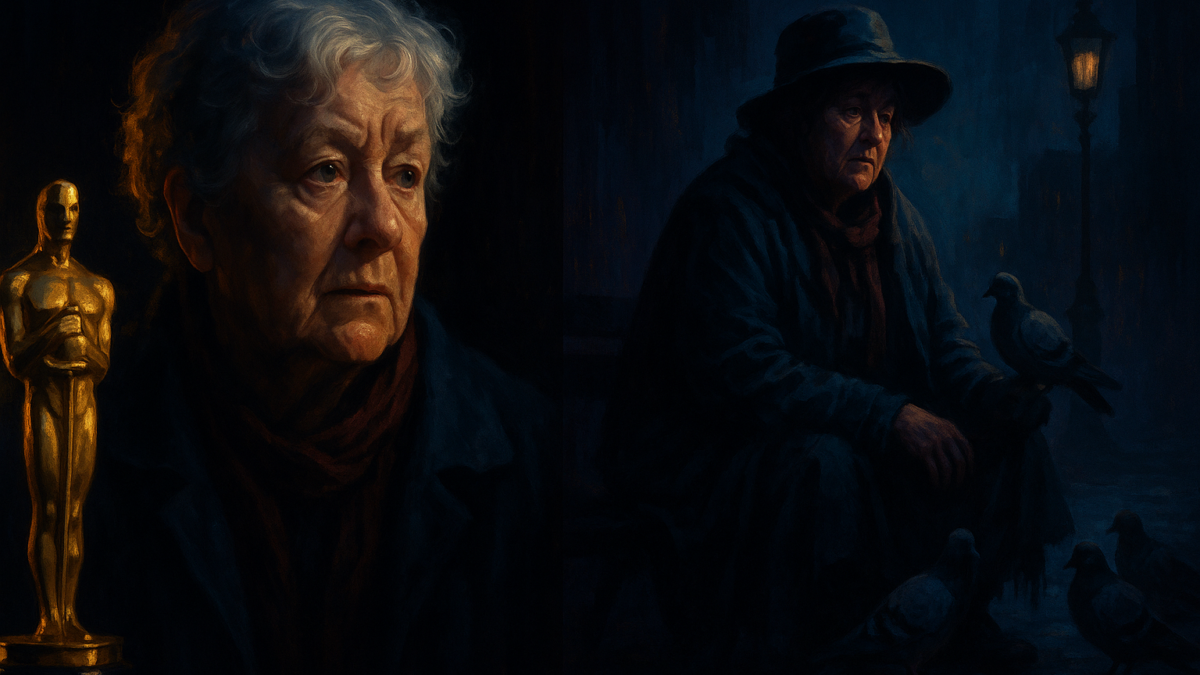
Fricker’s Oscar win in 1990 was a landmark moment. She took home the supporting actress prize for playing Bridget Fagan Brown, the determined mother of Irish writer and artist Christy Brown, in Jim Sheridan’s “My Left Foot.” The role required emotional restraint as much as force, and Fricker gave the film a deeply grounded center opposite Day-Lewis’ transformative lead performance. Her win helped cement the movie’s place as one of the defining Irish screen achievements of its era.
What made Fricker’s career distinctive was not volume or celebrity spectacle, but credibility. She was an actor who could convey worry, humor, grief and resilience without ever seeming to chase attention. Her screen presence was often described in terms of warmth, but that undersells the sharpness and precision she brought to her performances. She specialized in women who had endured, women who knew more than they said, and women whose emotional lives registered in the smallest shifts of expression.
That quality is part of why her “Home Alone 2” role endured. As the Central Park recluse befriended by Macaulay Culkin’s Kevin McCallister, Fricker gave the family comedy a pocket of melancholy and grace. The character, often remembered by audiences as the “pigeon lady,” could have been a broad eccentric. In Fricker’s hands, she became a portrait of isolation, kindness and tentative trust. Decades later, that subplot remains one of the reasons the sequel continues to resonate beyond its slapstick set pieces.
Industry Context
Fricker emerged from a generation of Irish and British-trained performers who built careers through theater, public-service broadcasting and character work before the international market fully opened to them. Long before awards campaigns became global operations, actors like Fricker established reputations through craft, reliability and the ability to elevate supporting parts into essential dramatic architecture.
Her Oscar victory arrived at a significant time for Irish cinema. “My Left Foot” did more than bring prizes; it announced that Irish stories, told with specificity and without sentimentality, could command worldwide attention. The film’s success helped clear a path for later Irish filmmakers and performers who would become regular fixtures at major festivals, awards ceremonies and in Hollywood productions.
Fricker’s career also illustrates the power and complexity of the supporting actor’s place in film history. While leading roles tend to dominate marketing and memory, supporting performances often provide the emotional framework that makes a story believable. Fricker understood that function instinctively. In “My Left Foot,” her work gave Day-Lewis’ explosive performance a human counterweight. In “Home Alone 2,” she added vulnerability to a franchise better known for comic mayhem.
Her screen credits extended across film and television, and she remained a respected figure even when she stepped away from the constant churn of public life. Unlike performers who recalibrate their careers around fame after an Oscar, Fricker’s post-awards path was comparatively understated. That, too, became part of her persona: she seemed less interested in industry mythology than in the work itself.
In recent years, as the entertainment business has reexamined the legacies of character actors, Fricker’s filmography has taken on renewed significance. Streaming access and holiday programming have introduced her to audiences who may not connect the Academy Award winner from “My Left Foot” with the lonely Central Park figure in a beloved studio comedy. That dual recognition speaks to the unusual breadth of her impact: she belonged to serious cinema and popular memory at once.
Her death also comes during a period of increased international attention on Irish talent, from acclaimed filmmakers to a new wave of actors receiving major awards recognition. Fricker helped shape the foundation on which that visibility rests. She proved that Irish performers could bring intensely local authenticity to stories that traveled globally, and she did so without diluting the texture of where she came from.
What Happens Next?
Tributes from colleagues, film institutions and fans are expected to continue in the coming days as the industry reflects on Fricker’s legacy. Given the reach of “My Left Foot” and the enduring seasonal popularity of “Home Alone 2,” remembrances are likely to come from both awards circles and mainstream audiences who encountered her work in very different contexts.
Her passing will likely prompt renewed viewership of “My Left Foot,” a film that remains central to discussions of Irish cinema and performance. It may also bring fresh appreciation for the restraint of her work in “Home Alone 2,” where a few scenes became a lasting emotional touchstone in a franchise built around broad physical comedy.
For Ireland’s acting community, Fricker’s career stands as a reminder that international recognition can come from roles rooted in truth rather than glamour. Her Oscar was historic, but her larger contribution was the dignity and humanity she brought to every frame. As Hollywood and the global film community mark her death, Brenda Fricker leaves behind a body of work defined by compassion, toughness and a rare ability to make even the quietest character unforgettable.