
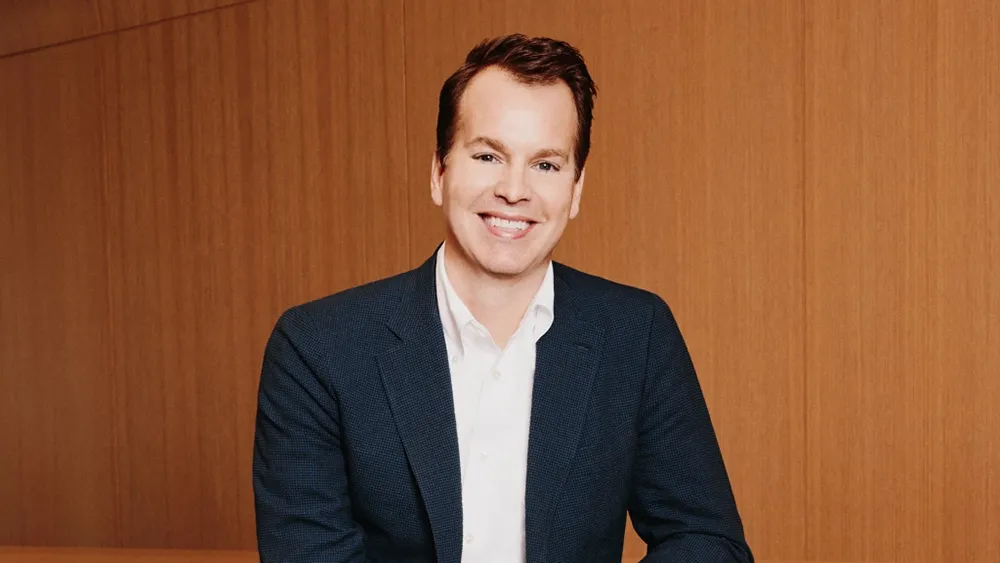
Casey Bloys is poised to take control of a significantly expanded streaming portfolio as Paramount Skydance and Warner Bros. Discovery move toward combining their operations, ending months of speculation over whether the HBO chief or Paramount direct-to-consumer chair Cindy Holland would lead the business.
Holland told colleagues Tuesday that she was leaving Paramount. Her staff was disappointed after seeing her impact on the company over the past year, but her departure did not come as a surprise as momentum increasingly appeared to favor Bloys.
Holland acknowledged the reasoning behind the decision in her farewell memo. “David is optimizing for HBO stability as we move into this next chapter, and I fully support that,” she wrote, referring to combined-company boss David Ellison.
The leadership question had become unavoidable because Ellison has made clear that he eventually wants HBO Max and Paramount+ brought together as a single entity. Neither Bloys nor Holland was expected to report to the other, making a long-term structure with both executives running separate streaming operations increasingly difficult.
Why Bloys emerged as the choice
Bloys, the chairman of HBO and HBO Max content, had indicated that he would not accept a role reporting to anyone other than Ellison. When asked in July whether he would report to another executive, Bloys replied, “I think you probably know the answer to that.”
His responsibilities had already grown well beyond HBO alone, making a return to a narrower role overseeing only the premium brand an apparent step backward. At a minimum, Bloys expected his portfolio in the combined company to include everything he currently oversees at Warner Bros. Discovery.
He also became more openly supportive of the merger during Emmys weekend last month. Bloys told industry figures that uncertainty surrounding the transaction was negatively affecting business and needed to be resolved. At that point, the deal still faced a lawsuit from California Attorney General Rob Bonta and 11 other state attorneys general.
A settlement reached last week between the 12 states and Paramount Skydance created a path forward for the merger, although the judge overseeing the case has not yet ruled on it. Following that development, the broad expectation was that Bloys would remain and that Warner Bros. Discovery global streaming and games CEO and president JB Perrette would also receive a major position in the new company.
Bloys first joined HBO in 2004, has led the brand since 2016 and has overseen HBO Max since 2020. Unconfirmed industry rumors had also linked him to a possible role at Netflix following a reported meeting with co-CEO Ted Sarandos. It remains unclear how realistic that possibility was, but it added to the urgency surrounding clarity over the future leadership of the Paramount-Warner Bros. streaming operation.
Holland’s Paramount+ overhaul
Holland’s exit comes after a consequential period at Paramount. She spent several years in Ellison’s orbit, initially advising Skydance Media on streaming as it acquired Paramount Global. After that transaction closed in August 2025, Ellison selected her to oversee direct-to-consumer operations and help with the pursuit of Warner Bros. Discovery.
Before that, Holland spent 16 years at Netflix, where she helped shape its original-content strategy, followed by a brief stint at Sister.
At Paramount, she inherited a lean Paramount+ operation in need of a rapid overhaul. Holland hired Jane Wiseman as executive vice president and head of originals for the platform, and the team moved to broaden its programming lineup by greenlighting more than 25 new series in a relatively short period.
Ellison was said to have explored keeping Holland in some capacity. However, maintaining two high-level streaming chiefs would have created the prospect of internal competition, uncertainty over where projects should be pitched and distractions during the wider integration. It also would have left two substantial executive salaries at a company carrying approximately $80 billion in debt and facing major cost reductions.
HBO’s position as the likely flagship property of the merged operation ultimately strengthened Bloys’ hand, despite Holland’s work rebuilding Paramount+.
What Happens Next?
HBO Max and Paramount+ are expected to remain separate consumer services in the near future. Both are profitable, and each has distinct revenue streams connected to distribution agreements, making an immediate shutdown or absorption of one platform into the other impractical. A bundle of the two services is considered a more likely first step, while a full organizational combination will take longer.
Holland’s immediate departure has nevertheless left Paramount+ in a period of uncertainty. A team must remain in place to operate the service, but the implications for employees once Bloys assumes oversight are not yet clear. Because the merger has not closed, an announcement detailing Bloys’ authority may not come until next week.
His programming portfolio would expand to include the Taylor Sheridan universe, including “Dutton Ranch,” “Landman,” “Tulsa King” and “Lioness.” It would also cover the upcoming fifth and final season of “Star Trek: Strange New Worlds,” “Dexter: Resurrection,” which returns for Season 2 on Oct. 30, and “MobLand,” recently renewed for a third season.
The next strategic challenge will be deciding how HBO Max and Paramount+ should be programmed while they remain distinct services—and how much overlap should exist between their development and ordering decisions. With both platforms moving under one leadership structure, Bloys will be responsible for shaping two separate brands that are increasingly part of the same streaming family.