
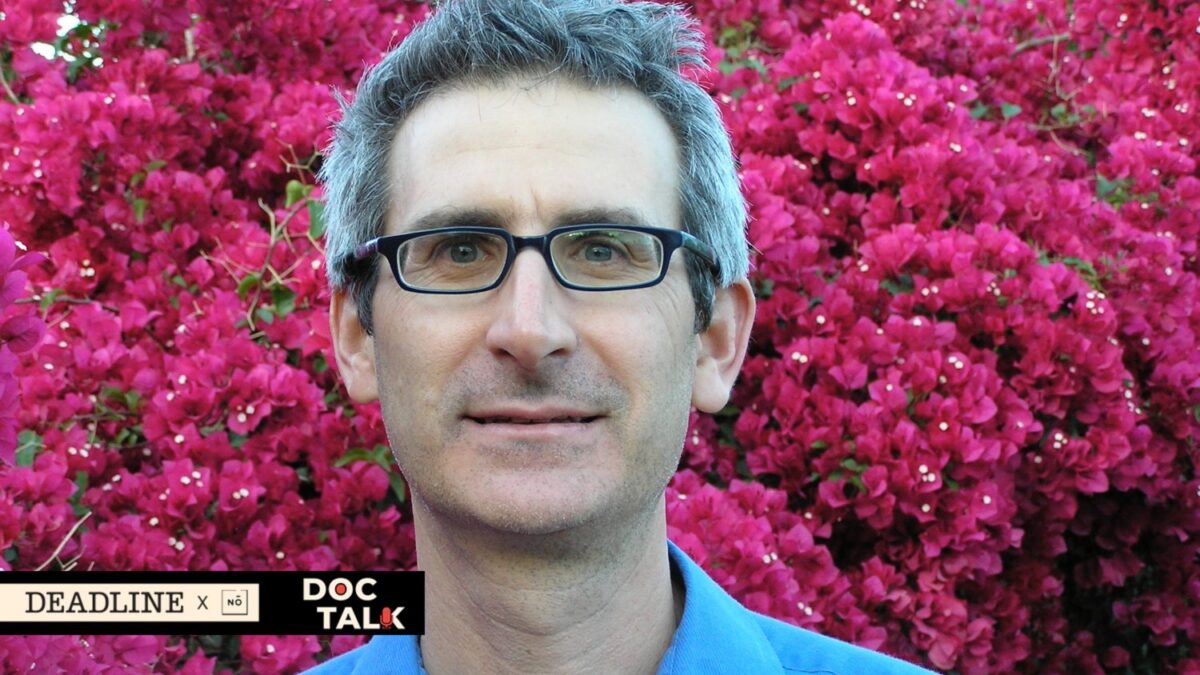
Ken Jacobson is offering a closer look at the Hot Springs Documentary Film Festival’s evolving role in nonfiction cinema as the Academy Awards race approaches its documentary shortlist voting stage.
The Hot Springs Documentary Film Institute executive director appears on the latest episode of Deadline’s Doc Talk podcast, discussing the festival’s history, its programming priorities and the challenges involved in staging the nine-day event. He also shares his perspective on the awards competition ahead of next month’s documentary shortlist voting.
The conversation follows the festival’s 35th edition, which featured world premieres alongside a group of leading Oscar contenders. The lineup included Once Upon a Time in Harlem, NAZA, American Doctor, Closure and To Hold a Mountain, among other nonfiction films.
A Festival With Academy Roots
Based in Hot Springs, Arkansas, HSDFF is described as North America’s longest-running nonfiction film event. Jacobson explains that the festival began through a collaboration with the Motion Picture Academy, with the original purpose of showcasing Oscar-nominated and Oscar-winning films.
Its latest edition revisited that awards-season connection by partnering with Deadline on the festival’s first Documentary Roundtable. The panel brought together filmmakers participating in the awards race, including directors Biljana Tutorov, Poh Si Teng and Michał Marczak, as well as producer Liani Greaves.
Jacobson, who has extensive experience in documentary festival programming, also addresses the balancing act behind the Hot Springs lineup. The festival aims to bring filmmakers from around the world to Arkansas while continuing to give space to work from the South and mid-South.
That combination of international reach and regional representation sits at the center of the event’s programming identity. Jacobson discusses how organizers pursue both goals while confronting the practical demands of mounting a festival that runs for nine days.
A Changed Landscape for the Forum
This year also brought a notable shift for the festival’s Forum. The program returned, but it operated without its usual support from the Corporation for Public Broadcasting after the organization was defunded under pressure from the Trump administration.
The change added another dimension to Jacobson’s discussion of the challenges facing documentary events. Although the Forum continued, it did so without a source of support that had ordinarily been part of its operation.
Hot Springs itself provides a distinctive setting for the festival. The Arkansas city is known as the childhood home of Bill Clinton and as a former Major League Baseball spring-training site during the era of Babe Ruth. It is also associated with its national park, mineral springs and early 20th-century bathhouses built for spa visitors.
Against that backdrop, the documentary festival has developed its own long-running place in the city’s identity, reaching its 35th edition while maintaining the awards-focused connection that shaped its beginnings.
ShowBiz Take
Jacobson’s appearance arrives at a significant point in the documentary calendar. With shortlist voting approaching, the films and filmmakers showcased at Hot Springs are participating in a broader awards conversation that echoes the festival’s original collaboration with the Academy.
The first Documentary Roundtable makes that connection especially clear. At the same time, the festival’s commitment to both international filmmakers and storytellers from the South and mid-South shows that its mission extends beyond awards positioning. Its latest edition brought those priorities together while navigating the loss of the Corporation for Public Broadcasting’s usual Forum support.
For a festival now 35 editions into its run, the story is not simply longevity. It is the continued effort to preserve regional visibility, attract global talent and provide a platform for nonfiction work during a consequential stage of the Oscar race.
What Happens Next?
The documentary awards picture will move into its next phase with shortlist voting scheduled for next month. Jacobson’s full discussion can be heard on the new Doc Talk episode, hosted by Oscar winner John Ridley, whose cited work includes 12 Years a Slave and Shirley, and Deadline senior documentary editor Matt Carey.
The podcast is produced by Deadline and Ridley’s Nō Studios. The episode is available through major podcast services including Spotify, iHeart and Apple.