
FEATURED ENTERTAINER OF THE WEEK
Sebastian Kole
Singer, songwriter and producer
July 11, 2026
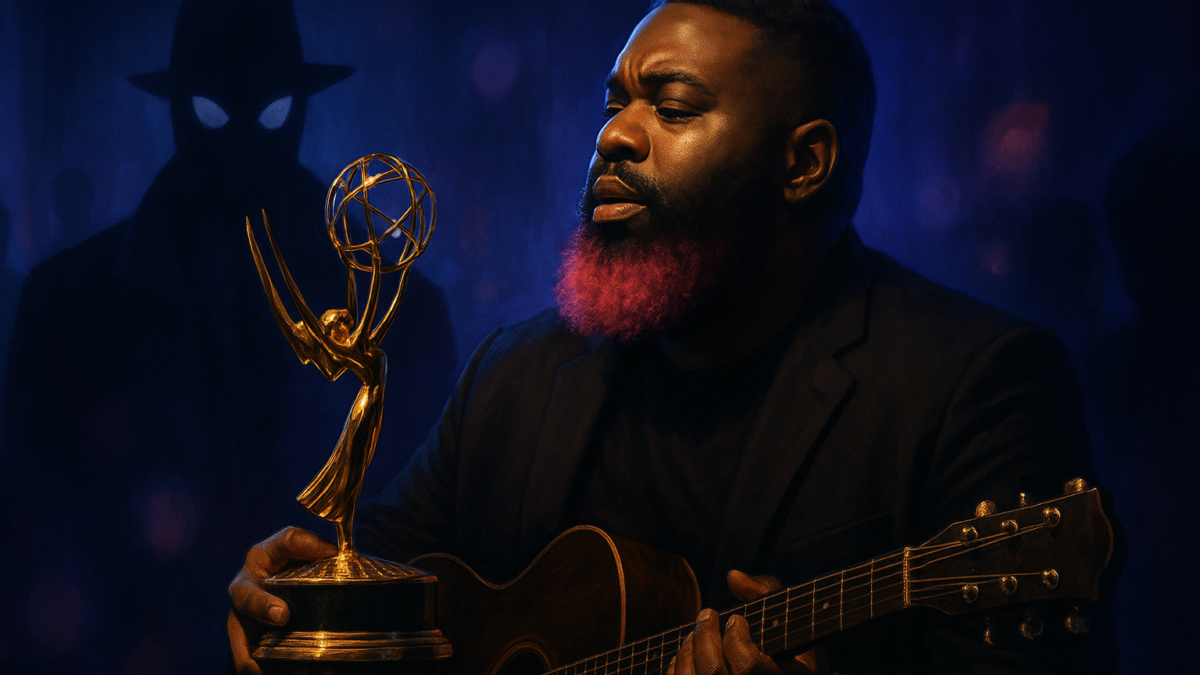
Sebastian Kole Earns Emmy Nomination for ‘Spider Noir’ Song
Sebastian Kole has never needed the center of the stage to change the temperature of a room. For more than a decade, the Birmingham-raised singer and songwriter has worked in that space pop music often hides from view: the writing room, where a stray phrase becomes a hook, a private confession becomes a chorus, and an artist’s career can pivot in three minutes. His name may not be as instantly recognizable as some of the stars who have sung his words, but his fingerprints are on records that helped define a modern strain of emotionally direct pop-soul.
This week, Kole steps into a brighter industry spotlight with a 2026 Emmy nomination for co-writing ‘The Devil You Know,’ featured in Prime Video’s ‘Spider Noir.’ It is the kind of recognition that suits him: not simply a trophy-season headline, but proof of how far contemporary songwriting now travels. A writer who helped give Alessia Cara the anti-party anthem ‘Here’ and the self-acceptance hit ‘Scars to Your Beautiful’ is now part of the musical language of a high-profile superhero series. That is not a random detour. It is a continuation of a career built on mood, character, tension and release.
Kole, also known in recent years as Pynk Beard, belongs to a lineage of singer-songwriters whose real currency is interpretation. He understands how to write for a voice without flattening it, how to make pop sound conversational, and how to let soul music’s church-born intensity survive inside a modern radio frame. The Emmy nomination matters because it widens the lens on his career. It connects the behind-the-scenes craft of hitmaking with the cinematic demands of television, where songs have to do more than sound good; they have to deepen a world.
For a musician from Birmingham, Alabama, whose breakthrough came not through a splashy celebrity rollout but through craft, persistence and uncommon melodic instinct, the moment feels earned. Sebastian Kole is this week’s featured entertainer because the industry has paused to notice something song listeners have been hearing for years: he knows how to write music that leaves a mark.
Quick Facts
| Birthplace | Birmingham, Alabama, U.S. |
| Nationality | American |
| Years Active | 2010s-present |
Early Life
Sebastian Kole’s public story begins in Birmingham, a city with a complicated and musically rich inheritance. Birmingham is not usually treated by the entertainment business as a pop factory, but that is part of what makes Kole’s voice distinctive. His work carries the feel of someone shaped by Southern musical vocabulary rather than manufactured by a coastal trend cycle. Gospel, soul, blues, R&B and the storytelling habits of the South are all part of the cultural atmosphere that produced him.
Kole has spoken publicly about music as something deeply rooted in his upbringing rather than merely a professional choice. That background helps explain why even his most polished pop work often has a lived-in quality. His songs tend to move like conversations. They are rarely just displays of clever structure; they depend on emotional access. That became especially clear when he emerged as one of the writers behind Alessia Cara’s ‘Here,’ a song that did not behave like the usual breakout single. It was moody, interior, skeptical of the party around it, and built around the psychology of wanting to leave a place everyone else seems to be enjoying.
The Birmingham connection also matters because Kole did not arrive in pop as an artist chasing the dominant sound of the moment. He came through as a musician with a strong identity, a writer able to translate Southern soul instincts into contemporary settings. His debut album, ‘SOUP,’ released in 2016, made that ambition explicit. The title has been understood as a nod to Southern Urban Pop, a phrase that neatly captures the mixture in his work: regional roots, modern production, and songwriting that treats feeling as architecture.
Career
The most interesting thing about Sebastian Kole’s career is that his arrival was both quiet and unmistakable. He did not become a household name overnight, but one of the first major hits associated with him announced a different kind of pop sensibility. Alessia Cara’s ‘Here,’ released in 2015, was a breakout single that sounded as if it had wandered in from the corner of a party and decided to tell the truth. Kole was one of its credited writers, and the song’s success helped introduce Cara as an artist with unusual candor.
‘Here’ stood apart because it treated social discomfort as a subject worthy of pop grandeur. It drew on the shadowy atmosphere of Portishead’s ‘Glory Box,’ which itself is built from Isaac Hayes’ ‘Ike’s Rap II,’ and turned that lineage into a 21st-century anthem for the reluctant partygoer. The record reached the upper tier of the Billboard Hot 100 and became one of the defining debut statements of its moment. For Kole, it established him as a writer who could help make vulnerability commercially powerful without sanding down its edges.
The follow-up impact was even broader. Kole co-wrote Cara’s ‘Scars to Your Beautiful,’ a song that became an international hit and a defining empowerment record of the mid-2010s. Where ‘Here’ found drama in alienation, ‘Scars to Your Beautiful’ found it in the pressure to be seen and judged. The song’s message about self-image, beauty standards and acceptance gave it a long life beyond radio. It became the kind of record that listeners used personally, in schools, in campaigns, in conversations about confidence and identity. For a songwriter, that is a rare achievement. Hits can be big and still disappear. ‘Scars to Your Beautiful’ stayed useful.
Kole’s solo work offered a fuller view of the artist behind those credits. His 2016 album ‘SOUP’ was not simply a songwriter’s calling card. It presented him as a vocalist and storyteller interested in fusing pop form with Southern soul texture. Tracks from that period showed an artist with a theatrical streak, a facility for harmony and an ear for the ache inside everyday language. As with many songwriters who also perform, the challenge was not talent but positioning. The industry often knows exactly what to do with a writer of hits and less readily what to do with an artist whose style resists a single radio lane.
That duality has shaped Kole’s career. He can operate inside mainstream pop, but he does not sound as if he belongs only to it. He has been publicly credited in connection with major artists including Alessia Cara and Jennifer Lopez, and his broader catalog reflects the modern songwriter’s reality: a career built through rooms, sessions, placements, collaborations and songs that may carry someone else’s name on the front cover. In entertainment, that can make a creator seem less visible than their influence. Kole’s influence is clearer when one traces the emotional thread across his best-known work. He is drawn to songs that reveal what people are trying not to say.
The Pynk Beard identity adds another layer. It suggests a performer willing to reshape presentation without discarding the craft that first brought him notice. In a music culture where artists are increasingly expected to be brands, producers, writers, performers and visual storytellers all at once, Kole’s evolution makes sense. The name Pynk Beard reads less like a disguise than an expansion: a way to make room for music and imagery that might not fit neatly under the expectations attached to a traditional singer-songwriter profile.
Now comes the Emmy nomination for ‘The Devil You Know,’ connected to Prime Video’s ‘Spider Noir.’ A superhero noir series is a particularly apt arena for Kole’s gifts. Noir stories depend on shadows, temptation, regret and moral pressure. They need music that can suggest danger without announcing it too loudly. A title like ‘The Devil You Know’ already carries the kind of tension Kole has often handled well: the pull between recognition and risk, intimacy and threat. The nomination places him in a different awards conversation, one tied not only to the music industry but to television’s expanding appetite for distinctive songs.
It also illustrates how the business has changed around him. Songs today can break from radio, streaming playlists, social media, film trailers, prestige dramas, superhero universes or a single scene that fans replay. For a writer like Kole, that opens more doors. His skill set is not limited to the verse-chorus mechanics of a pop single. He writes mood. He writes character. He writes the feeling before the confession. That is exactly why his work can travel from a teenager’s outsider anthem to the brooding musical world of ‘Spider Noir.’
Kole’s career has not followed the loudest possible path, but it has followed a durable one. He has built a résumé that connects commercial success, artist development, personal performance and now major television recognition. The Emmy nomination is not a sudden reinvention. It is a new chapter in a story that has always been about translating private feeling into public sound.
Television
- Spider Noir (2026) — Co-writer of the featured song ‘The Devil You Know’
Awards & Honors
- 2026 — Emmy Award (Songwriting category not specified in supplied materials) — Nominated
Business Ventures
- Released music as a recording artist through EP Entertainment and Motown Records during his early solo career.
- Works professionally as a songwriter and producer for recorded music and screen-related placements.
- Uses the Pynk Beard creative identity for music and performance work.
Current Projects
- Co-writer of ‘The Devil You Know,’ featured in Prime Video’s ‘Spider Noir.’
- Continuing recording and songwriting work as Sebastian Kole and Pynk Beard.
- Ongoing collaborations in pop, R&B and screen music.
Interesting Facts
- Sebastian Kole is from Birmingham, Alabama, a background that helps distinguish his Southern soul influence from more coastal pop styles.
- He is one of the credited writers behind Alessia Cara’s ‘Here,’ a breakout single built around the feeling of being uncomfortable at a party.
- ‘Here’ drew from a notable musical lineage through its use of material associated with Portishead’s ‘Glory Box’ and Isaac Hayes’ ‘Ike’s Rap II.’
- Kole also co-wrote ‘Scars to Your Beautiful,’ which became one of Alessia Cara’s signature songs.
- ‘Scars to Your Beautiful’ became more than a radio hit; it was widely embraced as a song about body image, self-worth and beauty standards.
- His 2016 album ‘SOUP’ presented him not only as a songwriter for others but as a solo artist with a defined musical point of view.
- The title ‘SOUP’ has been associated with the phrase Southern Urban Pop, a useful shorthand for his blend of regional roots and contemporary songwriting.
- Kole’s career shows how influential songwriters can shape pop culture even when the public mainly knows the performers who sing the songs.
- He has used the name Pynk Beard, expanding his creative identity beyond the traditional singer-songwriter frame.
- His Emmy nomination connects him to the growing importance of original songs in streaming television and genre storytelling.
- The move from pop hits to a superhero noir series highlights his ability to write atmosphere, not just hooks.
- Kole’s best-known songs share a common thread: they give voice to feelings people often keep private, including social anxiety and insecurity.
Why ShowBiz Selected This Entertainer
Sebastian Kole is featured this week because his 2026 Emmy nomination for co-writing ‘The Devil You Know’ marks a major new awards milestone in a career often defined by behind-the-scenes impact. The nomination, tied to Prime Video’s ‘Spider Noir,’ puts him in the center of a television conversation after years of shaping major pop records from the songwriting room.
The timing is meaningful because Kole’s career has always been about emotional architecture. ‘Here’ made alienation sound cinematic. ‘Scars to Your Beautiful’ turned a message of self-acceptance into a global pop statement. ‘The Devil You Know’ now extends that instinct into a noir-superhero setting, where a song has to serve character, tone and story as much as melody.
He stands out this week not merely because he received an Emmy nomination, but because the nomination clarifies the range of his craft. Kole is not just a writer of hits; he is a writer of mood, identity and dramatic pressure. In an entertainment landscape where music moves between albums, streaming series, trailers and fandoms, that versatility is increasingly valuable. His latest recognition invites a wider audience to look back at a career that has been hiding in plain hearing.
Watch Next
- Listen to Alessia Cara’s ‘Here’ to hear one of Kole’s most important early songwriting breakthroughs.
- Listen to Alessia Cara’s ‘Scars to Your Beautiful’ for the pop anthem that broadened his cultural reach.
- Listen to Sebastian Kole’s album ‘SOUP’ for his own voice as a recording artist.
- Watch Prime Video’s ‘Spider Noir’ for the Emmy-nominated song ‘The Devil You Know.’
- Explore Kole’s music released under the Pynk Beard name.