
FEATURED ENTERTAINER OF THE WEEK
Madonna
Pop star
July 15, 2026
Madonna’s New No. 1 Is a Reminder That Pop’s Great Disruptor Still Knows How to Command the Room
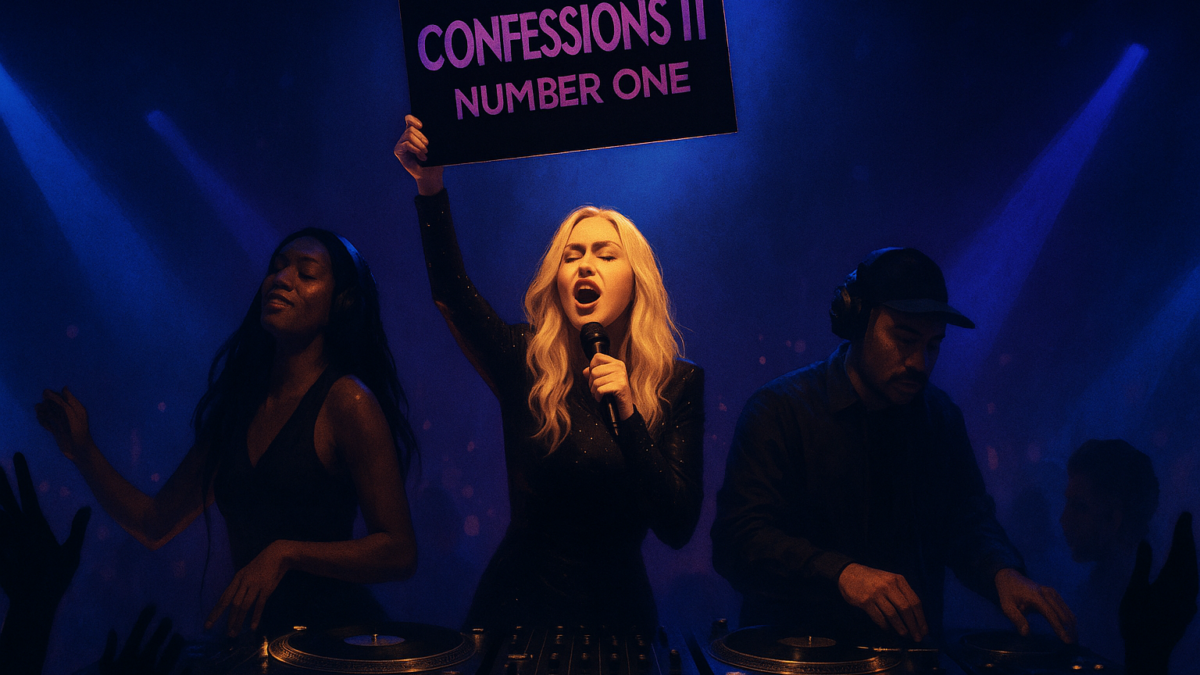
Madonna has spent more than four decades proving that pop longevity is not a matter of staying the same. It is the art of knowing when to detonate the old image and step through the smoke in a new one. This week, she has another reason to celebrate: Confessions II debuted at No. 1 in the United States and Canada, giving Madonna her 10th No. 1 album on the Billboard 200. For most artists, a chart-topping album this deep into a career would be a victory lap. For Madonna, it feels like part of a larger pattern: she has repeatedly turned the dance floor into a testing ground for identity, desire, technology, religion, fame and control. The achievement also places the spotlight back on one of the most consequential careers in modern entertainment. Madonna did not simply become a successful pop singer. She changed what a pop singer could be: auteur, provocateur, businesswoman, video artist, touring architect, fashion catalyst, tabloid combatant, actor, director, mother and cultural lightning rod. Her history is not a straight climb. It is a series of confrontations, reinventions and recoveries, from early club records in downtown New York to global stadium spectacles, from moral panic to museum-piece influence. A new No. 1 matters because Madonna’s career has always been about more than the number. It is about who gets to set the terms of pop culture, and how long a woman is allowed to keep setting them.
Quick Facts
| Born | August 16, 1958 |
| Birthplace | Bay City, Michigan, United States |
| Nationality | American |
| Years Active | 1979-present |
| Residence | Publicly associated with New York City; she has also lived in London, Los Angeles and Lisbon |
| Spouse | Sean Penn, 1985-1989; Guy Ritchie, 2000-2008 |
| Children | Six: Lourdes Leon, Rocco Ritchie, David Banda, Mercy James, Estere Ciccone and Stella Ciccone |
Early Life
Madonna Louise Ciccone grew up in a large Italian-American and French-Canadian Catholic family in Michigan, an upbringing that would later become one of the most visible sources of tension and inspiration in her work. Her mother, also named Madonna, died of breast cancer when Madonna was five, a loss the singer has often described as formative. It left her with grief, discipline, defiance and an unusually early awareness of the fragility of domestic life. Those forces run through much of her art, whether in the sacred imagery of Like a Prayer, the self-protective armor of her public persona, or the recurring theme that femininity can be both devotional and dangerous. As a student, she was bright, competitive and restless. She studied dance, earned a scholarship to the University of Michigan, and trained under Christopher Flynn, a mentor who encouraged her ambition and introduced her to a wider artistic world. In 1978, she left Michigan for New York City with little money and the kind of confidence that can look irrational until it works. She took dance classes, worked low-paying jobs, performed with modern dance companies and moved through the downtown club scene at a moment when punk, disco, hip-hop, new wave and performance art were colliding. Before she was a superstar, Madonna was a student of rooms: how people watched, how DJs controlled bodies, how style could announce a point of view before a word was sung. That education would prove as important as any formal training.
Family
Parents
- Madonna Louise Fortin Ciccone, her mother, who died in 1963
- Silvio Anthony Ciccone, known as Tony, her father
- Joan Gustafson Ciccone, her stepmother
Siblings
- Anthony Ciccone
- Martin Ciccone
- Paula Ciccone
- Christopher Ciccone
- Melanie Ciccone
- Mario Ciccone
- Jennifer Ciccone
Career
Madonna’s first act was built on movement. In New York, she danced, played drums and guitar, and sang with bands including the Breakfast Club and Emmy before finding her way into the club-record world. Her early singles, including Everybody and Burning Up, did not introduce a conventionally polished diva. They introduced a voice with attitude, rhythm and intent. She understood the club not as a niche but as a launchpad, and her 1983 debut album Madonna helped turn downtown dance energy into mainstream pop language. Then came the acceleration. Like a Virgin, released in 1984, made her a global star, but its impact cannot be measured by sales alone. The bridal performance at the first MTV Video Music Awards, the lace, crucifixes, rubber bracelets and visible self-possession created a new template for pop femininity. Madonna was not asking to be adored politely. She was making spectacle out of contradiction: innocence and sexuality, Catholic symbols and club heat, vulnerability and command. By the mid-1980s, she had become a style economy of her own. True Blue broadened her reach with Papa Don’t Preach, Open Your Heart and Live to Tell, while Desperately Seeking Susan proved that her screen presence could carry the energy of the moment, even if her film career would later become one of the most uneven chapters in her public life. The late 1980s and early 1990s brought the first great test of Madonna’s power. Like a Prayer fused gospel, rock, confession and religious imagery into one of her defining artistic statements. The video’s burning crosses and saintly eroticism triggered backlash, and Pepsi pulled a major commercial campaign tied to the song. The controversy could have diminished a less prepared artist. For Madonna, it clarified the stakes. She had learned that outrage could be costly, but also that cultural control often belongs to the person willing to absorb the heat. The Blond Ambition World Tour that followed helped redefine the modern pop concert: narrative-driven, choreographed, theatrical, sexually frank and visually precise. Its influence can be seen in the arena shows of nearly every major pop performer who followed. The 1990 documentary Truth or Dare then transformed backstage access into a genre of its own, offering a carefully edited but unusually intimate portrait of fame, ego, labor and chosen family. Madonna’s most controversial era arrived with Erotica and her Sex book in 1992. The project pushed sexual authorship to a degree that unsettled many critics and fans, especially because it arrived from a woman insisting on authorship rather than availability. The backlash was real. Radio cooled. Some reviewers dismissed the work as provocation without substance. Yet time has been unusually kind to that period. Erotica is now frequently discussed as a bold, house-influenced record about desire, AIDS-era anxiety, shame, fantasy and power, while Sex remains one of the most audacious celebrity publishing projects ever attempted. Madonna’s willingness to overreach became part of her mythology. She sometimes miscalculated, but she rarely retreated into safety. Evita marked another recalibration. Cast as Eva Perón in Alan Parker’s 1996 film adaptation, Madonna fought for a role many doubted she could handle. She trained her voice, approached the part with unusual seriousness, and won the Golden Globe for Best Actress in a Motion Picture, Musical or Comedy. The award mattered because it briefly changed the conversation around her acting. More importantly, Evita led into one of her richest musical transformations. Ray of Light, released in 1998 after the birth of her daughter Lourdes, paired spiritual searching with electronic production from William Orbit. It was not a nostalgia move; it was a future-facing reinvention by an artist already old enough, by pop’s unforgiving standards, to be underestimated. The album won multiple Grammys and brought Madonna some of the strongest reviews of her career. Its title track, Frozen and The Power of Good-Bye revealed an artist less interested in domination than transcendence, though still fully in command. The 2000s showed her shifting again. Music, made with French producer Mirwais, blended electro-folk, club minimalism and cowboy imagery. American Life was more divisive, arriving in 2003 with a critique of fame, consumption and politics that the public received unevenly, especially during the early Iraq War climate. Then came Confessions on a Dance Floor in 2005, a seamless return to disco propulsion and one of her most beloved late-career eras. Hung Up, built around an ABBA sample, placed her back at the center of global dance-pop, while the Confessions Tour reaffirmed her reputation as one of pop’s most exacting live performers. Her later albums, including Hard Candy, MDNA, Rebel Heart and Madame X, found her experimenting with hip-hop, EDM, Latin pop, theater and character work, sometimes to mixed critical response. But even her less universally embraced projects tend to contain ideas that later reappear in the mainstream. Madonna has often moved faster than public consensus, which means parts of her catalog can sound more coherent with distance. Her Celebration Tour, launched after a serious health scare delayed its start, became a living archive of her influence: a career-spanning production that treated her songs not as museum items but as chapters in a larger argument about survival, desire and self-invention. Confessions II arriving at No. 1 now connects directly to that history. Madonna’s relationship with club music has never been decorative. Dance music is where she first learned power, where she tested persona, and where she has repeatedly returned when she wanted to reset the conversation. A 10th Billboard 200 No. 1 is not simply a statistic. It is evidence that the artist who helped make pop a visual, physical and conceptual arena can still draw a crowd into her world.
Television
- American Bandstand (1984) — Musical guest
- MTV Video Music Awards (1984, 1995, 2003 and later appearances) — Performer and honoree
- Saturday Night Live (1985, 1993, 2009) — Host, performer and cameo guest
- Will & Grace (2003) — Liz
- The Marriage Ref (2010) — Panelist
- The MDNA Tour (2013) — Performer
- Madame X (2021) — Performer and creative force
Filmography
- Desperately Seeking Susan (1985) — Susan
- Shanghai Surprise (1986) — Gloria Tatlock
- Who’s That Girl (1987) — Nikki Finn
- Dick Tracy (1990) — Breathless Mahoney
- Madonna: Truth or Dare (1991) — Herself
- A League of Their Own (1992) — Mae Mordabito
- Body of Evidence (1993) — Rebecca Carlson
- Evita (1996) — Eva Perón
- The Next Best Thing (2000) — Abbie Reynolds
- Swept Away (2002) — Amber Leighton
- Die Another Day (2002) — Verity
- Filth and Wisdom (2008) — Director and co-writer
- W.E. (2011) — Director and co-writer
Awards & Honors
- 1986 — MTV Video Music Awards (Video Vanguard Award) — Won
- 1992 — Grammy Awards (Best Music Video, Long Form) — Won
- 1997 — Golden Globe Awards (Best Actress in a Motion Picture, Musical or Comedy) — Won
- 1999 — Grammy Awards (Best Pop Album) — Won
- 1999 — Grammy Awards (Best Dance Recording) — Won
- 1999 — Grammy Awards (Best Short Form Music Video) — Won
- 2000 — Grammy Awards (Best Song Written for a Motion Picture, Television or Other Visual Media) — Won
- 2007 — Grammy Awards (Best Long Form Music Video) — Won
- 2008 — Rock and Roll Hall of Fame (Performer) — Inducted
- 2012 — Golden Globe Awards (Best Original Song) — Won
- 2016 — Billboard Women in Music (Woman of the Year) — Won
Business Ventures
- Founded Maverick in 1992 with Time Warner; the entertainment company included Maverick Records, which released music by artists including Alanis Morissette.
- Created and controlled a major publishing and merchandising ecosystem around her music, tours and image during the MTV era.
- Released the Sex book in 1992 through Warner Books as a high-profile multimedia publishing project tied to the Erotica era.
- Co-founded the Hard Candy Fitness gym brand, which opened locations internationally.
- Launched MDNA Skin, a skincare line developed with Japanese beauty company MTG.
- Has worked as a producer and executive producer across music videos, documentaries, concert films and feature projects.
Philanthropy
- Founded Raising Malawi in 2006 to support vulnerable children and community programs in Malawi.
- Supported the Mercy James Centre for Paediatric Surgery and Intensive Care in Blantyre, Malawi, which opened in 2017.
- Participated in major benefit events and campaigns connected to HIV/AIDS awareness and LGBTQ+ advocacy.
- Has long been associated with advocacy for LGBTQ+ communities, a relationship rooted in her early New York career and visible throughout her tours, videos and public statements.
- Has supported disaster relief, education and children’s health initiatives through benefit performances and charitable donations.
Current Projects
- Celebrating Confessions II debuting at No. 1 in the United States and Canada.
- Continuing to build on the renewed attention generated by her career-spanning Celebration Tour.
- Developing screen and archival projects connected to her life and catalog, including a long-discussed biographical film project.
Interesting Facts
- Before her music career took off, Madonna moved to New York to pursue dance, not pop stardom.
- She played drums and guitar in bands before becoming known primarily as a singer.
- Her first major label single, Everybody, was embraced by dance clubs before many listeners knew what she looked like.
- Her 1984 MTV Video Music Awards performance of Like a Virgin helped make the VMAs a must-watch pop event.
- The Pepsi campaign tied to Like a Prayer was pulled after controversy over the song’s video, but the single became one of her signature works.
- The Blond Ambition World Tour influenced the structure of modern pop arena concerts, blending theater, choreography, fashion and narrative.
- Truth or Dare helped popularize the backstage pop documentary as a commercial form.
- Erotica was considered scandalous in 1992, but its reputation has grown among critics who see it as one of her most daring albums.
- She trained extensively for Evita, a role that required a different vocal discipline from her pop work.
- Ray of Light arrived after motherhood and spiritual study, giving her one of the most acclaimed reinventions of her career.
- Hung Up used a sample from ABBA’s Gimme! Gimme! Gimme! (A Man After Midnight), a rare approval from the Swedish group’s catalog at the time.
- She has worked with an unusually wide range of collaborators, including Nile Rodgers, Stephen Bray, Patrick Leonard, William Orbit, Mirwais, Stuart Price, Babyface and Shep Pettibone.
- Her children have connections to the arts, including Lourdes Leon’s work in fashion, modeling and music.
- Madonna was inducted into the Rock and Roll Hall of Fame in her first year of eligibility.
- Her career has repeatedly turned criticism into fuel, with several once-controversial periods later reassessed as influential.
Why ShowBiz Selected This Entertainer
Madonna is ShowBiz.com’s Featured Entertainer this week because Confessions II debuted at No. 1 in the United States and Canada, marking her 10th No. 1 album on the Billboard 200. The milestone is not just another chart entry; it reconnects the present-day Madonna with the dance-floor instinct that has powered many of her most important reinventions. From Everybody and Vogue to Ray of Light, Music, Hung Up and the Confessions era, she has used club culture as both a sound and a philosophy: motion as liberation, rhythm as identity, reinvention as survival. A 10th No. 1 album confirms that her audience is not only remembering the past. It is still showing up for the next version.
Watch Next
- Madonna: Truth or Dare
- Desperately Seeking Susan
- A League of Their Own
- Evita
- The Confessions Tour
- Madame X
- Dick Tracy
- W.E.