
FEATURED ENTERTAINER OF THE WEEK
Jay-Z
Rapper
July 12, 2026
Jay-Z Sparks New Album Buzz at Yankee Stadium
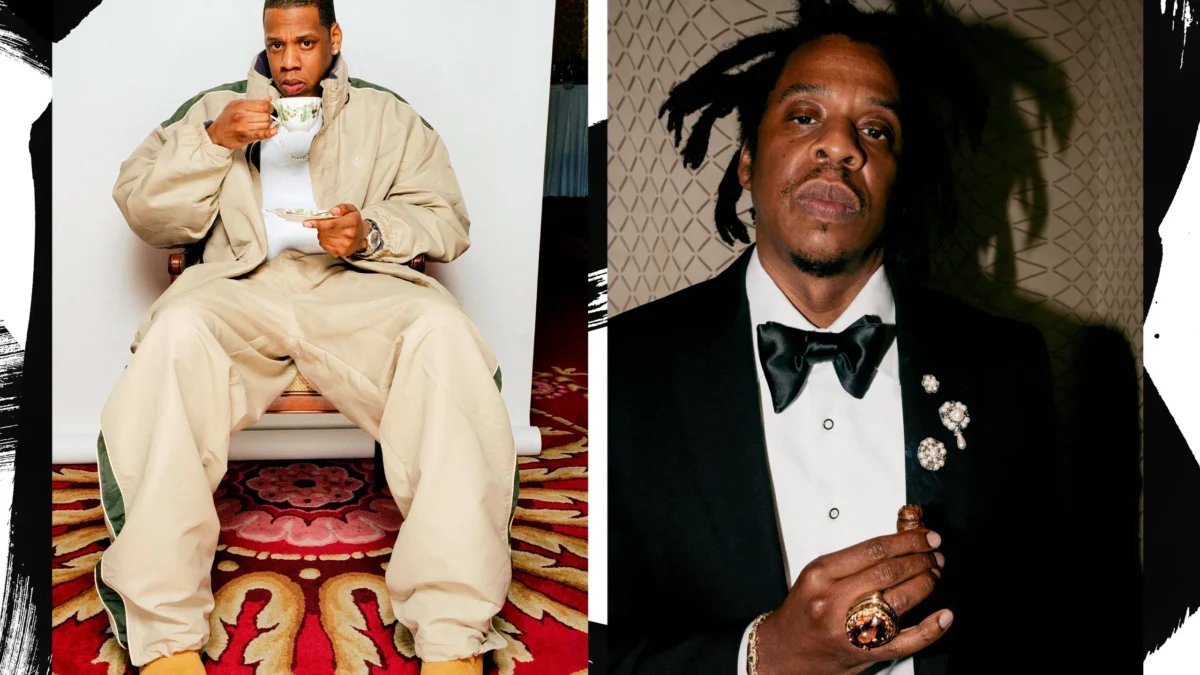
Jay-Z has always understood that silence can be louder than a press release. This week at Yankee Stadium, a concert-opening image did what a traditional announcement rarely can: it turned a grooming moment into a music-industry guessing game. Beyoncé shaving his head on camera during the launch of a three-night run instantly sent fans into interpretation mode, with many wondering whether the reset was cosmetic, symbolic or the first breadcrumb toward a new Jay-Z album. That reaction says as much about Jay-Z as the moment itself. Few artists have trained audiences to read their smallest public gestures as part of a larger strategy. For more than three decades, he has operated like a rapper, executive, brand architect and cultural chess player all at once. A haircut at a stadium matters because Jay-Z has made reinvention one of his most reliable languages. He turned street-corner mythology into boardroom authority, made retirement a marketing device, used an album about marital repair to deepen his public image, and repeatedly proved that hip-hop could be both art form and institutional power. The Yankee Stadium buzz does not exist apart from that career; it belongs to it. Whether or not new music arrives, the fact that one visual could ignite the conversation is the week’s reminder of Jay-Z’s unusual position. He is not merely a legacy artist returning to the stage. He is one of the few entertainers whose absence, appearance, haircut, verse or business move can still rearrange the temperature of pop culture.
Quick Facts
| Born | December 4, 1969 |
| Birthplace | Brooklyn, New York City, New York, U.S. |
| Nationality | American |
| Years Active | 1986-present |
| Residence | Los Angeles area and New York City, both publicly associated with his family and business life |
| Spouse | Beyoncé Knowles-Carter, married in 2008 |
| Children | Three: Blue Ivy Carter, Rumi Carter and Sir Carter |
Early Life
Before he became Jay-Z, Shawn Corey Carter was a Brooklyn kid shaped by the architecture and pressure of Marcy Houses. He has spoken often enough about his childhood for its outlines to be clear: a crowded public-housing environment, a mother raising children under difficult circumstances, and a neighborhood economy that offered too few legitimate routes out. His father, Adnis Reeves, left the family when Carter was young, a rupture Jay-Z later returned to in his music with unusual restraint and detail. The absence did not simply become a biographical fact; it became one of the emotional engines of his writing. He attended several schools, including George Westinghouse Career and Technical Education High School in Brooklyn, whose alumni also include future rap figures The Notorious B.I.G. and Busta Rhymes. The proximity is almost too neat, but it captures something real about New York hip-hop in that era: talent was not emerging from a single pipeline but from overlapping blocks, schools, ciphers and local reputations. Carter began rapping as Jazzy, a nickname that evolved into Jay-Z, partly in tribute to his early mentor Jaz-O and partly as a nod to the J/Z subway lines near his Brooklyn roots. What made him distinct early on was not just speed or cleverness, although he had both. It was composure. Even on his first major recordings, his voice carried the confidence of someone who had already negotiated several lives before entering a studio.
Family
Parents
- Gloria Carter, his mother, who later co-founded the Shawn Carter Foundation with him
- Adnis Reeves, his father, whose absence and later reconciliation were addressed in Jay-Z’s music
Siblings
- Eric Carter
- Andrea Carter
- Michelle Carter
Career
Jay-Z’s career began with a problem that later became central to his legend: the industry did not immediately know what to do with him. He was not a teenage novelty, not a pop-ready caricature and not easily separated from the adult realities he rapped about. After appearances with Jaz-O and a growing underground reputation, he co-founded Roc-A-Fella Records in the mid-1990s with Damon Dash and Kareem Burke. That decision was not a footnote. It was the first major proof of a pattern that would define him: when the gate did not open, he built a different entrance. His 1996 debut album, Reasonable Doubt, was not a blockbuster on arrival, but it became one of hip-hop’s great slow-burn documents. The record’s power came from its moral temperature. Jay-Z did not present hustling as cartoon triumph; he wrote it as ambition mixed with paranoia, calculation, regret and the desire to escape. Songs such as Can’t Knock the Hustle, Dead Presidents II and D’Evils gave listeners a character who was both narrator and defendant. Over time, Reasonable Doubt became the album against which much of his later work would be measured. The commercial breakthrough came with Vol. 2… Hard Knock Life in 1998. Built around the unlikely use of a sample from the musical Annie on Hard Knock Life, the album made Jay-Z unavoidable. It also delivered his first Grammy win for Best Rap Album, although he famously did not attend the ceremony, part of a boycott tied to the Grammys’ treatment of DMX. The moment mattered because it placed him in a complicated position he would occupy for years: celebrated by institutions while still skeptical of them. The early 2000s brought both dominance and danger. The Blueprint, released on September 11, 2001, became a defining rap album despite arriving on one of the most traumatic days in American history. Its soul-sample production, much of it from Kanye West, Just Blaze and Bink, gave Jay-Z a warmer canvas for some of his sharpest writing. It also contained Takeover, his famous broadside in the feud with Nas, a rivalry that helped define an era of New York rap. The Black Album in 2003 was marketed as a farewell, but Jay-Z’s version of retirement was never disappearance. It was theater, reflection and leverage. The documentary and concert film Fade to Black captured the sense that he knew the myth needed staging. His return with Kingdom Come in 2006 was commercially strong but critically mixed, and that stumble is important. It showed the risk of returning to a genre that had continued moving without him. He answered the criticism more convincingly with American Gangster in 2007, an album inspired by the Ridley Scott film but rooted in his own storytelling strengths. The next phase widened the frame. He became president and CEO of Def Jam Recordings, helping shape a major label from inside the system. He launched Roc Nation in 2008, building a company that would become a home for management, music publishing, touring, sports and production. Musically, he kept finding ways to make his own veteran status useful. The Blueprint 3 produced Empire State of Mind with Alicia Keys, a civic anthem that became inseparable from New York sports celebrations, political rallies and tourist imagination. Watch the Throne, his 2011 collaborative album with Kanye West, turned luxury rap into a touring spectacle and captured two artists at different points of imperial confidence. Magna Carta Holy Grail in 2013 was less universally praised, but its rollout through a Samsung partnership became a revealing Jay-Z maneuver: the album was not just music, it was a distribution event. Then came 4:44 in 2017, one of the most consequential late-career albums in modern rap. Where earlier Jay-Z albums often prized control, 4:44 made vulnerability the subject. He rapped about marriage, infidelity, therapy, Black ownership, family legacy, financial literacy and his mother Gloria Carter coming out as a lesbian on Smile. The album reframed him for a generation that had known him as a mogul before they fully understood him as a writer. It also created a public dialogue with Beyoncé’s Lemonade, not by reducing either work to celebrity confession, but by allowing two artists at the center of pop culture to turn private fracture into ambitious music. That is why this week’s Yankee Stadium speculation travels so quickly. Jay-Z has not released a solo studio album since 4:44. In the years since, he has remained visible through guest verses, business moves, philanthropy, Roc Nation’s partnership with the NFL on entertainment and social justice initiatives, and public appearances alongside Beyoncé. The longer the gap grows, the more any signal feels amplified. A head shave on camera could be nothing more than a playful moment between spouses. In Jay-Z’s world, it is also a reminder that his audience has been conditioned to expect meaning in the margins.
Television
- Saturday Night Live (2000, 2002, 2010, 2017) — Musical guest
- MTV Unplugged (2001) — Performer
- The Michael Jackson Number Ones television special (2003) — Performer
- The Oprah Winfrey Show (2010) — Guest
- Beyoncé and Jay-Z: On the Run (2014) — Performer
- My Next Guest Needs No Introduction with David Letterman (2018) — Guest
- Rest in Power: The Trayvon Martin Story (2018) — Executive producer
- Super Bowl LVI Halftime Show (2022) — Producer through Roc Nation’s NFL entertainment partnership
Filmography
- Streets Is Watching (1998) — Actor, writer and executive producer
- Backstage (2000) — Himself
- State Property (2002) — Executive producer and actor
- Fade to Black (2004) — Himself and producer
- The Great Gatsby (2013) — Executive producer of soundtrack
- Annie (2014) — Producer
- Top Five (2014) — Producer
- The Harder They Fall (2021) — Producer and songwriter
- The Book of Clarence (2023) — Producer and music contributor
Awards & Honors
- 1999 — Grammy Awards (Best Rap Album) — Won
- 2004 — Grammy Awards (Best R&B Song) — Won
- 2004 — Grammy Awards (Best Rap/Sung Collaboration) — Won
- 2009 — Grammy Awards (Best Rap Performance by a Duo or Group) — Won
- 2010 — Grammy Awards (Best Rap/Sung Collaboration) — Won
- 2010 — Grammy Awards (Best Rap Song) — Won
- 2010 — Grammy Awards (Best Rap Solo Performance) — Won
- 2012 — Grammy Awards (Best Rap Performance) — Won
- 2013 — Grammy Awards (Best Rap Performance) — Won
- 2013 — Grammy Awards (Best Rap Song) — Won
- 2013 — Grammy Awards (Best Rap/Sung Collaboration) — Won
- 2014 — Grammy Awards (Best Rap/Sung Collaboration) — Won
- 2017 — Songwriters Hall of Fame (Induction) — Won
- 2018 — Grammy Awards (Album of the Year) — Nominated
- 2018 — Grammy Awards (Record of the Year) — Nominated
- 2018 — Grammy Awards (Song of the Year) — Nominated
- 2021 — Rock and Roll Hall of Fame (Performer) — Inducted
- 2024 — Grammy Awards (Dr. Dre Global Impact Award) — Won
Business Ventures
- Roc-A-Fella Records, the independent label he co-founded with Damon Dash and Kareem Burke.
- Rocawear, the apparel brand co-founded in 1999 and later sold to Iconix Brand Group.
- The 40/40 Club, a sports-bar and lounge brand associated with his early-2000s business expansion.
- Roc Nation, founded in 2008 as an entertainment company spanning music, management, touring, publishing, film, television and sports.
- Roc Nation Sports, launched in 2013 to represent athletes and extend the Roc Nation brand beyond music.
- Tidal, the streaming service he acquired with other artist-owners in 2015; a majority stake was later sold to Square, now Block.
- Armand de Brignac Champagne, widely known as Ace of Spades; LVMH acquired a 50 percent stake in 2021.
- D’Ussé Cognac, a brand partnership with Bacardi that became the subject of a later buyout agreement.
- Marcy Venture Partners, an investment firm co-founded by Jay-Z, Jay Brown and Larry Marcus.
- Made in America Festival, the Philadelphia music festival launched by Jay-Z and Roc Nation.
- Monogram, a cannabis brand launched in connection with The Parent Company.
Philanthropy
- Co-founded the Shawn Carter Foundation with his mother, Gloria Carter, to provide scholarships, college preparation and educational support to students facing socio-economic barriers.
- Co-founded REFORM Alliance with Meek Mill, Michael Rubin and others to advocate for probation and parole reform.
- Through Team Roc, supported legal and social-justice advocacy around policing, incarceration and civil-rights issues.
- Partnered with the United Nations in 2006 on a Water for Life initiative that brought attention to global water access issues.
- Supported disaster-relief and community efforts through benefit performances and charitable initiatives connected to Roc Nation and the Shawn Carter Foundation.
- Helped produce Rest in Power: The Trayvon Martin Story, extending his social-justice work into documentary storytelling.
Current Projects
- Opened a three-night Yankee Stadium concert run, where an on-camera haircut by Beyoncé triggered widespread fan speculation about possible new music.
- No new Jay-Z solo album has been officially announced in connection with the Yankee Stadium moment.
- Continues to oversee and influence Roc Nation’s music, sports, film, television and live-event work.
- Remains active in criminal-justice reform efforts through REFORM Alliance and Team Roc.
- Continues to appear selectively as a guest artist, producer and cultural figure rather than maintaining a conventional album-tour cycle.
Interesting Facts
- Jay-Z has said he does not usually write lyrics down in the traditional way, instead composing and memorizing verses before recording.
- Reasonable Doubt was not a massive commercial debut at first, but its reputation grew until it became one of the most respected rap albums ever released.
- Hard Knock Life turned a sample from the musical Annie into the hook for one of the biggest hip-hop singles of the 1990s.
- He skipped the 1999 Grammy Awards, the year he won Best Rap Album, in protest of the institution’s treatment of DMX, who had not been nominated despite a dominant year.
- The Blueprint was released on September 11, 2001, yet still became one of his defining albums.
- His stage name is linked both to mentor Jaz-O and to the J/Z subway lines associated with his Brooklyn neighborhood.
- He was president and CEO of Def Jam Recordings before building Roc Nation into a broader entertainment company.
- He became the first living solo rapper inducted into the Songwriters Hall of Fame.
- Empire State of Mind became a modern New York anthem and has been used far beyond rap spaces, including sports celebrations and civic events.
- 4:44 includes Smile, a song featuring his mother Gloria Carter speaking publicly about her identity as a lesbian.
- His daughter Blue Ivy Carter became one of the youngest Grammy winners through her credited contribution to Beyoncé’s Brown Skin Girl.
- The Annie connection came full circle when Jay-Z, whose breakthrough single used Hard Knock Life, later produced the 2014 film adaptation of Annie.
- He has tied several album eras to unconventional business strategies, including the Samsung rollout for Magna Carta Holy Grail and the Tidal release window for 4:44.
- His Rock and Roll Hall of Fame induction placed him among a select group of hip-hop artists recognized by the institution.
Why ShowBiz Selected This Entertainer
Jay-Z is featured this week because he transformed a brief concert-opening visual into a full-scale music conversation. Beyoncé shaving his head on camera at Yankee Stadium might have passed as a playful private-public moment for another star. With Jay-Z, it landed differently. Fans immediately began speculating about a possible album because his career has taught audiences to read presentation, timing and silence as part of the message. That is the larger significance: the moment revives attention around an artist who has not released a solo studio album since 4:44, yet still holds enough cultural weight to make a hairstyle feel like a possible rollout. The buzz connects directly to his history of reinvention, from the self-made Roc-A-Fella years to the retirement theater of The Black Album, the corporate experiment of Magna Carta Holy Grail and the emotional recalibration of 4:44. This week’s story is not really about hair. It is about how Jay-Z remains one of music’s rare figures whose smallest moves can still feel strategic, symbolic and worth debating.
Watch Next
- Reasonable Doubt
- The Blueprint
- The Black Album
- Fade to Black
- American Gangster
- Watch the Throne
- 4:44
- Beyoncé and Jay-Z: On the Run
- My Next Guest Needs No Introduction with David Letterman: Jay-Z
- The Harder They Fall