FEATURED ENTERTAINER OF THE WEEK
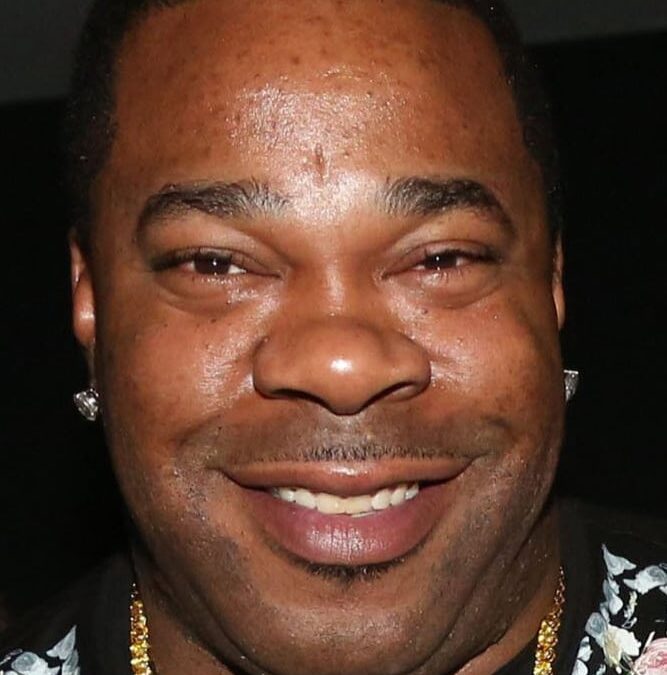
Busta Rhymes
Rapper, songwriter, record producer and actor
October 06, 2026
Busta Rhymes, J Dilla and the Breathless Art of Staying in Motion
Few artists can turn a museum conversation into a live-wire reminder of hip-hop history. That is what Busta Rhymes brought to the Grammy Museum while celebrating “Dillagence II,” his latest exploration of music created around the work of the late producer J Dilla. With Anderson .Paak joining the occasion and Common appearing as a special guest, the evening connected three generations of artists who understand rhythm as something to be inhabited, not merely followed.
The setting suited Busta. His records have always rewarded closer inspection: the sudden changes in cadence, the Jamaican inflections, the comic voices, the precisely placed growls and the pockets of silence that make the next burst of syllables feel even faster. Beneath the spectacle is a technician who thinks deeply about beats. Writing to Dilla—whose drums often sound deliberately off-balance until the groove reveals itself—requires exactly that kind of concentration.
It also placed the new project within a much longer story. Busta emerged from Leaders of the New School, stole a landmark posse cut with one verse, survived the collapse of his group and became one of rap’s most recognizable solo performers without sanding away his eccentricities. He has worked with everyone from A Tribe Called Quest and Janet Jackson to Mariah Carey, Dr. Dre and Chris Brown. His videos expanded hip-hop’s visual vocabulary, while his guest verses repeatedly introduced him to listeners too young to remember the previous reinvention.
“Dillagence II” therefore feels less like a detour than a return to first principles: an extraordinary rapper, an exacting producer and the question of how many ways a human voice can move through a beat.
Quick Facts
| Born | May 20, 1972 |
| Birthplace | Brooklyn, New York City |
| Nationality | American |
| Years Active | 1986–present |
| Children | Six |
Early Life
Busta Rhymes was born Trevor George Smith Jr. to Jamaican parents, and that heritage became an audible part of his work. Dancehall phrasing, sound-system energy and patois have surfaced throughout his catalog, giving his performances a character distinct from the conversational cool favored by many of his New York contemporaries.
After spending his early years in Brooklyn, Smith moved with his family to Uniondale on Long Island. His education crossed several New York schools, including George Westinghouse Career and Technical Education High School, whose student body also included future rap figures Jay-Z and the Notorious B.I.G. Busta has recalled battling Jay-Z at school—an encounter he has freely admitted did not go his way. He later graduated from Uniondale High School in 1991.
His professional education came through Leaders of the New School, formed with Charlie Brown, Dinco D and Cut Monitor Milo. The young group earned an association with Public Enemy, and Chuck D supplied Trevor Smith with his enduring stage name, inspired by former NFL receiver George “Buster” Rhymes. The altered spelling made it more distinctive; Busta’s delivery did the rest.
Leaders of the New School released two albums, but the group’s internal tensions became increasingly visible. By the time its members appeared on “Yo! MTV Raps” in 1994, the split was unfolding in public. For Busta, the collapse was both setback and opening: he no longer had a group, but audiences already knew exactly which voice they wanted to hear again.
Family
Parents
- Geraldine Green, mother
- Trevor Smith Sr., father
Siblings
- Paul Smith, younger brother
Career
The decisive early moment arrived before Busta had a solo record. On A Tribe Called Quest’s 1991 remix of “Scenario,” Leaders of the New School shared space with Tribe and other guests. Busta took the closing verse and transformed it into a miniature performance piece, roaring about a dungeon dragon while changing pitch, rhythm and personality. The verse did more than attract attention; it established the central Busta Rhymes proposition. He could be technically formidable and wildly entertaining at the same time.
His first solo album, “The Coming,” arrived in 1996. Its lead single, “Woo-Hah!! Got You All in Check,” was abrasive, funny and almost impossible to mistake for anyone else’s record. The song earned his first Grammy nomination and introduced the visual partnership between Busta and director Hype Williams. Fish-eye lenses, saturated colors, oversized rooms and elastic body language made his videos feel like cartoons with blockbuster budgets.
“When Disaster Strikes…” followed in 1997 with “Put Your Hands Where My Eyes Could See” and “Dangerous.” The former demonstrated that Busta did not need to rap at maximum velocity to command a track; its controlled, almost stalking cadence became one of his defining performances. “Extinction Level Event: The Final World Front” arrived in 1998, extending the apocalyptic imagery that ran through his early solo catalog. Its Janet Jackson collaboration, “What’s It Gonna Be?!,” paired two unusually physical performers in an effects-heavy video that became an event in its own right.
Busta maintained a demanding release schedule through “Anarchy,” “Genesis” and “It Ain’t Safe No More….” “Break Ya Neck,” produced by Dr. Dre, made breath control sound like an action sequence. “Pass the Courvoisier Part II,” with Pharrell and Diddy, moved in the opposite direction, demonstrating his ease with a spacious club groove. Mariah Carey’s “I Know What You Want” gave him one of his most durable crossover successes without asking either artist to abandon a recognizable style.
A move to Dr. Dre’s Aftermath Entertainment helped produce 2006’s “The Big Bang,” Busta’s first album to reach No. 1 on the Billboard 200. Its single “Touch It,” built around Daft Punk’s “Technologic,” generated a celebrated all-star remix and another Grammy nomination. The Aftermath period did not become a permanent home, however, and subsequent years brought label changes, delayed projects and the difficult task of maintaining momentum in a rapidly changing record business.
Rather than depend on nostalgia, Busta kept returning through collaborations. His high-speed appearance with Lil Wayne on Chris Brown’s “Look at Me Now” became a generational introduction and produced two more Grammy nominations. He also strengthened his own Conglomerate operation and released the free 2012 project “Year of the Dragon.”
The long-delayed “Extinction Level Event 2: The Wrath of God” finally arrived in 2020, more than two decades after its conceptual predecessor. It was not simply a title sequel: the album reconnected Busta’s end-of-the-world theatricality with an older, more reflective voice. “Blockbusta” followed in 2023, with Pharrell Williams, Timbaland and Swizz Beatz serving as executive producers.
J Dilla represents another thread running through this career. Busta recorded over Dilla productions during the producer’s lifetime and remained a forceful advocate for his work after Dilla’s death in 2006. The 2007 mixtape “Dillagence,” presented with DJ Mick Boogie, placed Busta over a collection of Dilla beats and became a favorite among listeners interested in the meeting of an explosive voice with Dilla’s deceptively loose drums. “Dillagence II” revisits that relationship not as an exercise in imitation, but as an ongoing conversation with a producer whose rhythmic ideas continue to challenge rappers.
Television
- Strapped (1993) — Buster
- The Wayans Bros. (1997) — Himself
- The Boondocks (2007–2010) — Flonominal
- Master of None (2015) — Himself
- The Masked Singer (2020) — The Dragon
Filmography
- Higher Learning (1995) — Dreads
- The Rugrats Movie (1998) — Reptar Wagon
- Shaft (2000) — Rasaan
- Finding Forrester (2000) — Terrell Wallace
- Halloween: Resurrection (2002) — Freddie Harris
- Narc (2002) — Darnell “Big D” Beery
- Breaking Point (2009) — Al Bowen
Awards & Honors
- 1997 — Grammy Awards (Best Rap Solo Performance) — Nominated
- 1999 — Grammy Awards (Best Rap Solo Performance) — Nominated
- 2000 — Grammy Awards (Best Rap Album) — Nominated
- 2000 — Grammy Awards (Best Rap Performance by a Duo or Group) — Nominated
- 2007 — Grammy Awards (Best Rap Solo Performance) — Nominated
- 2012 — Grammy Awards (Best Rap Performance) — Nominated
- 2012 — Grammy Awards (Best Rap Song) — Nominated
- 2023 — BET Awards (Lifetime Achievement Award) — Won
- 2025 — MTV Video Music Awards (Rock the Bells Visionary Award) — Won
Business Ventures
- Established Flipmode Entertainment and built the Flipmode Squad, the collective associated with Rampage, Rah Digga, Spliff Star, Lord Have Mercy and other artists.
- Founded the Conglomerate Entertainment record label, extending his work into artist development and independent releases.
- Has served as an executive producer on his own projects, including later albums developed through the Conglomerate banner.
- Expanded his career beyond recordings through film roles, voice acting, touring and high-profile brand collaborations.
Philanthropy
- Participated in the 2001 Artists Against AIDS Worldwide recording of “What’s Going On,” created to raise money for AIDS-related causes.
- Joined the large ensemble that recorded “We Are the World 25 for Haiti” in 2010 following the devastating Haitian earthquake.
- Participated in Feed Your City Challenge efforts during the COVID-19 pandemic, helping distribute food and essential supplies in New York.
Current Projects
- “Dillagence II,” a new project built around Busta Rhymes’ writing and performances over J Dilla productions.
- Live appearances that combine new material with a catalog extending from Leaders of the New School through “Blockbusta.”
- Continued stewardship of the Conglomerate Entertainment label and the broader Flipmode musical legacy.
Interesting Facts
- Chuck D gave him the name Busta Rhymes, adapting the surname of former NFL receiver George “Buster” Rhymes.
- Before his solo career, he was a member of Leaders of the New School with Charlie Brown, Dinco D and Cut Monitor Milo.
- His verse on A Tribe Called Quest’s “Scenario” remix ends the track and became the performance that pushed him toward solo stardom.
- He attended George Westinghouse Career and Technical Education High School, which was also attended by Jay-Z and the Notorious B.I.G.
- Busta has said that Jay-Z defeated him in a rap battle while they were students.
- His Jamaican family background influenced his use of patois, dancehall rhythms and sound-system-style vocal projection.
- The urgent strings on “Gimme Some More” draw from Bernard Herrmann’s score for Alfred Hitchcock’s “Psycho.”
- “Touch It” samples Daft Punk’s “Technologic,” linking his percussive delivery with the French duo’s robotic electronic minimalism.
- He voiced the Reptar Wagon in “The Rugrats Movie,” one of the more unexpected roles in his acting career.
- “The Big Bang” was his seventh solo studio album but his first to top the Billboard 200.
- The original “Dillagence” arrived in 2007 as a J Dilla-focused mixtape presented with DJ Mick Boogie.
- His apocalyptic imagery predates contemporary album-sequel culture: “Extinction Level Event 2” followed its predecessor after more than 20 years.
- He has accumulated 12 Grammy nominations without a competitive Grammy win, making later lifetime and visionary honors especially significant.
- His performance on Chris Brown’s “Look at Me Now” introduced his rapid-fire style to a new generation and became one of the most imitated verses of the early 2010s.
- The elaborate videos made with Hype Williams were not decoration added after the music; they helped establish Busta’s exaggerated movement and facial expressions as part of his artistic language.
Why ShowBiz Selected This Entertainer
Busta Rhymes is featured this week because his Grammy Museum appearance accomplished more than conventional album promotion. By discussing “Dillagence II,” explaining the demands of writing to J Dilla’s beats and performing selections from across his career, he presented his catalog as a living body of work rather than a collection of anniversary pieces. Anderson .Paak’s participation and Common’s special appearance reinforced the scale of Dilla’s influence and Busta’s place within that musical lineage.
The evening also arrived at an appropriate moment for reassessment. Busta has received lifetime, visionary and Hollywood Walk of Fame recognition, yet he continues to release music and test himself against one of hip-hop’s most complex rhythmic architects. That tension—between decorated veteran and restless working rapper—is why he still matters. The voice is instantly familiar, but the curiosity behind it has not settled.
Watch Next
- A Tribe Called Quest featuring Leaders of the New School — “Scenario”
- Busta Rhymes — “Woo-Hah!! Got You All in Check”
- Busta Rhymes — “Put Your Hands Where My Eyes Could See”
- Busta Rhymes featuring Janet Jackson — “What’s It Gonna Be?!”
- Busta Rhymes — “Break Ya Neck”
- Busta Rhymes — “Touch It” and the all-star remix
- Chris Brown featuring Lil Wayne and Busta Rhymes — “Look at Me Now”
- Busta Rhymes’ 2023 NPR Tiny Desk Concert
- Busta Rhymes’ BET Lifetime Achievement Award performance
- The Grammy Museum conversation and performance celebrating “Dillagence II”