Why This Matters
Christopher Nolan has once again turned a movie opening into an industry event. The Odyssey, his sweeping adaptation of Homer’s ancient epic, launched to an estimated $264 million worldwide in its first weekend, a debut that instantly places the film among the year’s defining theatrical stories.
The scale of the number is striking, but the manner of the achievement may be even more important. Nolan’s latest arrived with the kind of old-fashioned cinematic muscle that studios have spent years trying to re-create: a filmmaker-driven spectacle, sold on theatrical urgency, technical ambition and the promise that audiences would be seeing something they could not easily replicate at home.
That message appears to have landed. Premium formats were central to the weekend, with IMAX and other large-format screens driving a major share of ticket sales. The film’s distinction as the first feature shot entirely on IMAX cameras was not merely a production footnote; it became part of the marketing proposition. For moviegoers, the format was positioned as essential rather than optional.
The opening also reinforces Nolan’s rare status as a director whose name functions like a franchise. Following the commercial and awards-season success of Oppenheimer, he has moved from prestige blockbuster auteur to one of the most reliable theatrical brands in the business. At a moment when studios often lean on sequels, superheroes and familiar IP, Nolan has shown that a director’s authorship can still be a marquee draw.
For exhibitors, the debut offers a badly needed reminder of what happens when a major release gives audiences a reason to plan their weekend around the cinema. Theaters have spent the post-pandemic era navigating uneven release calendars, shifting consumer habits and shorter windows. A global start of this size gives chains more than a hit movie; it gives them a showcase for the theatrical experience itself.
Industry Context
The Odyssey arrives at a complicated point for the film business. The industry has seen periods of feast and famine at the box office, with some tentpoles breaking through in spectacular fashion while others stumble despite massive spending. Audiences have become more selective, and the assumption that scale alone guarantees turnout has repeatedly been challenged.
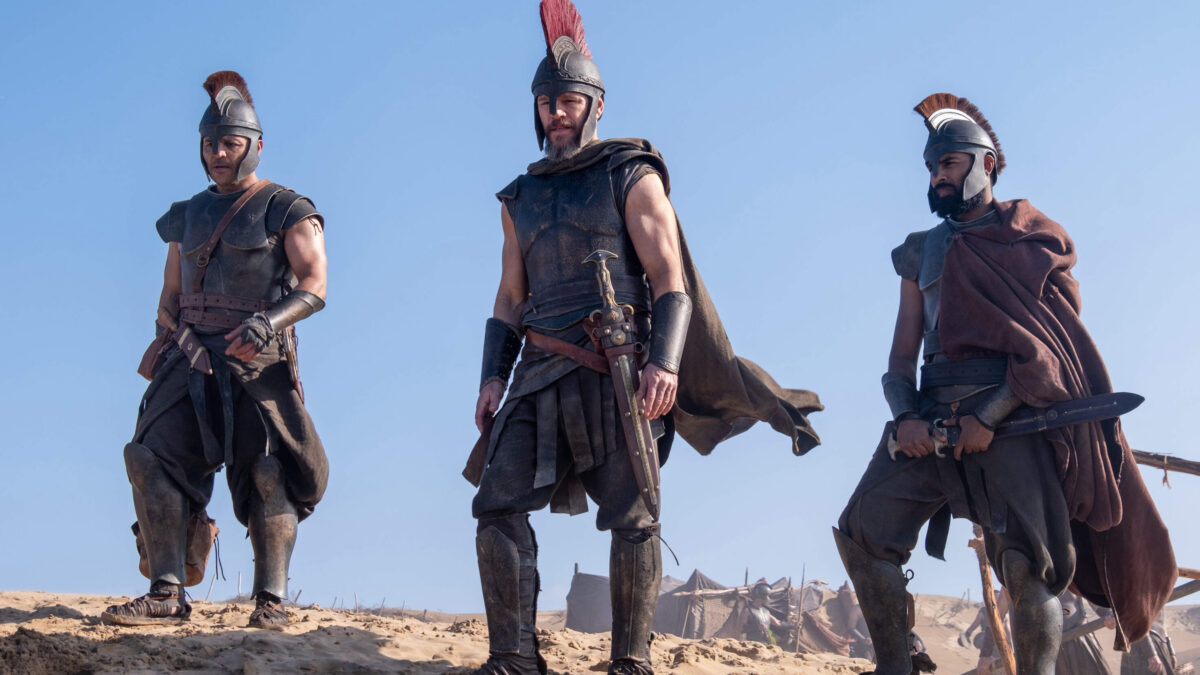
Nolan’s film, however, combines scale with identity. The project was never marketed as generic spectacle. From its earliest rollout, the emphasis was on ambition: a mythic canvas, a large ensemble, practical grandeur and the full deployment of IMAX technology. In an era when many blockbusters blur together in digital sameness, The Odyssey was sold as a physical, immersive journey.
That distinction matters because premium large-format theaters have become one of Hollywood’s most valuable growth engines. Higher ticket prices can significantly boost grosses, but audiences will only pay the surcharge when they believe the experience is worth it. Nolan has become one of the few filmmakers who can persuade moviegoers that format matters, and his latest opening suggests that trust remains intact.
The film also underscores the renewed importance of global audiences to prestige-scale filmmaking. A $264 million worldwide launch is not simply a domestic success story with international support; it is a coordinated global event. For a production of this size, overseas markets are essential, and the early response indicates that the combination of classical mythology, cinematic spectacle and Nolan’s name travels across borders.
There is also a symbolic dimension to the material. Homer’s Odyssey is one of the oldest adventure narratives in Western literature, a story of war, survival, temptation and homecoming that has influenced centuries of storytelling. By mounting it as a contemporary theatrical epic, Nolan is effectively linking Hollywood’s blockbuster grammar to one of narrative history’s foundational texts.
That choice gives the film a different profile from the comic-book and video-game properties that dominate many studio slates. It is familiar, but not in the modern franchise sense. It carries cultural recognition without being tied to a recent screen continuity. That may prove instructive for studios looking beyond the usual corporate libraries for material with built-in resonance.
The opening weekend will also be studied in relation to Nolan’s post-Oppenheimer momentum. Few directors have parlayed an awards triumph into a commercial launch of this magnitude so quickly. The Academy success expanded his audience rather than narrowing his brand, giving The Odyssey the aura of both an event film and a serious artistic undertaking.
What Happens Next?
The immediate question is whether The Odyssey can sustain its voyage beyond opening weekend. A launch this large guarantees attention, but long-term success will depend on word of mouth, repeat premium-format viewing and the film’s ability to hold screens as new releases enter the marketplace.
If the audience response remains strong, the movie could become a rare four-quadrant epic with both commercial stamina and awards-season credibility. Nolan’s films often benefit from extended conversation, and a project of this scale is likely to generate debate around performance, craft, adaptation choices and technical achievement for weeks to come.
Studios will also be watching closely. A strong run would further validate the idea that theatrical exclusivity, premium presentation and filmmaker branding can still create global urgency. It may encourage more companies to take calculated swings on ambitious, director-led projects rather than relying exclusively on established franchises.
For Nolan, the opening confirms that his creative leverage remains formidable. He can command enormous resources, attract major talent and bring audiences out in force for material that might look risky in another filmmaker’s hands. That combination is increasingly rare, and it gives him a level of influence few contemporary directors possess.
For theaters, the path ahead is more practical: maximize the moment. Expect IMAX and premium screens to remain at the center of the film’s rollout for as long as demand allows. If The Odyssey continues to perform, its opening weekend may be remembered not only as a box office triumph, but as another argument that cinema’s biggest battles are still best fought on the largest screens.