
Why This Matters
Brenda Fricker’s death at 81 marks the loss of one of Ireland’s most quietly formidable screen talents, an actor whose career moved with unusual ease from British television staples to Oscar-winning drama and mainstream Hollywood films. Her work carried a rare combination of steel and tenderness, often finding the emotional center of characters who might have seemed peripheral in less capable hands.
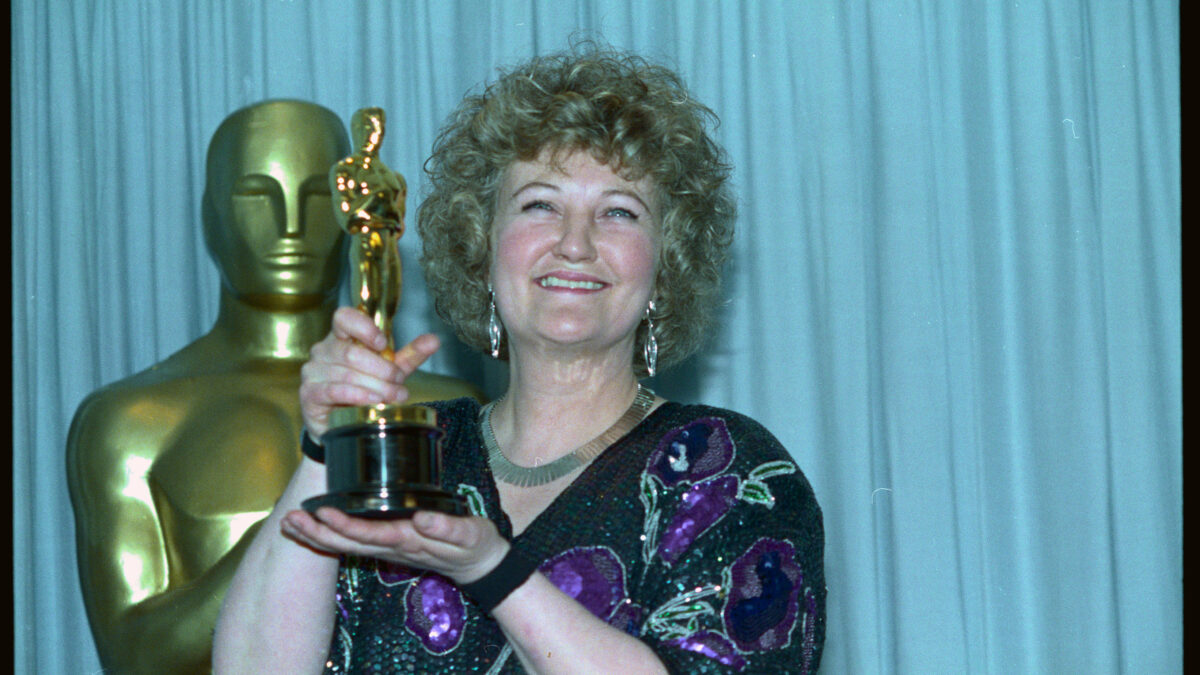
Fricker made history with her Academy Award win for My Left Foot, becoming the first Irish woman to receive an acting Oscar. In Jim Sheridan’s celebrated 1989 drama, she played Bridget Fagan Brown, the mother of Christy Brown, the Irish writer and artist born with cerebral palsy and portrayed by Daniel Day-Lewis. The role demanded restraint rather than showmanship, and Fricker’s performance gave the film its moral gravity: a portrait of maternal endurance that never slipped into sentimentality.
Her agent, Phil Belfield, confirmed her death in a statement to the BBC, paying tribute to an artist and collaborator he described with deep affection. The outpouring that followed reflects not only admiration for a distinguished career, but also the particular place Fricker held in the hearts of audiences who encountered her across generations and genres.
To many viewers, she was not simply an Oscar winner. She was also Megan Roach in Casualty, one of the original faces of the long-running BBC medical drama, bringing compassion and authority to a series that would become a cornerstone of British television. For others, she remains instantly recognizable from Home Alone 2: Lost in New York, where her turn as the so-called Pigeon Lady gave a blockbuster sequel one of its most unexpectedly poignant notes.
That range is what makes her passing resonate beyond a single award or performance. Fricker belonged to a generation of actors trained to serve the story rather than chase the spotlight. She could command attention without insisting upon it, and she often elevated films and television episodes simply by making her characters feel fully lived-in.
Industry Context
Fricker’s career began in a screen landscape very different from today’s global entertainment ecosystem. Born in Dublin, she entered the profession at a time when opportunities for Irish women actors were often limited, especially for those not packaged as conventional leading ladies. She built her reputation through persistence, craft and a willingness to work across formats, appearing early in Coronation Street before becoming a familiar presence on British and Irish screens.
Her ascent was not the kind of career arc engineered by modern publicity machinery. Instead, Fricker emerged through character work, the kind of acting that depends on credibility, texture and emotional intelligence. Her years on television gave her an unforced naturalism that served her well when film roles grew larger and more international.
My Left Foot changed her professional profile overnight. The film itself became a major moment for Irish cinema, helping to announce a wave of Irish storytelling that would reach international audiences with new force in the 1990s and beyond. Day-Lewis won the Oscar for best actor, but Fricker’s supporting actress victory was equally significant, broadening recognition for Irish performers and underscoring how essential her work was to the film’s impact.
After that breakthrough, Hollywood came calling. Fricker appeared in a variety of American productions, from family films to legal dramas, including Angels in the Outfield and A Time to Kill. She did not become a celebrity in the tabloid sense, nor did she seem particularly interested in the machinery of fame. Instead, she remained a working actor with an international résumé, moving between prestige projects, studio films and television with a pragmatic sense of purpose.
Her role in Home Alone 2 became one of the more surprising afterlives of her career. In a film remembered for slapstick chaos and holiday spectacle, Fricker created a character defined by loneliness, dignity and guarded warmth. Decades later, that performance continues to circulate each Christmas, introducing her to viewers who may not know her Oscar-winning work but recognize the emotional precision she brought to a family comedy.
Fricker’s career also speaks to the enduring value of supporting actors in film and television. Awards culture often rewards visibility, transformation and narrative dominance, but her best work demonstrated how a performance can shape an entire story from the margins. She made silence meaningful. She made weariness eloquent. She gave audiences the sense that her characters had histories extending far beyond the script.
What Happens Next?
In the coming days, tributes are expected from colleagues across Ireland, the U.K. and Hollywood, particularly from those who worked with Fricker during her long association with film and television drama. Institutions tied to Irish cinema are also likely to revisit her Oscar milestone and the broader significance of her international success.
Broadcasters and streaming platforms may respond by spotlighting some of her defining performances, especially My Left Foot and episodes from her television career. For younger audiences who know her primarily through holiday reruns or supporting film roles, the renewed attention may provide a fuller view of an actor whose legacy extends well beyond a handful of famous titles.
Her death also arrives at a moment when the industry is increasingly reassessing the contributions of character actors, particularly women whose careers did not always fit the narrow categories of stardom. Fricker’s filmography offers a reminder that cultural memory is not built only by marquee names. It is also shaped by performers who bring truth to ordinary people, complicated mothers, wounded outsiders and quiet survivors.
For the Irish acting community, Fricker leaves behind a landmark achievement and a model of artistic integrity. Her Oscar win remains part of cinema history, but her deeper legacy lies in the consistency of her work and the humanity she brought to every role. As audiences return to her performances, they will find an actor who never wasted a moment on screen — and whose absence will be felt precisely because her presence was so deeply, unmistakably real.