
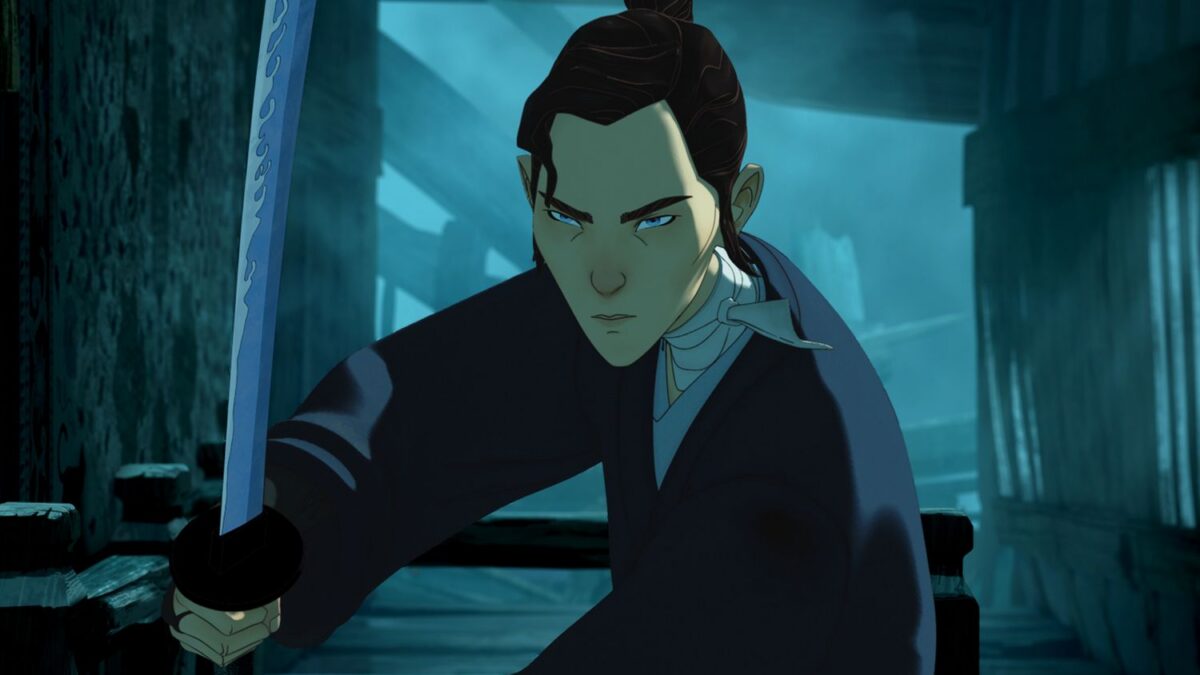
Netflix has confirmed that Blue Eye Samurai will return for a third season — and that the 2028 installment will bring the acclaimed animated drama to a close.
The announcement came during Netflix’s presentation at Anime NYC, where the streamer used the East Coast convention to lay out the future of one of its most celebrated adult animated series. The news arrived alongside a new teaser for Season 2, which is set to debut in January and shifts the action beyond Japan as Mizu, voiced by Maya Erskine, continues her pursuit through London.
Created by Amber Noizumi and Michael Green, Blue Eye Samurai became one of Netflix’s breakout animation success stories after its first season drew strong critical response, passionate audience support and major awards recognition. The series has won four Emmys and has been widely praised for its cinematic visual style, sharply choreographed action and emotionally layered storytelling.
By announcing a third and final season ahead of Season 2’s premiere, Netflix is giving the creative team a defined endpoint — a move that has become increasingly important in the streaming era, where even acclaimed shows can face uncertain futures between seasons.
The new teaser shown at Anime NYC offered the clearest look yet at the expanded scope of Season 2. After the first season followed Mizu’s bloody quest for revenge in Edo-period Japan, the next chapter appears to take the character into unfamiliar and dangerous territory abroad. London, glimpsed in the footage as both a destination and a battlefield, marks a significant escalation for the series’ world-building.
Erskine returns as Mizu, the mixed-race swordfighter whose identity and rage drive the series’ central conflict. The show’s first season ended with Mizu leaving Japan in pursuit of the men tied to her origins, setting the stage for a broader story about empire, violence, power and belonging.
Netflix has not yet released full plot details for the second season, but the teaser suggests the show will continue blending intimate character drama with large-scale action. For a series built around secrecy, identity and vengeance, the move to London also opens the door to a new political and cultural landscape — one that could deepen the show’s examination of race, gender and outsiderhood.
Why the Renewal Matters
The third-season pickup is notable because Blue Eye Samurai occupies a rare position in the television marketplace: an adult animated series with prestige-drama ambitions and global commercial appeal. While animation has long been central to Netflix’s international strategy, adult animated dramas remain a more difficult category to sustain than comedy or franchise-driven action.
The series’ renewal signals that Netflix sees value not only in the show’s awards profile, but in the kind of devoted viewership that can turn an animated original into a long-tail asset. Unlike many live-action streaming dramas, Blue Eye Samurai does not depend on weekly watercooler conversation alone. Its audience has grown through word of mouth, critical lists, awards attention and repeat viewing — all key factors for a platform that measures success across global engagement rather than traditional ratings.
The decision to end the show with Season 3 also reflects a broader industry shift. Streamers are increasingly weighing the benefits of limited, tightly planned runs over open-ended renewals. For creators, that can mean a more coherent ending. For platforms, it provides a clear marketing hook and reduces the risk of a series drifting creatively or financially after its peak.
In the case of Blue Eye Samurai, a planned conclusion may be especially valuable. The show’s first season was praised for its deliberate structure and elegant pacing, with each episode building toward Mizu’s evolving understanding of revenge and selfhood. Extending that arc indefinitely could dilute what made the series stand out. A three-season plan gives Noizumi and Green room to expand the world while still protecting the integrity of Mizu’s journey.
Animation’s Prestige Moment
The announcement also comes as adult animation continues to move further into prestige territory. Shows once seen as niche genre programming are increasingly competing for the same critical attention as live-action dramas. Blue Eye Samurai benefited from that shift, but it also helped accelerate it.
Its painterly visual language, filmic fight sequences and layered performances pushed the series beyond conventional expectations for streaming animation. The show’s success has strengthened the argument that animated storytelling can carry the same dramatic weight, thematic sophistication and emotional intensity as live-action prestige TV.
For Netflix, the series sits alongside a broader push into global and genre-facing animation, a space where the company has invested heavily even as it has become more selective about renewals. Anime NYC provided a fitting platform for the update, placing Blue Eye Samurai in front of an audience deeply attuned to animation as both art form and industry force.
There is also a practical advantage to the long lead time. Animation production schedules are complex, particularly for a series with Blue Eye Samurai’s level of visual detail. Announcing Season 3 now allows Netflix and the producers to build momentum without leaving fans wondering whether the story will be completed.
What Happens Next
The immediate focus now turns to Season 2, which arrives in January and will determine how Mizu’s story evolves outside Japan. The London setting suggests a larger canvas, new adversaries and a collision between personal vengeance and international power structures.
Netflix is expected to roll out additional footage, casting details and episode information closer to premiere. With the final season already set for 2028, the streamer can now market the next chapter not as a standalone return, but as the bridge to the endgame.
For fans, the message is clear: Mizu’s path has a destination. The wait for Season 2 is nearly over, and the finish line is officially in sight.