
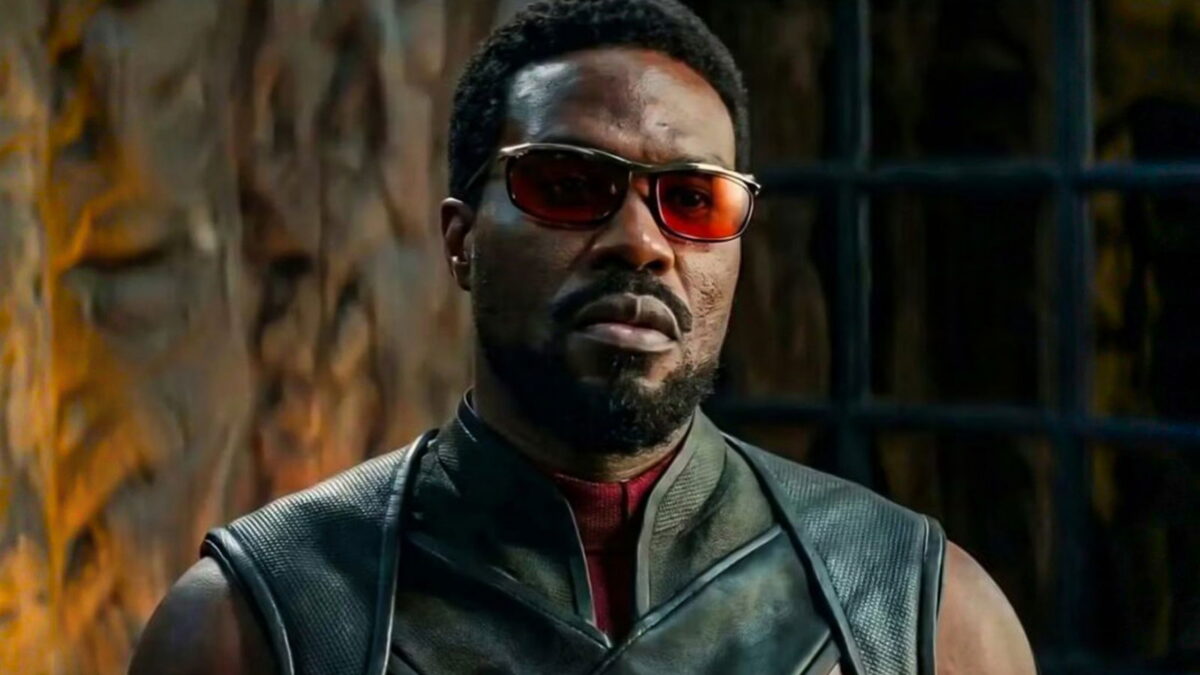
Yahya Abdul-Mateen II has addressed Marvel Studios’ decision to cancel Wonder Man, offering his most direct comments yet as the studio faces renewed questions about the fate of several high-profile projects led by Black superheroes.
In a candid interview with Vanity Fair, the Emmy-winning actor responded to the broader conversation surrounding Marvel’s shifting slate, including the sudden end of Wonder Man and the prolonged uncertainty around Mahershala Ali’s Blade. Asked about the pattern, Abdul-Mateen did not pretend the situation was difficult to read.
“I think the optics are obvious,” he said, a remark that immediately ricocheted across fan communities and industry circles already watching Marvel’s next moves closely.
The comment lands at a sensitive moment for Marvel Studios and parent company Disney. After more than a decade of near-uninterrupted box office dominance, the superhero giant has been recalibrating its film and television ambitions amid softer audience response, ballooning production costs and a more selective streaming strategy. But for many viewers, the question is not simply whether Marvel is making fewer projects. It is which projects are disappearing first.
Wonder Man, which had been positioned as one of Marvel’s more unconventional Disney+ entries, was expected to give Abdul-Mateen a major role inside the Marvel Cinematic Universe after his breakout work in Watchmen, Candyman and Aquaman. The series centered on Simon Williams, a Hollywood actor and stunt performer whose comic-book history allows Marvel to play with celebrity, performance and superhero mythology from a satirical angle.
That premise made the show stand apart from the studio’s more familiar cosmic, spy and multiverse stories. It also made Abdul-Mateen’s casting significant: another Black actor leading a Marvel property at a time when the studio had been publicly emphasizing broader representation across its franchise.
A Difficult Moment for Marvel’s Pipeline
Marvel’s television output has been under intense internal and external review since the company began pulling back from the rapid-fire release strategy that defined the early Disney+ era. Series such as WandaVision, Loki and Ms. Marvel helped turn the MCU into a year-round presence, but the pace also created concerns about creative oversight, visual-effects strain and audience fatigue.
In response, Marvel has slowed development, reworked projects and reexamined how closely its streaming series should resemble traditional television. That reset may be practical from a business standpoint. The studio is no longer operating in an environment where every Marvel title feels inevitable, and Disney has been under pressure to make streaming more profitable.
Still, the timing of Wonder Man being shelved has drawn particular attention because it arrives alongside the ongoing turbulence surrounding Blade. The vampire-hunter reboot, first announced in 2019 with Ali attached to star, has cycled through creative changes, script overhauls and release-date uncertainty for years. For a project led by a two-time Oscar winner and built around one of Marvel’s most iconic Black characters, its slow collapse has become symbolic of a larger frustration.
Fans have pointed out that Marvel has successfully turned obscure characters into billion-dollar brands, from the Guardians of the Galaxy to Ant-Man. Against that history, the inability to get Blade moving — and the decision to end Wonder Man before it could reach audiences — has intensified debate about priorities inside the studio.
Why Abdul-Mateen’s Comment Matters
Abdul-Mateen’s response is notable because Marvel actors are typically careful when discussing behind-the-scenes decisions. The studio has long maintained a tightly managed publicity culture, and performers often speak about unrealized or delayed projects in vague, diplomatic terms. By acknowledging the “optics,” Abdul-Mateen effectively gave voice to a criticism that had already been circulating among viewers but rarely came from inside the talent pool.
His remark does not accuse Marvel of intent. It does, however, underscore the public-relations challenge now facing the company. In Hollywood, optics can shape the conversation almost as much as official strategy. If the projects most visibly affected by retrenchment appear to be those anchored by Black characters, the studio will have to contend with that perception whether or not executives view the decisions as purely financial or creative.
The issue also extends beyond Marvel. Studios across the industry have spent the last several years announcing diverse franchises, inclusive reboots and more expansive superhero universes. But as budgets tighten and risk tolerance declines, there is growing scrutiny over whether those commitments survive when the marketplace becomes more difficult.
Representation is no longer treated by audiences as a bonus feature. It is part of brand trust. Marvel benefited enormously from the cultural impact of Black Panther, a film that proved a Black-led superhero epic could become both a commercial juggernaut and an awards-season force. That success raised expectations for what the studio would build next.
For that reason, the fate of Wonder Man and Blade is being read not as isolated programming news, but as a test of whether Marvel remains committed to expanding its roster in meaningful ways during a more cautious era.
The Larger Franchise Question
Marvel’s immediate challenge is balancing creative renewal with brand discipline. The studio needs fewer projects that feel more essential. It also needs new heroes capable of carrying the franchise beyond the original Avengers generation. Canceling or indefinitely stalling emerging characters may help reduce short-term costs, but it risks narrowing the future of the MCU at a time when novelty is desperately needed.
Abdul-Mateen, for his part, remains one of Hollywood’s most in-demand actors, with a résumé that spans prestige television, horror, superhero films and major studio spectacles. His willingness to speak plainly suggests that talent may be less inclined to quietly absorb corporate reversals when those decisions carry cultural weight.
Marvel has weathered criticism before and has often rebounded by turning uncertainty into anticipation. But the current moment is different. The studio is no longer simply defending a movie or a phase. It is defending the direction of an entire entertainment ecosystem that helped define modern franchise filmmaking.
What Happens Next
The next move belongs to Marvel and Disney. The studio can clarify its plans for characters like Wonder Man and Blade, recommit to projects led by underrepresented heroes or allow the current narrative to harden into conventional wisdom.
For fans, Abdul-Mateen’s comment will likely keep the pressure on. Until Marvel offers a convincing roadmap, the conversation around canceled and stalled Black-led superhero projects is unlikely to fade. In an industry where audience loyalty is increasingly difficult to maintain, the optics may be more than obvious — they may be consequential.