Why This Matters
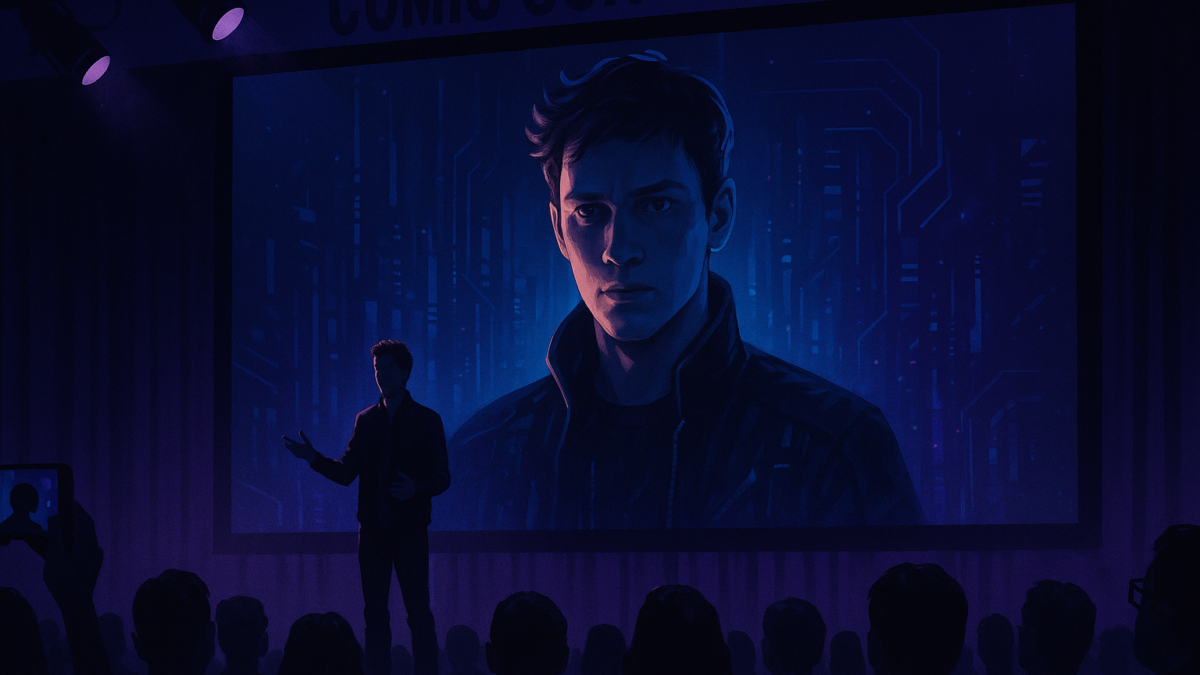
Callum Turner gave Apple TV one of its more attention-grabbing Comic-Con moments on Saturday, appearing by video during the streamer’s Hall H presentation to introduce the first teaser for Neuromancer, the long-gestating adaptation of William Gibson’s landmark 1984 novel.
The surprise appearance instantly elevated the panel from a standard studio showcase to a statement of intent. Turner, who stars as Case, greeted the San Diego crowd before unveiling the first look at the 10-episode cyberpunk series, now officially set to premiere Jan. 22, 2027.
For science fiction fans, the arrival of Neuromancer as a major streaming series is more than another piece of branded genre programming. Gibson’s novel helped define the vocabulary of cyberpunk, popularizing ideas about hackers, artificial intelligence, virtual space and corporate power that would later echo through film, television, gaming and digital culture.
The series follows Case, described as a damaged, elite super-hacker who is pulled into a dangerous network of digital espionage. With Turner in the role, Apple is signaling that the show is being positioned not merely as a niche literary adaptation, but as a prestige genre play built around a rising international star.
Turner’s Comic-Con introduction also matters because Neuromancer has carried a kind of mythic status in Hollywood development circles. The book’s influence has been everywhere, while a definitive screen version has remained elusive. Bringing the property to Hall H gives fans the sense that this iteration is no longer theoretical. It is dated, marketed and moving toward viewers.
Industry Context
The first look arrives at a moment when streamers continue to hunt for genre properties that can travel globally, support long-tail viewing and generate conversation beyond premiere weekend. Apple TV has increasingly leaned into polished, high-concept science fiction, with projects that treat speculative storytelling as both awards-adjacent drama and franchise infrastructure.
Neuromancer fits that strategy neatly. The novel is revered, but it is not as broadly familiar to casual audiences as superhero universes or fantasy franchises. That gives Apple both an opportunity and a challenge: the streamer can define the screen identity of the property for a new generation, but it must also translate dense, cerebral material into an accessible serialized thriller.
Creators Graham Roland and JD Dillard bring the project into a marketplace that has changed dramatically since cyberpunk first entered the mainstream imagination. What once felt futuristic now overlaps with daily anxieties about artificial intelligence, surveillance, corporate consolidation, data theft and the emotional cost of living online. In that sense, Neuromancer may be arriving at exactly the right time.
The Comic-Con launch also reflects how important fan-facing events remain for streaming platforms, even as traditional television marketing has fragmented. Hall H still functions as a symbolic proving ground. A strong response there can help position a show as an event long before critics weigh in or algorithms begin sorting audience behavior.
For Turner, the role expands a screen profile that has grown across film and prestige television. Casting him as Case suggests Apple is betting on a performer who can carry both the vulnerability and volatility of a character defined by damage, addiction, brilliance and desperation. The success of the series may depend as much on that human anchor as on its visual depiction of cyberspace.
The broader industry will be watching closely because literary science fiction remains a difficult category to crack. The most successful adaptations tend to balance fidelity with reinvention, respecting core fans while giving newcomers an emotional entry point. With a 10-episode runway, Neuromancer has room to build its world, but it will need momentum, clarity and character-driven stakes to avoid becoming admired more than watched.
What Happens Next?
Apple TV will now begin the long promotional road to the show’s January 2027 debut, using the Comic-Con teaser as the first major marker in a campaign that is likely to unfold in stages. Additional casting reveals, production imagery and deeper story details should follow as the streamer moves from fan-room excitement to wider audience awareness.
The central question is how much of Gibson’s dense mythology the series will foreground in early marketing. Apple may choose to sell the show first as a sleek thriller about a gifted hacker caught in a conspiracy, then gradually introduce the more complex philosophical and technological dimensions that made the novel so influential.
Expect future materials to clarify the tone: whether the series leans noir, action spectacle, psychological drama or a blend of all three. The teaser’s Hall H reception gives Apple an early read on genre enthusiasm, but the next wave of promotion will need to convince viewers who know the word “cyberpunk” mainly through its descendants.
As the premiere date approaches, Neuromancer will face the scrutiny that comes with adapting a foundational text. Fans will look for the atmosphere, danger and strangeness of Gibson’s world, while industry observers will assess whether Apple has another signature sci-fi title capable of sustaining conversation beyond launch week.
For now, Turner’s surprise appearance has done what a Comic-Con moment is supposed to do: turn anticipation into something more concrete. After decades of influence from the shadows, Neuromancer is finally stepping into the streaming spotlight.