
Why This Matters
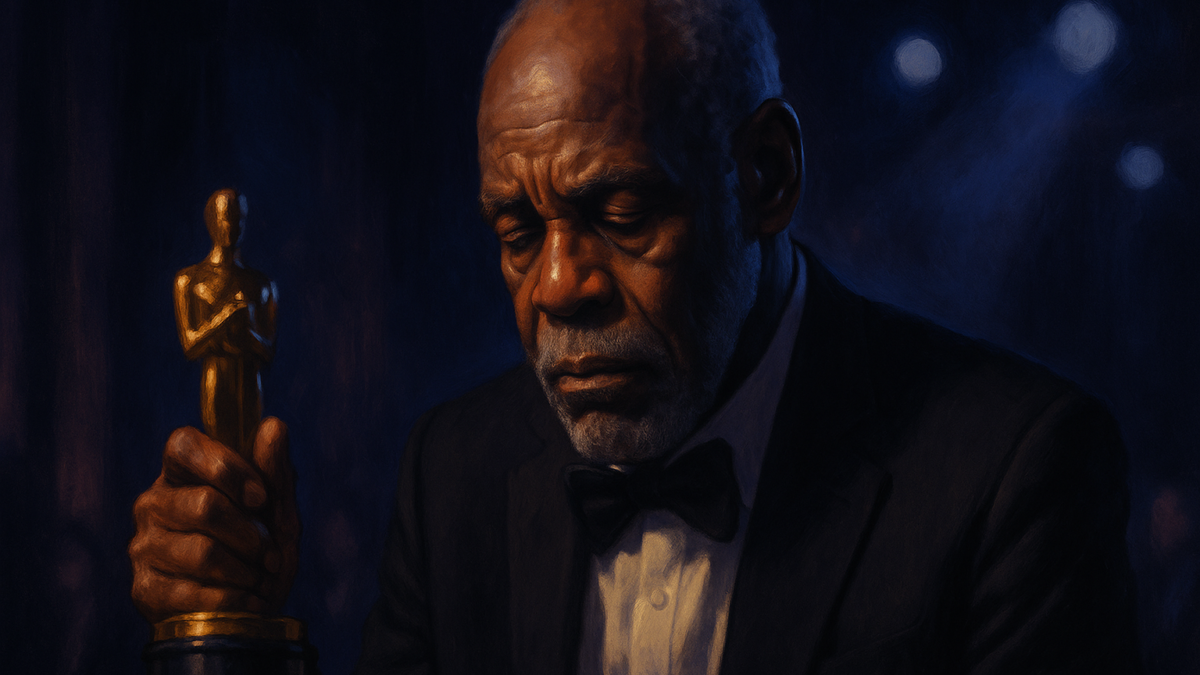
Danny Glover’s disclosure that he has been living with Alzheimer’s disease adds a deeply personal chapter to the public life of an actor whose career has spanned blockbuster franchises, prestige drama and decades of social activism. Speaking in an interview that aired Wednesday on NBC’s Today, the 79-year-old performer said he received the diagnosis not long after being honored by the Academy of Motion Picture Arts and Sciences with the Jean Hersholt Humanitarian Award in 2022.
For generations of moviegoers, Glover is inseparable from the role of Detective Roger Murtaugh in the Lethal Weapon films, where his weary pragmatism played opposite Mel Gibson’s volatility and helped define the modern buddy-cop template. But his screen legacy extends well beyond that franchise, including acclaimed work in The Color Purple, To Sleep with Anger, Places in the Heart and a long list of politically engaged projects that reflected his off-screen commitments.
That is why the revelation carries weight beyond celebrity health news. Glover has long occupied a rare place in Hollywood: a leading man, character actor and activist whose public identity has been grounded in moral seriousness as much as star recognition. His decision to discuss Alzheimer’s publicly places one of the industry’s most respected figures in a broader conversation about aging, memory and dignity.
In the interview, Glover described the diagnosis with measured candor, saying, “I can live with it in a sense,” while acknowledging that the disease may become more challenging as it advances. The comment was striking for its restraint. Rather than framing the diagnosis as a farewell or a dramatic announcement, Glover presented it as part of the reality he is navigating.
Industry Context
Hollywood has become more open in recent years about health disclosures from major artists, particularly when those disclosures involve neurological or cognitive conditions. Bruce Willis’ family publicly shared his aphasia diagnosis in 2022 and later confirmed frontotemporal dementia, prompting an industry-wide reckoning with how productions, agents and studios support performers whose health circumstances change. Glover’s announcement arrives in that same climate of greater transparency.
Alzheimer’s disease, the most common form of dementia, affects memory, thinking and behavior, often progressing over time. For actors, whose work can depend on recall, stamina, timing and emotional precision, such a diagnosis can raise difficult professional questions. Yet it is also important not to reduce an artist to a medical condition. Many people live meaningful, active lives for years after diagnosis, and the course of the disease varies widely.
Glover’s stature gives the disclosure added resonance. He was never simply a performer hired to deliver lines; he became a visible advocate for labor rights, racial justice, global humanitarian causes and political movements that often existed far outside the red-carpet spotlight. The Academy’s Jean Hersholt Humanitarian Award recognized that wider body of work, placing him among artists whose influence is measured by civic impact as well as filmography.
His career also reflects a particular generation of actors who built longevity by moving fluidly between studio hits, independent cinema and public advocacy. Glover emerged at a time when Black actors were fighting for richer roles and greater institutional power, and he used his visibility to speak on issues that many performers once avoided for fear of professional consequences. In that sense, his Alzheimer’s revelation is not separate from his public legacy; it is part of a lifetime of speaking plainly about human vulnerability and social responsibility.
The entertainment industry is still uneven in how it accommodates aging artists. Insurance requirements, production schedules and the physical demands of location work can become complicated when a performer faces a progressive illness. At the same time, streaming, documentary formats, voice work, producing roles and advocacy platforms have expanded the ways veteran artists can remain engaged without conforming to the demands of traditional leading roles.
What Happens Next?
Glover’s immediate future will likely be shaped less by studio calendars than by his health, his family and the level of public engagement he chooses to maintain. A diagnosis of Alzheimer’s does not automatically mean retirement from creative life, but it often requires careful decisions about time, travel, workload and support. For a figure who has spent decades balancing acting with activism, those choices will be watched with respect and sensitivity.
The public response is expected to be warm, particularly because Glover’s fan base crosses generations. Some know him from the Lethal Weapon films, others from his dramatic performances, and many from his long history of humanitarian work. His willingness to speak openly may also encourage more families to discuss cognitive health without stigma, especially in communities where dementia is often handled privately.
Industry observers will be watching to see whether Glover continues to appear at public events tied to film history, activism and humanitarian causes. Given the timing of his diagnosis after one of the Academy’s highest honorary recognitions, there is a poignant symmetry to this moment: Hollywood formally celebrated his service just as he was entering a new and intensely personal challenge.
For now, the significance lies in the disclosure itself. Danny Glover has spent much of his career giving voice to characters and causes defined by conscience, endurance and empathy. By sharing his Alzheimer’s diagnosis, he has added another dimension to that legacy, reminding an industry built on image that honesty can be as powerful as performance.