
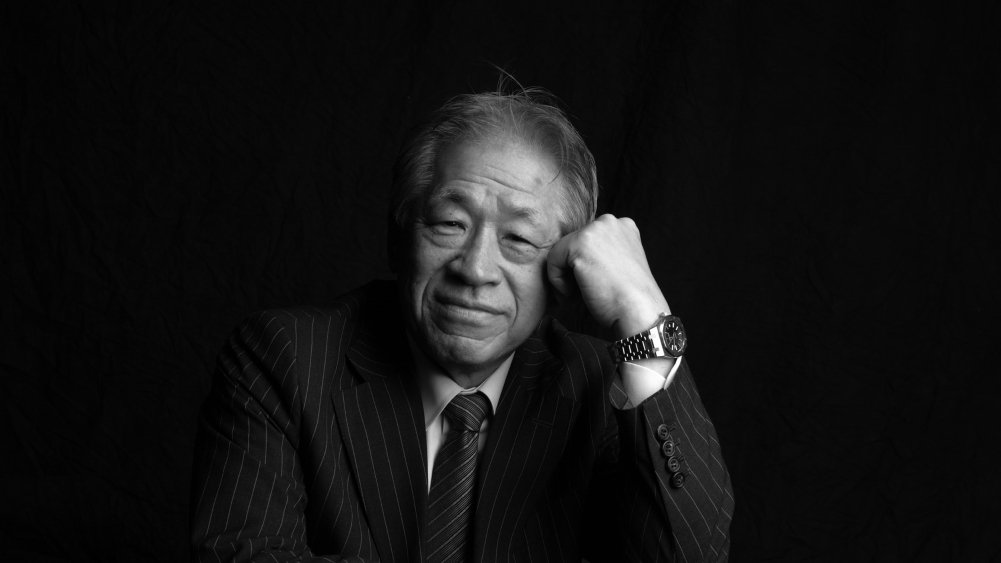
Japan’s entertainment companies must take greater control of their intellectual property and overseas distribution if the country is to meet its ambitious content export goals, according to TIFFCOM CEO Shiina Yasushi.
Shiina, whose Tokyo International Film Festival content market is heading into its 23rd edition, says the industry should follow the model Hollywood studios used to become global businesses: establishing distribution operations in individual countries, working directly with each market and remaining closely involved in marketing.
The stakes are substantial. Japan’s government is targeting JPY20 trillion ($126.6 billion) in overseas content sales by 2033, with anime expected to account for JPY6 trillion ($38 billion). Shiina argues that international demand alone will not be enough to deliver those figures unless Japanese companies also change how they manage and monetize their properties.
Keeping control of Japanese IP
“Historically, Japanese companies have often licensed content rights abroad and left local distribution and marketing to their licensees,” Shiina told Variety. “Going forward, companies should retain ownership of their IP, be actively involved in international distribution, and maximize the revenue generated from their properties.”
Under that approach, companies would build a direct international presence before extending a property across movies, games, streaming and merchandise. Shiina sees that broader use of content as part of the government-backed move toward an “IP-driven industry.”
There are already signs of a strategic rethink. TBS is working with Legendary Entertainment, Nippon TV is growing its international operations, and publishers are exploring overseas adaptations. Talent agencies have also begun focusing more closely on IP, Shiina says, because properties featuring performers can retain value long after those performers retire.
That represents a notable change in corporate thinking. “In the past, the very concept of the long-term value of IP was not widely considered,” Shiina said.
TIFFCOM’s wider marketplace ambition
The evolution is also visible at TIFFCOM itself. The market was once dominated by international sales agents trading completed titles. Producers later joined, adding a stronger creative component, while streaming companies now participate alongside film and television businesses. Anime studios, publishers, game companies and toy manufacturers are among the IP owners attending.
TIFFCOM wants Tokyo to become a destination not only for finished-content sales, but also for project development and financing. Its Tokyo Gap-Financing Market, or TGFM, has expanded beyond simply selecting projects that met its eligibility requirements. It can now create programs around particular regions and genres, maintaining an Asian focus while collaborating with Italy and partnering this year with Canadian genre organization Frontières.
Shiina’s vision is for producers, directors, screenwriters, studios and investors to gather in the same marketplace. That would move TIFFCOM beyond the traditional structure centered on sellers and buyers and make it a meeting point for participants across the production and financing process.
Taking the Tokyo IP Market to the Cannes Film Market helped raise TIFFCOM’s international profile, but Shiina does not intend to simply reproduce that initiative at a series of overseas events. His priority is persuading international professionals to travel to Japan, where they can meet directly with rights holders, original authors, directors and screenwriters.
Japan’s appearance as Country of Honor at Cannes brought together sales executives, directors, producers, studios and senior company leaders. Anime studios and IP were featured alongside live-action work, prompting publishers to join the delegation as well.
For Shiina, the key result was a shift in perspective among Japanese executives who had previously viewed festival markets primarily as venues for buying and selling finished movies. Cannes demonstrated that they could participate more broadly in the marketplace themselves.
AI, creator rights and anime reform
Technology will also be part of this year’s TIFFCOM conversation. Executives from AGBO will deliver a keynote about artificial intelligence and storytelling. Shiina would not predict which area of entertainment will be transformed first, but he expects AI to reduce production costs and shorten turnaround times.
Rights remain his central concern. Because both AI technology and the rights questions surrounding it cross national borders, Shiina does not believe Japan can resolve the issue independently. He also says avoiding AI altogether is no longer realistic.
“The critical priority is how to protect creators,” he said, describing AGBO as a studio founded by film directors and its creator-led approach to AI and technology as the conversation the industry wants now.
Shiina also sees gradual improvement in anime’s long-standing challenges around production costs, working conditions and creators’ share of profits. He pointed to work-style reforms, a new law protecting freelancers, and joint government-industry efforts focused on working conditions.
Meanwhile, some anime studios are beginning to retain their IP and develop their own businesses instead of operating solely as subcontractors. Live-action producers are pursuing a similar path, with Shiina arguing that anime is leading the movement and live-action is following.
ShowBiz Take
Japan’s export targets make this more than a conversation about selling additional titles abroad. Shiina is calling for a structural change in who owns content, who distributes it and who captures its long-term value. TIFFCOM’s own expansion—from finished-program sales toward financing, development and cross-industry collaboration—mirrors the business model he wants Japanese entertainment companies to embrace.
That distinction matters as TIFFCOM competes for attention with Busan’s Asian Contents & Film Market and Hong Kong FilMart. Shiina says success should be measured by quality rather than attendance figures, with Tokyo’s chief advantage being direct access to Japanese creators and rights holders. In his view, greater participation by Japanese companies will, in turn, attract more international visitors.
What Happens Next?
Shiina describes Cannes as the first step and this edition of TIFFCOM as the second, with the larger transformation still at an early stage. Beyond the current market, he wants to increase TIFFCOM’s capacity across its operations, including an expansion of venue space. By around 2030, he envisions a significantly larger marketplace—three years before Japan’s 2033 overseas content-sales target comes due.