
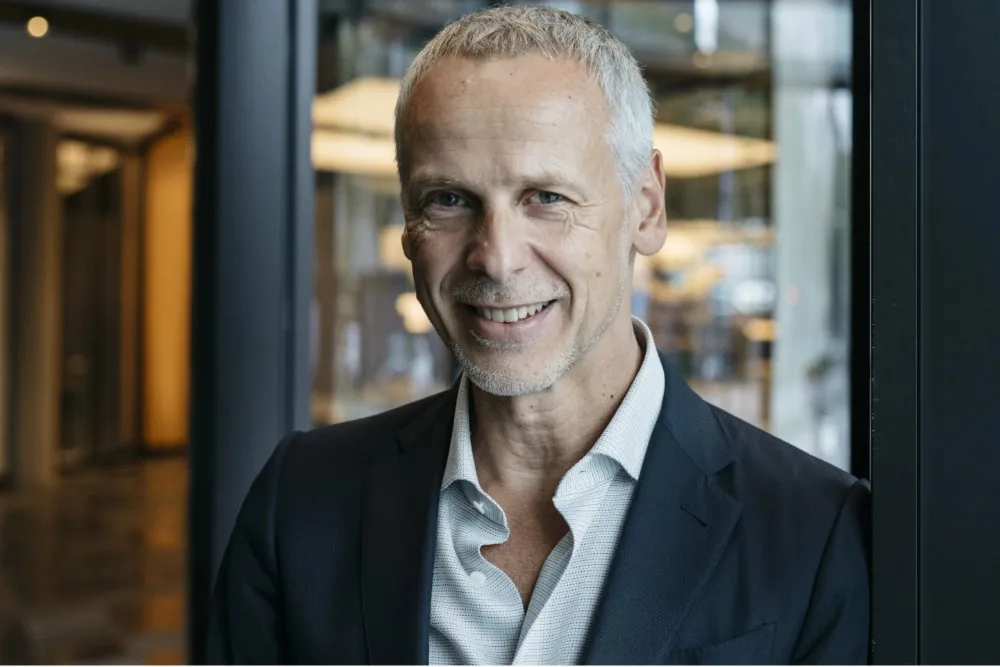
Leonine Studios chief executive Fred Kogel sees the Skydance-led merger of Paramount and Warner Bros. Discovery as an opportunity for Germany’s film and television business, despite the additional competition it could bring to cinemas, streaming and distribution.
In an interview with Variety, the head of Germany’s leading independent distribution and production company expressed confidence in Skydance chief David Ellison’s commitment to produce more than 30 movies annually. Kogel said Ellison’s background in both content and business gives him reason to believe the target can be reached.
“He is a businessman and a creative guy,” Kogel said. “He loves the business and he loves making movies.”
Kogel acknowledged that a major increase in theatrical output is difficult, requiring long-term development and a deep pipeline of projects. Even so, he remains optimistic that Ellison and his management team can deliver the promised volume.
He was similarly positive when asked about Skydance’s sizable debt burden, pointing to the group’s assets, intellectual property and broader possibilities. Kogel said he has “complete trust” in the people running the company and described Ellison and Ynon Kreiz as a strong team capable of navigating a tough market.
Opportunities for Leonine
For Leonine, the new structure could create production opportunities across both film and television. Kogel said the company could make movies for Skydance when the intellectual property and project are a suitable match, noting that Leonine has previously produced films for other distributors.
Television drama could offer another opening. Leonine already works with HBO Max as a production unit in Germany, and Kogel said serving as a local producer of premium programming for a studio such as Skydance would be a natural area for cooperation.
That existing HBO Max relationship includes “Four Blocks Zero,” a prequel to Leonine’s TNT series “Four Blocks.” Kogel said production on the new German original began two weeks before the interview through Leonine banner Wiedemann & Berg Television.
Leonine also delivered “Clangold,” a Beetz Brothers production that Kogel identified as the first documentary commissioned by HBO Max in Germany. HBO Max had launched in Germany at the beginning of the year, and Kogel now regards the service as a major presence in the country’s commissioning market.
He argued that German-language productions are essential for streamers and broadcasters seeking a lasting connection with local audiences. Describing Germany as Europe’s biggest television market and one of the world’s most important, Kogel said Skydance’s HBO Max and Paramount+ services give the group the capacity to invest.
More Movies, More Competition
A slate of more than 30 films a year could intensify competition for Leonine’s distribution operation, but Kogel does not consider that a major threat. Distribution has always been highly competitive, he said, and Leonine already aims to compete on equal terms with international studios.
His focus is less on the total number of releases than on whether those films can attract audiences. Kogel said Germany receives approximately 650 theatrical releases annually, including at least 200 German films and about 450 international titles. An additional 10 international releases would not trouble him if they were strong enough to benefit cinemas.
The larger challenge, in his view, is finding release dates and giving films enough support to reach audiences. He also said the top 20 to 25 films account for the vast majority of Germany’s annual business, making it essential for distributors to secure one or more of the year’s strongest titles.
“The discussion for me is not about having 10 more films or 10 fewer films; it’s about having the right films,” Kogel said.
As a supporter of theatrical releases, Leonine is aligned with Ellison’s stated ambition to increase volume while making quality, audience-pleasing movies. Kogel believes successful releases can help other films by encouraging more people to visit cinemas, while a crowded calendar without enough must-see titles represents the less desirable outcome.
Leonine could potentially distribute selected Paramount or Warner Bros. movies in Germany, Austria and Switzerland. The company acquires at least 25 international films and sometimes secures a studio title for German release. Kogel cautioned that such arrangements are less common when a major studio already has a substantial local distribution operation, as Warner Bros. does, though they can still happen.
A Stronger Streaming Competitor
Kogel also expects the merged group to sharpen streaming competition. He believes Paramount+ could become a stronger partner under Skydance in the coming years, while stressing that it is too early to predict the company’s long-term strategy.
A strong HBO Max and Paramount+ would be tougher competitors for other streaming services than either would be under separate ownership, he said. Increasing the movie slate to more than 30 titles would also put additional films onto the group’s platforms. For producers and licensors of premium content, Kogel views that increased competition as positive.
Leonine enters that environment with the backing of Mediawan, the group headed by Pierre-Antoine Capton that also includes Plan B. Kogel said Leonine’s production companies already collaborate with other Mediawan businesses across fiction and non-fiction.
One example is “Weekend Rebels,” a successful German film produced and released by Leonine. After Plan B noticed the project, the companies developed a U.S. remake together, which has gone directly to Apple. On the distribution side, Leonine also evaluates Mediawan titles for possible release in Germany, Austria and Switzerland, including successful French films.
ShowBiz Take
Kogel’s support is significant because it comes from a company that could face Skydance as both a competitor and a potential customer. His assessment is that stronger studio output can support German theaters, while expanded streaming investment can generate more demand for local productions and licensing.
However, he identified one obstacle to bringing more U.S. production work into Germany: the country’s incentive system. Kogel said Germany does not yet have a tax-credit structure matching those in other European territories or possible future U.S. incentives. Until that changes, he believes Germany will remain less competitive than it could be for incoming studio projects.