
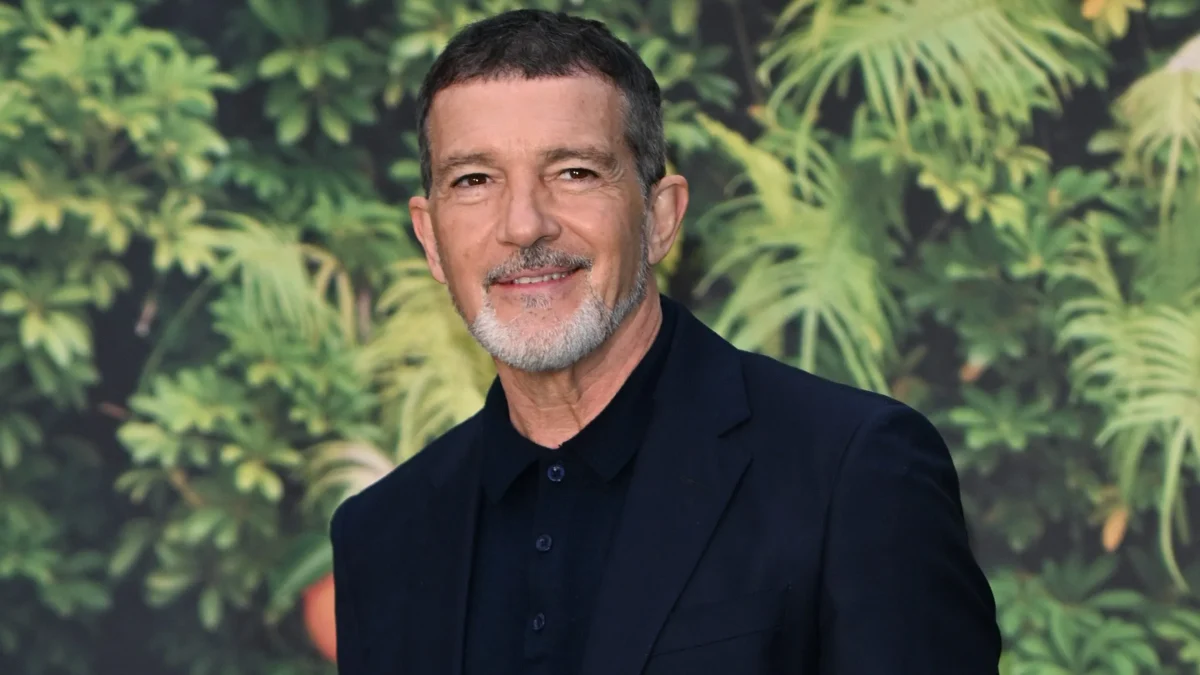
Antonio Banderas is taking on Hernán Cortés in a new historical feature that places the Oscar-nominated actor at the center of an AI-focused studio’s growing film slate.
Cortés is currently in production in Paris, with Paul Mignot, whose credits include Vaincre ou mourir, directing from a screenplay by Oscar nominee Nicholas Kazan, the writer of Reversal of Fortune. Utopai Studios and Ex Machina Studios are co-producing and co-financing the project.
Set in 1519, the film follows Cortés as a soldier driven by glory who leads an expedition to the Yucatán. After reaching the coast of what is now Mexico, he encounters Marina, an enslaved Indigenous woman whose linguistic abilities become crucial to his advance.
“As Cortés turns fragile alliances, faith and fear into instruments of conquest, Marina watches him transform from a daring outlaw into a self-anointed messiah,” the film’s logline says.
The project marks the latest alignment between a Hollywood veteran and an AI-focused entertainment company at a time when the film industry remains divided over the technology’s role in production.
A New Team Takes Shape
Cortés was among Utopai’s first announced projects when the company rebranded as an entertainment studio last year. At that stage, production designer Kirk Petruccelli was attached to make his directorial debut. Mignot is now directing the film, with Banderas leading the cast.
Utopai co-founder and CEO Cecilia Shen said the production reflects the reason the studio was created, emphasizing the creative vision of Kazan, Mignot and Banderas.
“Nicholas has written an extraordinary screenplay, Paul has a clear cinematic point of view and Antonio brings the humanity needed at the center of it,” Shen said. “We want to give them the ability to make the film they set out to make.”
Marco Weber, Ex Machina’s CEO and co-founder, is producing Cortés. Weber, a former co-CEO of Utopai, described the planned film as both large in scale and closely focused on its central characters.
“Antonio gives us a Cortés who can be commanding, complicated and deeply human, while Paul has a clear vision for the brilliant screenplay that Nick wrote,” Weber said, also pointing to the production’s planned world-building.
Ex Machina describes itself as a new production company dedicated to advancing episodic and feature-length work through the “ethical, artist-first integration of artificial intelligence.” The source material does not detail which specific AI tools or processes are being used on Cortés.
Global Sales and Distribution Plans
The two studios have divided responsibility for taking the film to international markets. Utopai will lead sales and distribution in the United States, Canada, Asia, the Middle East and Africa.
Ex Machina will handle sales and distribution across most of Europe, as well as Latin America, Australia and New Zealand.
The feature joins a Utopai lineup that includes both AI-enabled projects and productions described as completely AI-generated. Among them is an AI-assisted, feature-length animated adaptation of The Most Serious Fart, the 2023 children’s book by Not Another Teen Movie screenwriter Mike Bender.
Utopai has also partnered with Chinese production company Huace on a fully AI-generated adaptation of Journey to the West: The Lost Five Hundred Years. That project is described as an origin story connected to the 1592 Chinese mythological book.
Cortés, The Most Serious Fart and Utopai’s live-action feature Half Moon are all scheduled for release sometime next year.
For Banderas, the role follows his performance as José Vatel, Anthony Bourdain’s mentor, in A24’s Tony. The actor is represented by NuCo Media Group and Greenberg Glusker.
ShowBiz Take
Banderas’ casting gives Cortés a prominent performer at the center of a project carrying significance beyond its historical narrative. Utopai and Ex Machina are presenting the film as a meeting point between filmmaker-led production and artificial intelligence, while their comments repeatedly stress the screenplay, direction and human complexity of the lead performance.
That balance matters because the industry’s debate over AI remains unresolved. Rather than presenting Cortés as a fully AI-generated movie, the companies are positioning it within a broader slate that spans live-action, AI-assisted animation and wholly AI-generated work. The eventual film will therefore be watched not only for Banderas’ portrayal, but also for how the studios’ artist-first claims translate into a finished feature.
What Happens Next?
Production is underway in Paris, and the film is set for release sometime next year. Utopai and Ex Machina already have their respective sales and distribution territories in place, but no more specific release date has been announced in the supplied material.