
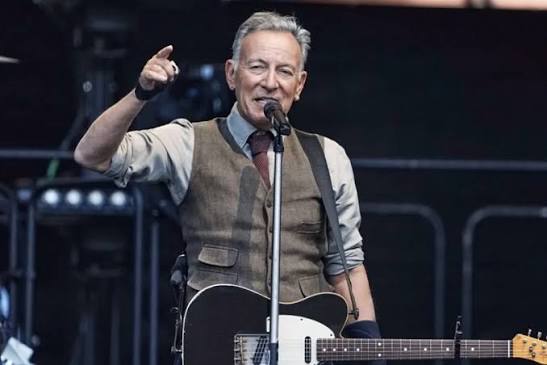
Bruce Springsteen is standing firmly behind the political charge of his recent Land of Hope and Dreams Tour, making clear in a new Rolling Stone interview that he has no regrets about building a show that risked dividing listeners.
“I’m old now and I do what I want to do,” Springsteen told the magazine. “This was the show I wanted to make, the story I wanted to tell.”
The comments arrive as Springsteen is extending the life of the tour beyond the stage through an accompanying concert film, released in installments. The first seven songs from the Philadelphia performance are already streaming on YouTube under the title Bruce Springsteen and the E Street Band: Land of Hope and Dreams American Tour (Philadelphia Freedom Cut), with additional portions of the concert still to come.
The Land of Hope and Dreams Tour was a 20-date U.S. run that began March 31 in Minneapolis and ended May 30 in Philadelphia. According to the source material, the tour followed Springsteen’s January release of “Streets in Minneapolis,” a protest song written in response to the deaths of Reneé Good and Alex Pretti during a confrontation with federal immigration authorities.
Onstage, Springsteen leaned into politically pointed material from across his catalog. The set included “Born in the U.S.A.,” “Death to My Hometown,” “Long Walk Home” and “Youngstown.” The concerts opened with Edwin Starr’s “War” and closed with Bob Dylan’s “Chimes of Freedom.” Springsteen also delivered a speech criticizing the Trump administration before moving back into the music.
In the interview, Springsteen framed the tour less as an attempt to convert anyone and more as a way of placing his songs in the middle of the current national conversation. “It was the state of the nation for 2026,” he said.
That approach extended to “Born in the U.S.A.,” a song Springsteen said he had rarely performed in the U.S. in recent years because of how its meaning has been misunderstood. By placing it between “War” and “Death to My Hometown,” he said he believed the song could be re-contextualized for the present moment.
Springsteen also acknowledged that not everyone embraced the show’s political content. Asked about the possibility of alienating fans who support Donald Trump, he said he has long focused on making the records and concerts he wants to make, then finding the audience for them.
“I’m sure there were people, and I’ve read things where people were vehement about the content of the show,” Springsteen said. “And that’s just the way the chips fall.”
The singer also addressed the upcoming midterm elections, saying he hopes Democrats can regain control of the House and Senate. Before the midterms, he is set for at least one more political-adjacent appearance, joining Tom Morellos for a show in Washington, D.C. next month.
What Happens Next?
Beyond the concert film rollout, Springsteen told Rolling Stone he has two albums in the works: one completed record and another project he hopes to finish and release first. He also remains open to more touring, though he does not envision returning to the large-scale 140-show E Street Band runs of the past.
For now, the Land of Hope and Dreams era continues on YouTube, where the Philadelphia Freedom Cut has begun its staged release — and where Springsteen’s latest political statement is moving from arena stages to screens.