
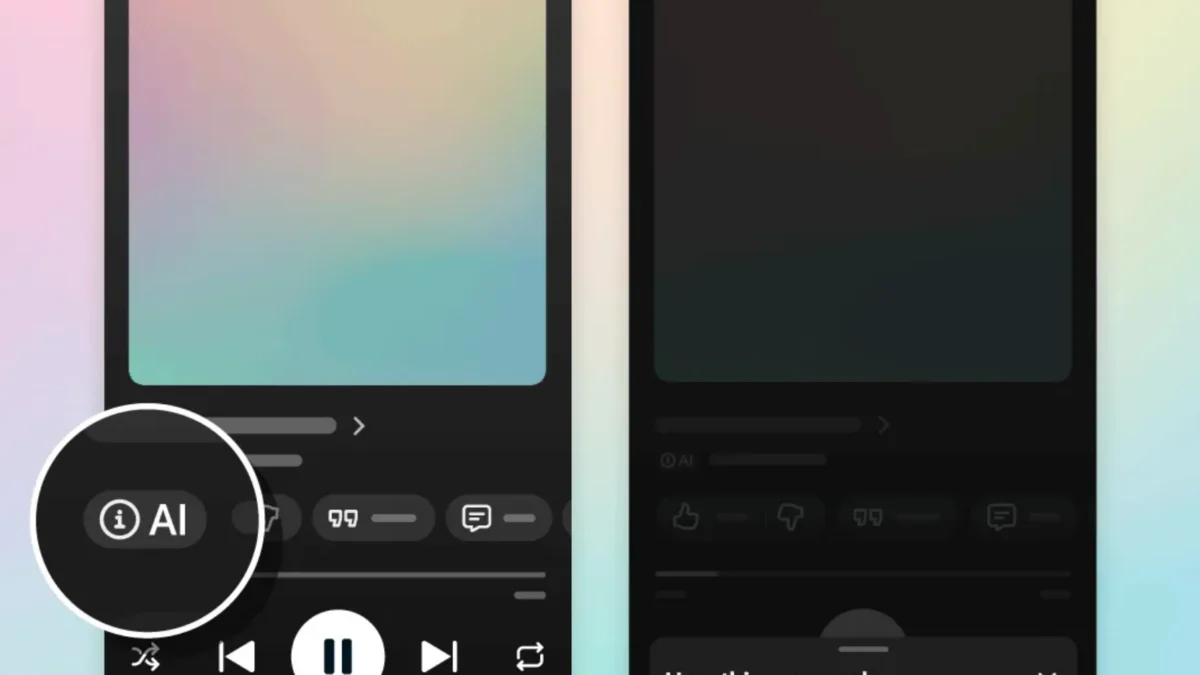
YouTube Music is introducing disclosures for tracks created primarily with generative artificial intelligence, placing a label directly on the player page when AI had a significant role in making the music.
The company said the rollout is designed to make it easier for listeners to identify AI-generated material. Its example of qualifying content is a track that used “a generative model to create the composition and vocals.”
Listeners will be able to tap the label to open a menu containing further information about the track. YouTube also released a sample layout showing how the disclosure will appear in the service.
“When you listen to a track on YouTube Music where AI played a significant role, you’ll see a label directly on the player page,” the company explained in a blog post. “Tapping the label opens a simple menu that shares more information.”
Music-related labeling will also appear on the main YouTube app, apparently allowing users to identify when a song carrying that disclosure is used there.
How YouTube Plans to Identify AI Music
YouTube said it will rely on both its own technology and information supplied by its “music partners” to identify relevant tracks. The company characterized the initiative as an effort to provide users with greater “clarity when it comes to the music they listen to.”
The move arrives as questions about AI’s role in music continue to draw attention. Debate has surrounded whether Kanye used AI on his latest album, Bully, making YouTube Music’s new disclosure system particularly timely. The supplied information does not establish that the platform has labeled the album or reached any determination about its production.
The size of YouTube’s music audience gives the change potentially wide visibility. A 2026 report from The Business of Apps described YouTube as far ahead of other services in total music-streaming usage, with two billion users, while remaining behind Spotify and Apple in paid subscribers. That user figure applies specifically to music streaming.
YouTube is not acting alone among major music platforms. Spotify introduced an AI tag earlier this year, although its disclosure is voluntary and used at the discretion of a music label or artist. Spotify also indicated that it would not favor songs associated with “AI personas.” Apple Music is reportedly preparing an AI label as well, though the supplied material does not confirm that it has launched.
ShowBiz Take
YouTube Music’s approach matters because the disclosure is positioned where listeners encounter the track: directly on its player page. Rather than requiring users to search elsewhere for production details, the label provides an immediate signal and a path to additional information.
The criteria are also notable. YouTube is focusing on music in which AI played a significant role, including the company’s example of generative technology producing both vocals and composition. That frames the label around substantial AI involvement rather than merely the presence of any AI-assisted process.
There is also a meaningful distinction between the platforms’ disclosed approaches. Spotify’s tag is voluntary and controlled by labels or artists, while YouTube says its identification process will combine partner-supplied information with the company’s own technology. How those methods work in practice will shape what listeners see, but YouTube has not provided further operational details in the supplied announcement.
What Happens Next?
The YouTube Music labels are now rolling out, with related labeling also planned for the primary YouTube app. The company has not specified a completion date for the rollout in the available material.
For listeners, the immediate change will be the appearance of disclosures on qualifying player pages. For the wider music business, YouTube’s move adds another platform-specific system for identifying tracks made primarily through generative AI, as Spotify already offers a voluntary tag and Apple Music is reportedly developing its own label.