
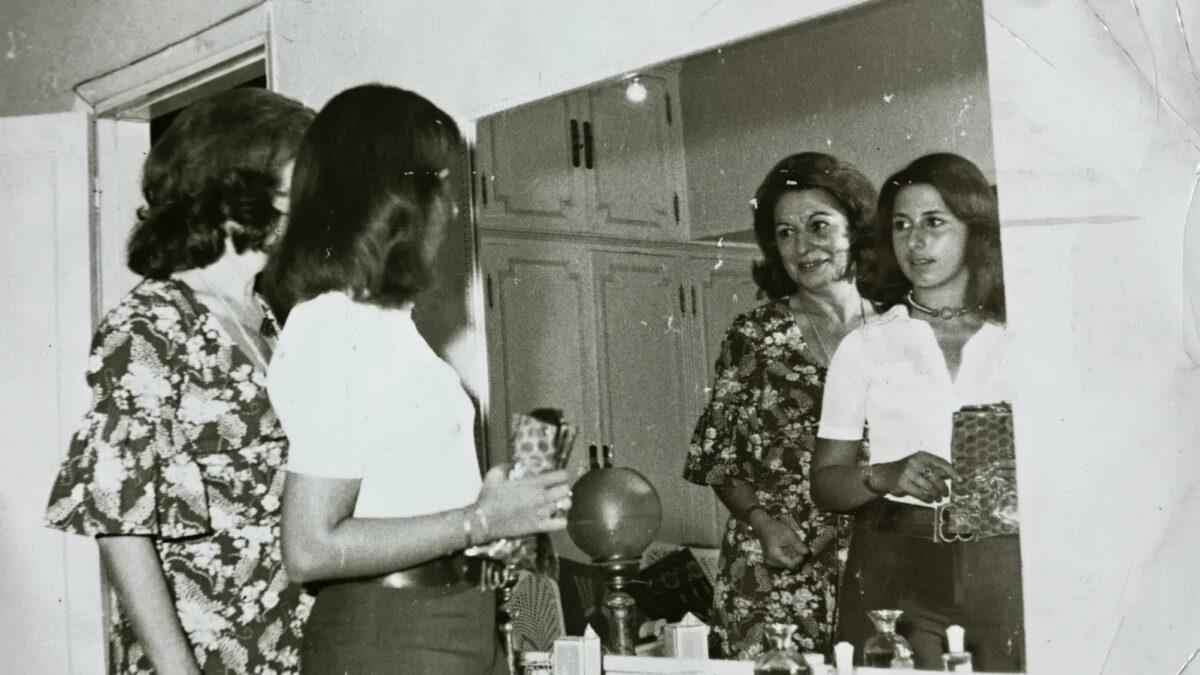
Egyptian filmmaker Sara Shazli has turned years of unresolved questions about her mother, producer and director Marianne Khoury, into “Your Daughter,” a documentary premiering at the 47th Cairo International Film Festival.
The film follows Shazli’s evolving view of Khoury, moving from the pain she felt over her mother’s absence during childhood toward an admiration she did not expect to find. Khoury spent decades working alongside her uncle, director Youssef Chahine, and later took over his production company, Misr International, after his death.
Shazli began filming after returning to Cairo from film school in Cuba. She would sit in the family kitchen with her camera, waiting for opportunities to question her mother and better understand a devotion to cinema that had often made Shazli feel alone.
“Was the camera protecting me from the answers she could give me? Was the camera a way of having her attention?” Shazli wondered. Because filmmaking occupied such a central place in Khoury’s life, the camera also became a way for her daughter to reach her.
A different film emerges
“Your Daughter” did not begin as a documentary about Khoury. Shazli initially planned to search for Woody, the nanny who helped raise her and played an important part in her childhood.
That focus shifted as the project developed. During workshops, other filmmakers drew Shazli’s attention to the affection visible in the way she recorded her mother.
“Someone told me, ‘Look at how you film your mother. You film her with so much love,’” she recalled. Recognizing that feeling was painful, Shazli said, because it required her to confront questions she had long avoided.
Those questions were not limited to how much time Khoury had spent away from her daughter. Shazli also examined the lessons about self-reliance that she inherited from her mother.
“I grew up with a mother telling me that you have to be independent from any man in the world,” Shazli said. “But it was so extreme. Why can’t both the dad and the mom help? Why can’t both be responsible?”
Khoury built her career while carrying much of her family’s financial burden and handling its everyday demands. Shazli came to admire that determination while still questioning its cost. In her own life, she sought a partnership in which her husband shares childcare and financial responsibilities.
Reconsidering a mother’s choices
The filmmaking process helped Shazli see how Khoury’s upbringing influenced the way she showed love. “She gave what she knew. You give what you receive,” Shazli told Variety, explaining that affection in her mother’s childhood had not always been expressed through time and attention.
That new understanding did not eliminate Shazli’s childhood hurt. It did, however, allow her to look at Khoury as a person beyond her role as a parent. Becoming a mother herself deepened that reassessment.
“Now I feel like I really admire her,” Shazli said. “How on earth did she manage to do all this?”
She also recognized the extraordinary ambition behind Khoury’s work, while making clear that she does not want to duplicate her mother’s path. Shazli said she is comfortable not possessing the same drive to be everywhere and do everything, noting that such ambition can also bring suffering.
Her family’s filmmaking history created another internal struggle. Shazli grew up around Chahine, whom she calls “Uncle Joe,” and felt pressure to define herself separately from that legacy.
“Nobody put that pressure on me,” she said. “It was me, coming from that Chahine family, being compared to such a titan. What are you going to do with all this?” Studying in Cuba gave her distance from both Egypt and her family, helping her identify what she wanted to express through film.
ShowBiz Take
“Your Daughter” matters because Shazli does not reduce its central relationship to either resentment or celebration. The documentary preserves the hurt she experienced while tracing the empathy that emerged when she examined Khoury’s upbringing, work, ambition and family responsibilities.
It also continues Shazli’s use of filmmaking to investigate her closest relationships. Her earlier documentary, “Back Home,” explored her relationship with her father. “For me, filmmaking is really about healing,” she said. “If there’s no problem, there’s no film. If there’s nothing to discover, to heal, to dig deep into, there’s no film.”
The response at Cairo has extended that personal exploration beyond Shazli’s own family. She said men have recognized aspects of their relationships in the documentary, with some viewers telling her that it made them want to speak to a mother or father. For Shazli, that is precisely what the film should accomplish.
What Happens Next?
After making documentaries about both parents, Shazli is ready to change direction. “I did a film about my dad. I did a film about my mom. I’m done,” she said.
Her next creative ambition is fiction. Shazli said she wants to have more fun, write a fictional work, collaborate with actors and find a different way to create.