
The dress code at Wimbledon is notoriously strict, as straight as the baseline on the hallowed Centre Court and with sensibilities that date back to the Victorian era.
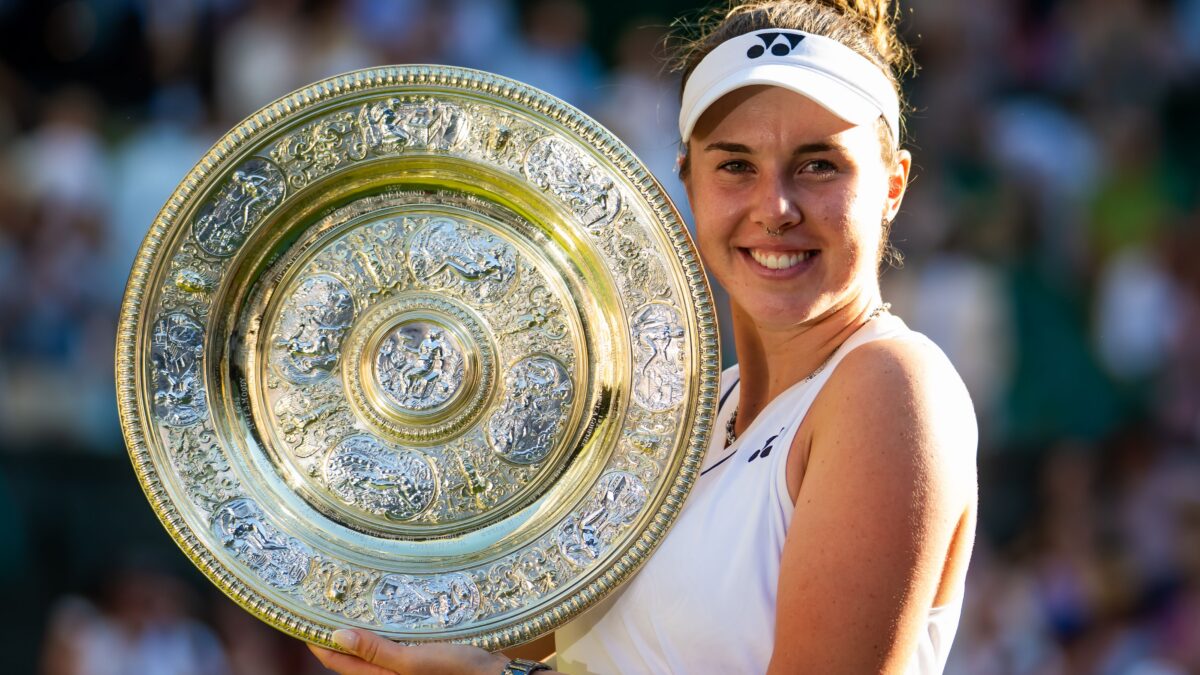
On Saturday, World No. 12 Linda Nosková clinched her Women’s Singles Final win in three sets—and while she sported head-to-toe Yonex and kept to enforced traditions in her blazing all-whites, there was a curious flash of silver through her nasal cartilage that kept catching the beating sun.
At 21 years old, Nosková became the youngest Wimbledon champion in 15 years, the sixth Czech woman to lift the Venus Rosewater Dish, and first winner with a septum piercing. As a tennis fan with a trifecta of nose piercings—including a similar horseshoe barbell—it was nice to see my people represented on the grass and not where you may usually find us: holding court outside Dimes, putting in a shift arguing on eBay.
Piercings have appeared sporadically across the Grand Slams: Serena Williams notably wore a small stud in her nose during the 2016 Indian Wells tournament, while former Indian No. 1 Sania Mirza often wore the piercing on the court. Tattoos are actually more common: Aryna Sabalenka has a prominent tiger tattoo on her left forearm, while Carlos Alcaraz has established a tradition of celebrating his major titles with new tatts: a strawberry for his Wimbledon appearances, an Eiffel Tower for Roland-Garros. Despite the despotic dress code for players, no rules are in place to govern piercings, tattoos, jewelry, makeup, or hair. Beauty and body adornment remains the one frontier where Wimbledon players can show some personality, and a little bit of rebellion that won’t cost them.
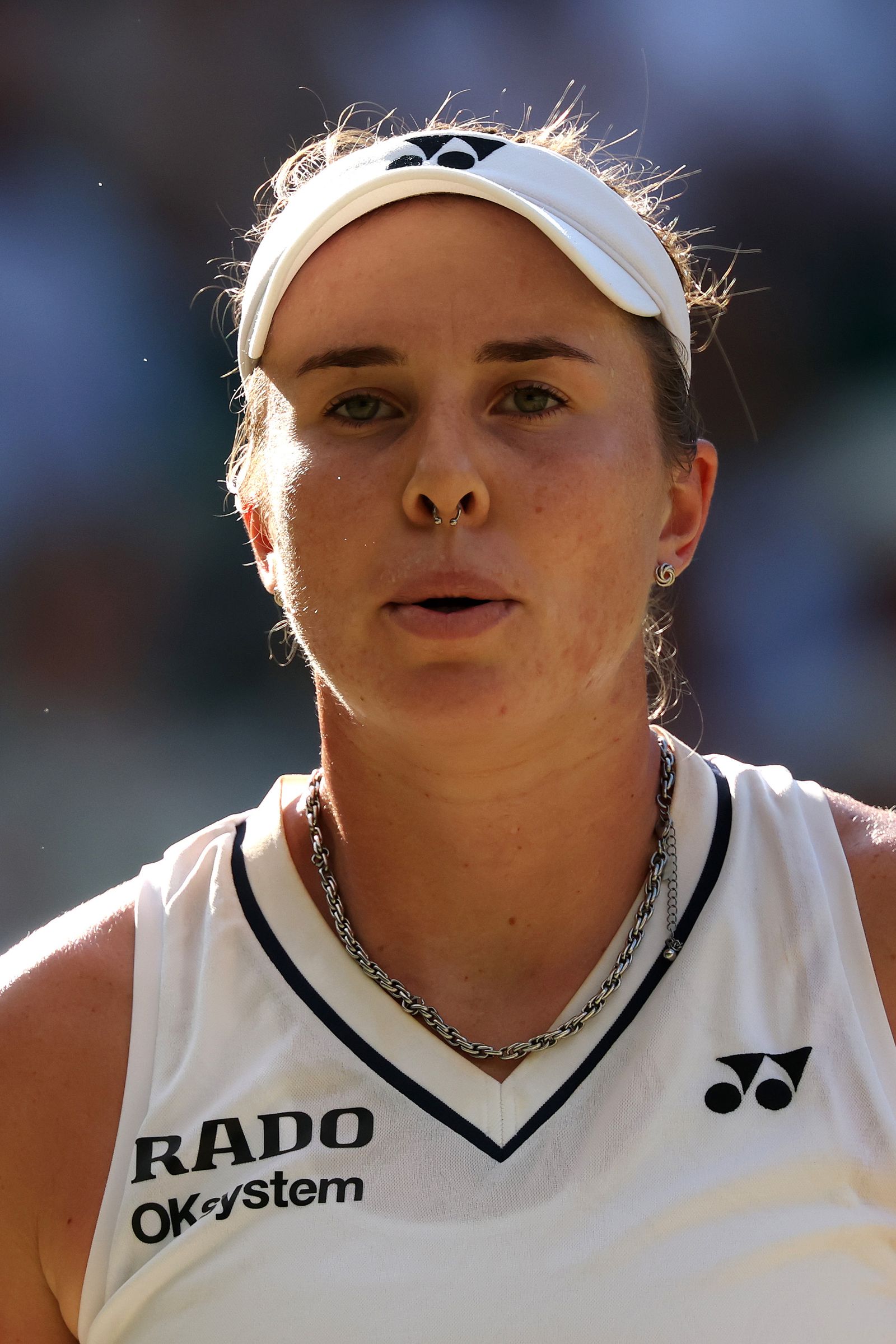
Photo: Getty Images
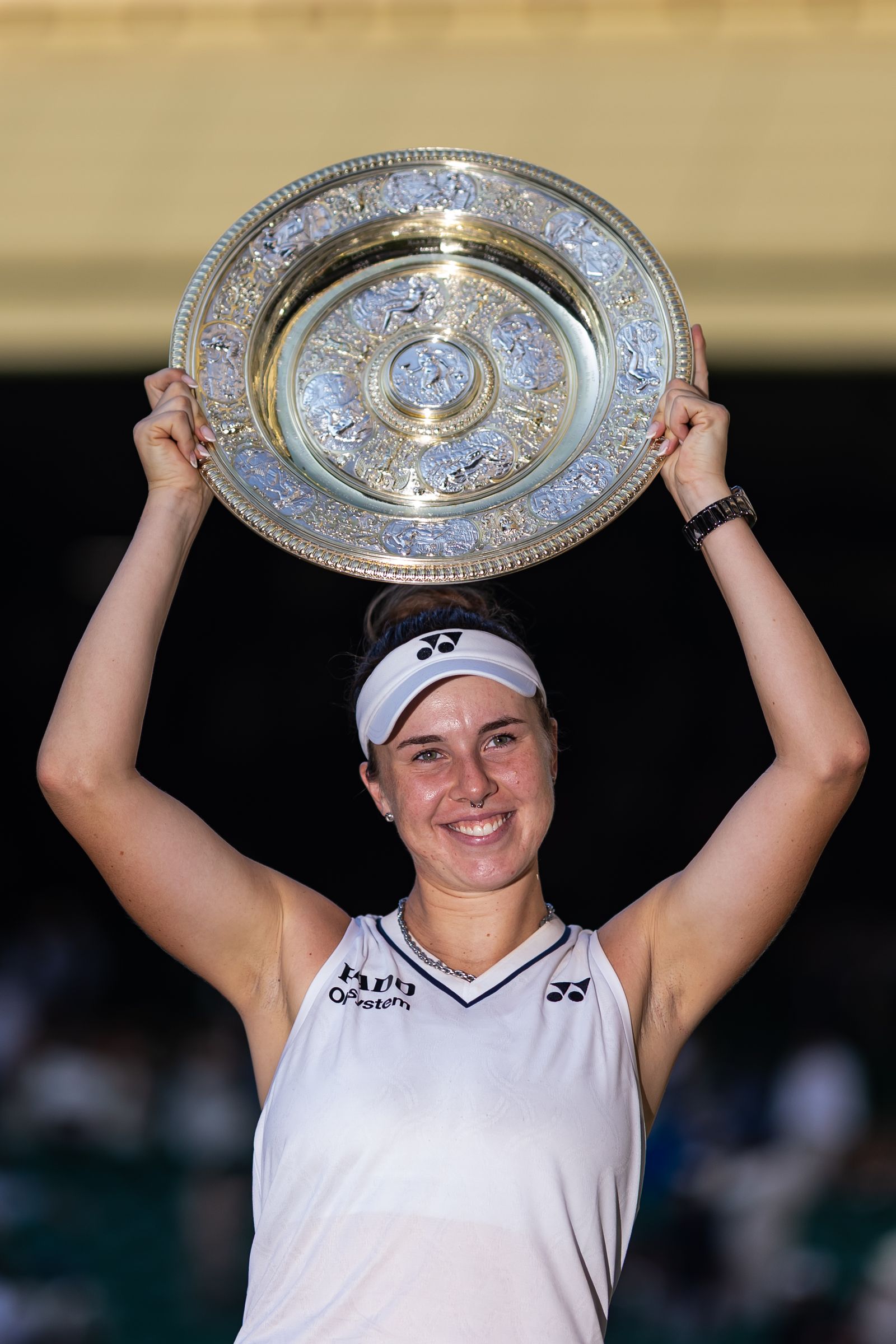
Photo: Getty Images
And for the Gen-Z Linda Nosková, the nose ring is a small statement of defiance and identity. It glinted brilliantly when she looked skyward to serve, and finally picked up her trophy dish. The following day, when she arrived back as a fully fledged member of the All England Lawn Tennis and Croquet Club, Nosková wore a corset midi shirt dress from Alice+Olivia: pretty and femininely cut. That evening, she wore an elegant, slinky black gown from Savile Row’s Knatchbull to the Wimbledon champions’ dinner: the septum barbell added some much-needed edge to both looks.
The septum piercing has a long history as a marker of cultural traditions: across Native American communities, Central Australia, India, Nepal and Bangladesh—and in many cultures, it’s a symbol of a girl’s coming of age. It’s a style that experienced some uplift among millennials in the ’10s (think Rihanna, FKA twigs, Zoe Kravitz), but you’ll see Odessa A’Zion, Manon, and Love Island’s Serena with the personality-body mod today. Other athletes get expressive with their piercings, too: Alysa Liu brought her smiley piercing to the 2026 Winter Olympics. For Nosková, her septum bar is a good luck charm, and a way to stay true to herself when she’s entering a pantheon of champions.