
Why This Matters
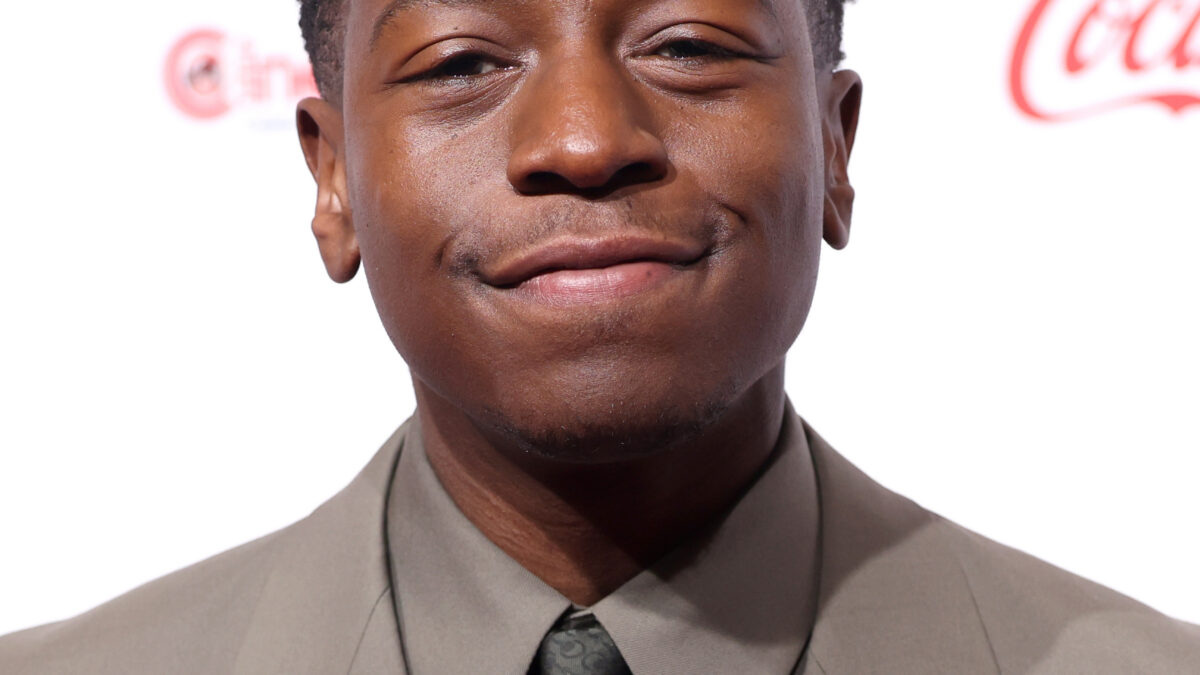
Marvel Studios has made its clearest statement yet about the future of Wakanda, confirming at San Diego Comic-Con 2026 that British actor David Jonsson will step into one of the franchise’s most symbolic roles: T’Challa II, the grown son of the late King T’Challa.
The announcement, unveiled during Marvel’s Hall H presentation, immediately became one of the convention’s defining moments. For a fan base still deeply connected to Chadwick Boseman’s legacy, the casting signals a new chapter rather than a replacement. Marvel is not recasting Boseman’s T’Challa. Instead, the studio is advancing the storyline introduced at the end of “Black Panther: Wakanda Forever,” when audiences learned that T’Challa and Nakia had a son living outside Wakanda.
Jonsson’s selection gives Marvel a performer with both rising-star momentum and dramatic range. He first drew significant attention as Gus Sackey in HBO and BBC’s “Industry,” where he stood out in an ensemble built around ambition, class pressure and emotional restraint. He later earned widespread praise for his warm, grounded turn in the romantic comedy “Rye Lane,” a film that positioned him as one of the most charismatic young British actors of his generation.
His profile rose again with “Alien: Romulus,” in which he brought an unusually tender, unsettling quality to a role that could have been played as pure genre machinery. That mix of vulnerability and command is precisely what makes his Marvel casting notable. T’Challa II is not merely another superhero mantle-holder. He represents succession, grief, identity and the question of what Wakanda becomes after the loss of its most globally recognized king.
The response in Hall H reflected that weight. According to attendees, the reveal drew a sustained ovation, with Marvel emphasizing the character as the bridge between the emotional legacy of the first two “Black Panther” films and the broader future of the Marvel Cinematic Universe. The studio has spent years balancing audience affection for Wakanda with the real-world sensitivity surrounding Boseman’s death in 2020. Choosing Jonsson suggests a careful attempt to honor that history while giving the franchise a living, evolving center.
Industry Context
The “Black Panther” franchise remains one of Marvel’s most culturally significant and commercially powerful brands. Ryan Coogler’s 2018 film became a box office phenomenon, earned a best picture Oscar nomination and shifted expectations for what a superhero movie could mean to global audiences. “Wakanda Forever,” released in 2022, carried the near-impossible task of continuing the series after Boseman’s passing and did so by foregrounding loss, leadership and Shuri’s reluctant rise.
That film ended with a quiet but consequential reveal: T’Challa had a son, Toussaint, whose Wakandan name was also T’Challa. It was a narrative seed planted with obvious long-term potential. By aging the character into a central figure for “Black Panther 3,” Marvel is moving toward a generational handoff, one that allows the studio to continue the royal lineage without undoing its decision not to recast the original role.
For Jonsson, the casting is a career-altering leap. He joins a short list of actors whose arrival in the MCU comes with immediate franchise expectations, not just supporting-player visibility. The role could place him at the center of future “Avengers” stories, Wakanda-focused spin-offs and crossovers involving the next generation of Marvel heroes.
The timing is also important for Marvel. After a period of uneven reception across film and streaming projects, the studio has been working to reassert clarity around its biggest brands. “Black Panther” offers something many superhero properties are chasing: prestige credibility, a distinctive world and emotional stakes that extend beyond multiverse mechanics. A new lead in Wakanda gives Marvel a way to refresh the franchise without abandoning what made it resonate.
Jonsson’s casting also reflects a broader industry pattern in which studios are turning to actors with strong independent, television and genre credentials rather than relying solely on established blockbuster names. His résumé suggests versatility rather than overexposure. That can be a major advantage for Marvel, which has often benefited from introducing performers to global audiences at precisely the moment they are ready to break wider.
There is also the question of what T’Challa II means thematically. A young man raised partly outside Wakanda could bring a different perspective to the throne, the suit and the country’s place in the world. The first film examined isolationism, diaspora and responsibility. The second explored mourning and vengeance. A third built around T’Challa’s son could examine inheritance: what is owed to the past, what must be protected, and what must be reimagined.
What Happens Next?
Marvel has not yet disclosed a full plot synopsis, production start date or complete cast list for “Black Panther 3.” The studio’s Comic-Con presentation confirmed Jonsson’s role but kept several key questions unanswered, including how the film will address Shuri’s status as Black Panther and whether Letitia Wright, Lupita Nyong’o, Danai Gurira, Winston Duke or Angela Bassett will return in major capacities.
Ryan Coogler’s involvement will remain one of the most closely watched elements as the project moves forward. His voice has been central to Wakanda’s cinematic identity, and any continuation of the franchise will be measured against the emotional and visual language he established. If Coogler returns to direct, Jonsson’s introduction would likely unfold within the same carefully built world of family, ritual, politics and Afrofuturist spectacle.
The next phase will also test how audiences respond to T’Challa II as an adult hero. The character arrives with enormous symbolic value, but Marvel will need to define him beyond lineage. His personality, flaws, alliances and relationship to Wakanda will determine whether he becomes a true lead rather than simply a legacy figure.
For now, Jonsson enters the MCU with momentum and a rare opportunity: to carry forward one of Marvel’s most meaningful crowns without standing in another actor’s shadow. The challenge ahead is substantial, but so is the promise. Wakanda is preparing for a new era, and Marvel has chosen a performer capable of making that transition feel both respectful and alive.