
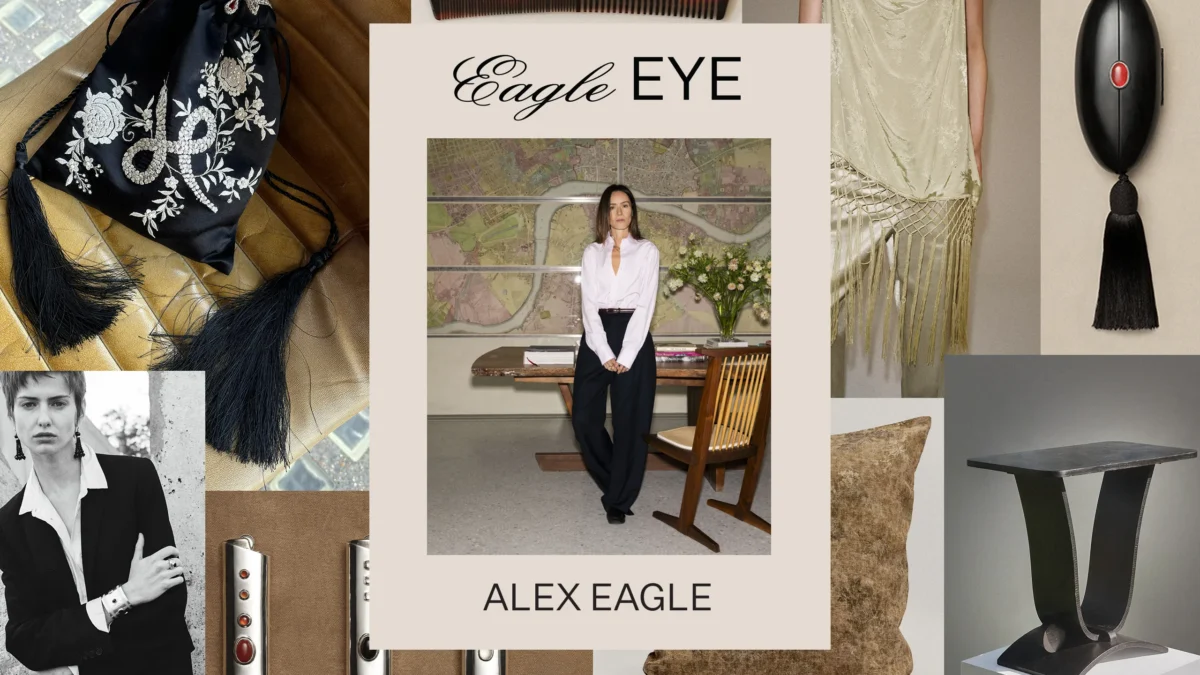
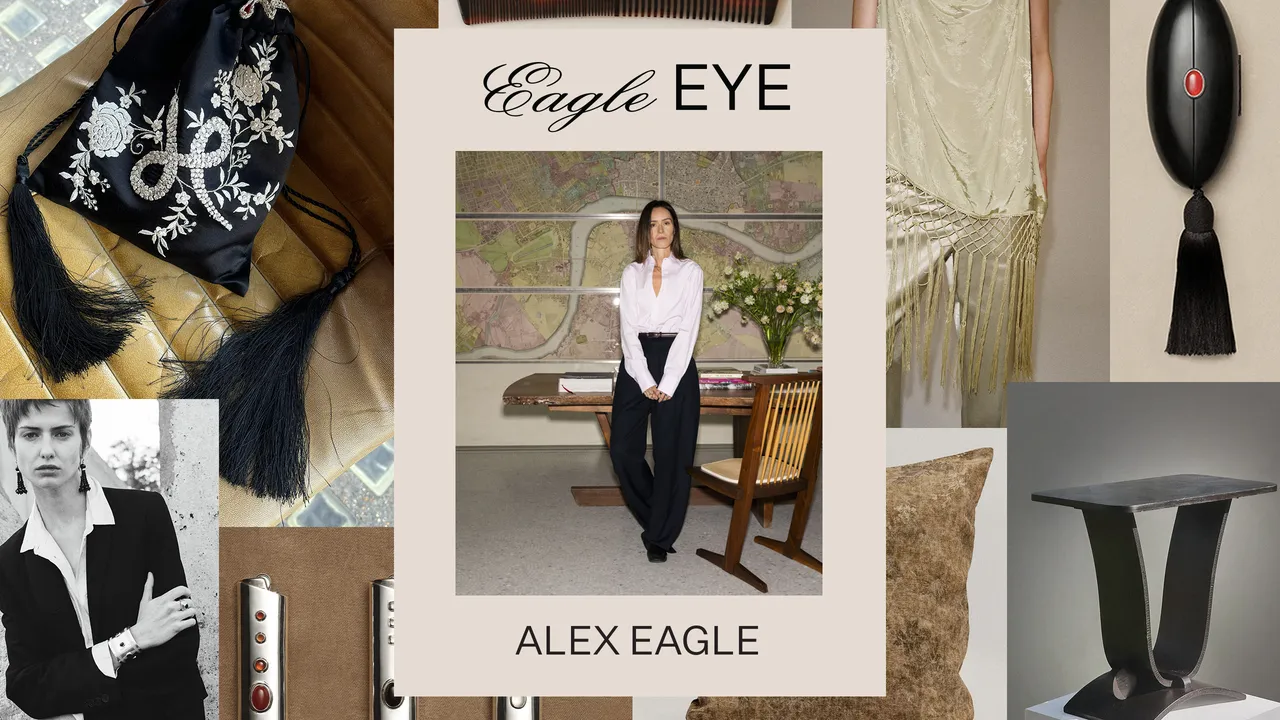
Eagle Eye exists to explain the gaps—between how we dress and how we live; between the spaces you’re drawn to and the coat you keep reaching for. Each month, London-based designer and creative director Alex Eagle will tap her roster of friends and experts to explore the “why” behind a certain theme—why we’re drawn to certain things, and how those instincts quietly form over years without us really noticing. It’s a column rooted in interior design, with many branches (and, of course, a curated edit of shoppable products to boot).
Born in 1920s Paris, Art Deco soon swept through every discipline of design—architecture, interiors, jewelry, fashion—uniting them all under a single set of convictions: that beauty should be structural, that ornament must earn its place, and that elegance and abundance are not opposites. It was the visual language of a world emerging from catastrophe and choosing to be magnificent. One hundred years later, now feels like precisely the right moment to return to it. The centenary of the movement’s defining event, the 1925 International Exhibition of Modern Decorative and Industrial Arts in Paris, prompted a major retrospective at the Musée des Arts Décoratifs that just wrapped in April, gathering over a thousand works across the arts.
Even beyond the anniversary, people are hungry for something more considered, more lasting, and, frankly, more decadent after years of expendable design. That appetite is visible everywhere you look. At Chanel, Matthieu Blazy drew directly from the Art Deco movement for his Métiers d’Art 2026 collection: tassels, feathers, and intricate beadwork by Maison Lesage, the storied Parisian embroidery house that has supplied couture’s most exacting craft since 1924. The conversation between then and now has rarely felt more alive.
It is a conversation I’ve been having myself, too. I keep returning to Art Deco as a reference point in my interiors work with Eagle + Hodges: its geometric rigor and insistence on material honesty. As interior designer Michael Bargo puts it: “You need a foundation of comfort in your structure, but of course decoration and accessory is always welcome.” To that end I also find it cropping up in smaller, more personal places: the embroidery on a Conner Ives silk robe, the curves on a Guéridon table, or even Sophie Buhai’s Evil Eye minaudière for storing tiny essentials.
To dig into the elements of Art Deco that feel more relevant than ever, I spoke to Bargo, jewellery designer Fernando Jorge, antiques dealer Dorian Caffot De Fawes, and Parisian art gallerist Mia Lacoste. In various forms, Art Deco asks you to commit to craft and give a single, beautiful thing space to breathe. That instruction, it turns out, is not dated at all.
Tassels, Everywhere
The tassel, in all its forms, is one of the simplest ways to bring an Art Deco sensibility into your life without reinventing your wardrobe (or decor) from scratch. Start small: a belt, a clutch. Alaïa’s leather belt can be worn loose or tightly for a cinched silhouette; Sophie Buhai’s Cyclops clutch, with its elegant single tassel, does all the talking for you if you’d rather keep the rest of your outfit pared-back.