
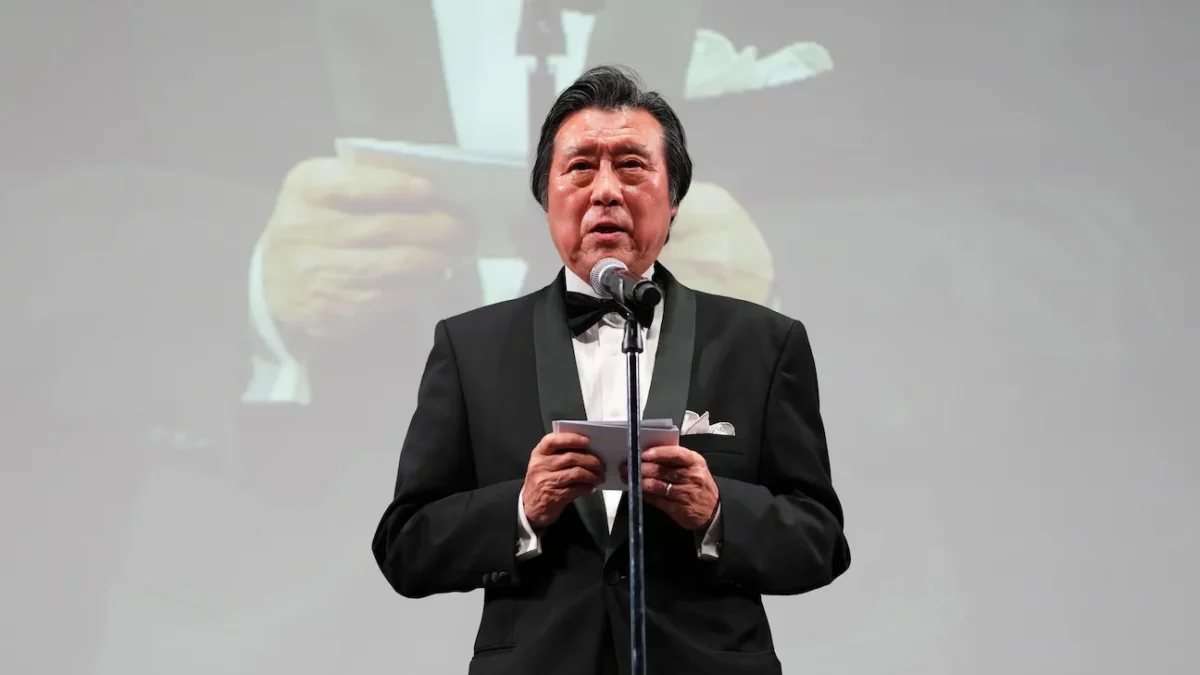
Takeo Hisamatsu is setting out an expansion-minded agenda after returning to lead the Tokyo International Film Festival, with a larger budget, deeper studio involvement and greater international visibility for Japanese filmmakers among his priorities ahead of the event’s 40th edition.
Hisamatsu, who previously directed the festival from 2017 to 2021, said his reinstatement was unexpected but offered another chance to pursue unfinished goals.
“It was a surprise, but I thought it was an honor and a good opportunity for me to do some of the things I couldn’t accomplish before,” he said.
The Japanese film veteran spent lengthy executive tenures at Shochiku and Warner Bros. before first taking charge of the festival. Veteran diplomat Hiroyasu Ando, appointed chairman in 2019, subsequently assumed control with a mandate to reshape the event.
Under Ando, the festival moved to Tokyo’s Ginza and Hibiya districts, changed its programming staff, expanded filmmaker talks and brought back the Kurosawa Akira Award. Ando abruptly stepped down earlier this year, clearing the way for Hisamatsu’s return.
Hisamatsu declined to address the institutional circumstances surrounding his departure and reinstatement. Instead, he is focusing on what he sees as an especially promising period for Japanese cinema.
“I feel at this moment that there is considerable tailwind behind Japanese cinema, so it’s a fortunate time for me to return to this work,” he said.
A Bigger International Role for Tokyo
Hisamatsu wants the Tokyo festival to become more than a place where Japanese audiences encounter films from overseas. He also envisions it as a more effective international springboard for Japanese filmmakers and their projects.
That ambition arrives amid a series of overseas breakthroughs. Hisamatsu cited Ryusuke Hamaguchi’s best international feature Oscar win for Drive My Car, the historic visual effects victory for Godzilla Minus One and the growing worldwide popularity of Japanese anime.
Japan was also selected as the country of honor at Cannes’ Marché du Film in May, while more than 30 Japanese films screened at the Busan International Film Festival this month.
The domestic market has supplied further momentum. Japan’s box office reached a record ¥274.5 billion, or $1.8 billion, in 2025, exceeding its previous high from 2019. Hisamatsu also pointed to significant investment in Japanese productions from global streaming services and increased government attention after the content industry was identified as a priority growth sector.
“Obviously, Japanese films and filmmakers are drawing attention from the world, and we should be able to both support and capitalize on these trends at the festival,” he said.
TIFF has already begun adding infrastructure around that goal. This year, its Nippon Cinema Now program, which highlights contemporary Japanese filmmaking, introduced competitive prizes. The festival also launched TIFF Work-in-Progress, an initiative designed to connect Japanese productions with international festival programmers and industry representatives.
More Money — and More Parties
Hisamatsu’s expansion plans come with a direct financial message: Tokyo needs additional resources.
“We need more money,” he said. “Given the recent depreciation of the yen and the rise in inflation, our former budget — for flying in and hosting filmmakers and talent — it just doesn’t go as far. And we want to be expanding the festival, not cutting down.”
He is optimistic that government support will increase before the landmark 40th edition, but the festival is not relying on that possibility alone. Its team is also seeking more sponsors and pitching the anniversary event as a valuable platform for participating brands.
Japanese studios are another major piece of Hisamatsu’s strategy. He wants them to work more closely with TIFF, use the festival to promote their projects and host events that encourage connections among film professionals.
“We need to create a more festive vibe around the festival, and to do that we need more parties,” he said, pointing to the role such gatherings play in networking and business development at Cannes. He also noted that Korean studios stage company events during the Busan International Film Festival.
Toho is taking a step in that direction this year by hosting its first invitation-only “Toho Izakaya Night,” where it will promote projects and network with international guests. Hisamatsu contacted Japan’s other major studios about organizing events, but they were unable to assemble plans in time.
“They weren’t ready this year, but hopefully by the 40th edition, they will be ready to make a bigger splash,” he said.
ShowBiz Take
Hisamatsu’s return matters because it coincides with measurable momentum for Japanese film, both at home and abroad. His plans connect the festival’s programming mission with a wider industry objective: giving Japanese work more opportunities to reach international decision-makers while making Tokyo a stronger meeting place for global film business.
The challenge is turning that opportunity into lasting scale. TIFF has introduced new prizes and a work-in-progress platform, but Hisamatsu’s comments make clear that programming alone will not deliver the expansion he wants. Funding, sponsorship, studio participation and the ability to bring filmmakers and talent to Tokyo will all shape how far the festival can extend its reach.
What Happens Next?
Hisamatsu is using the 40th edition as a focal point for evaluating TIFF’s place on the international festival circuit. Although Tokyo is perceived as a competitor to Busan, he sees room for cooperation rather than a purely adversarial relationship.
Asia represents about 40 percent of the global box office, he said, arguing that Tokyo and Busan can operate as two major events presenting Asian cinema to the world. Before that vision can fully take shape, TIFF will be working to secure more government backing and sponsors — and encouraging additional Japanese studios to join Toho in making the anniversary edition a larger industry showcase.