
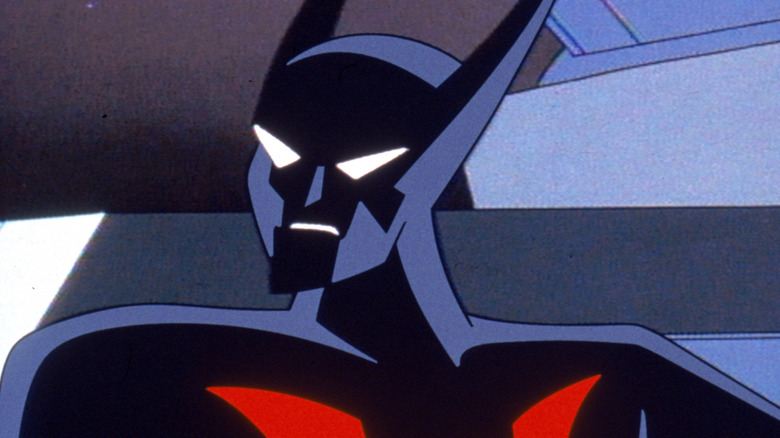
One of the strangest offshoots of the “Batman Beyond” era lasted two seasons, carried direct ties to the DC Animated Universe and still never came close to matching the profile of the series that launched it.
“The Zeta Project,” a Kids’ WB animated series spun out of “Batman Beyond,” followed Zeta, a government-built robot who rejected his original programming as an assassin. The character first appeared in the Season 2 “Batman Beyond” episode “Zeta,” where Terry McGinnis encountered the fugitive machine as it sought a more peaceful life after going on the run.
That setup became the foundation for a separate series, but the spin-off moved in a noticeably different direction from its parent show. While “Batman Beyond” reimagined Gotham City decades after “Batman: The Animated Series,” with an elderly Bruce Wayne training teenager Terry McGinnis to become the new Batman, “The Zeta Project” shifted the focus away from Gotham’s superhero mythology and toward a chase story about a sentient weapon trying to escape government control.
In the spin-off, Zeta was redesigned with a more humanoid appearance and teamed with teenager Ro Rowan while NSA agents pursued him and attempted to bring him back under their command. The show drew inspiration from films such as “Blade Runner,” but presented its world with a brighter, more simplified visual style than the darker “Batman Beyond” aesthetic that introduced the character.
A DC spin-off without much visible DC identity
“Batman Beyond” had a major advantage when it arrived on television in 1999: it was built from the legacy of “Batman: The Animated Series.” The sequel series featured Bruce Wayne in old age, with Kevin Conroy returning from “TAS” to voice the older version of the character, while Terry McGinnis stepped into the Batman role in a futuristic Gotham.
“The Zeta Project,” by contrast, did not present itself with the same instantly recognizable DC trappings. Its futuristic setting, more “cartoony” look and absence of familiar superheroes left comparatively little on the surface to mark it as part of the DC Animated Universe. That distinction helped make it a more original departure, but it also meant the show did not benefit from the same obvious connection to a built-in Batman audience.
The voice cast included Diedrich Bader as Zeta. Michael Rosenbaum voiced NSA Agent West shortly before taking on the DC role of Lex Luthor on the “Superman” prequel series “Smallville.”
Even with those pieces in place, “The Zeta Project” never developed the mainstream following that “Batman Beyond” enjoyed. The source series had the hook of a new Batman operating under the guidance of Bruce Wayne; the spin-off asked viewers to invest in a less familiar figure whose connection to the larger DC world was far less prominent.
Creative limits after 9/11
The show’s path became more complicated after the 9/11 terror attacks, which occurred after its first season. The premise originally included the NSA believing that Zeta had become a terrorist, a storyline that suddenly carried a different weight in the aftermath of the attacks.
Kids’ WB considered canceling “The Zeta Project” after 9/11. The series continued only under conditions that changed its creative direction: the tone had to be lightened, violence reduced and villains minimized. As those creative constraints mounted, series creator Robert Goodman stepped down as showrunner.
The network did not find a replacement showrunner, and “The Zeta Project” ended in 2002.
The result is an unusual footnote in the history of “Batman Beyond”: a two-season spin-off born directly from the DC Animated Universe, featuring a character introduced opposite Terry McGinnis, yet remembered far less vividly than the futuristic Batman series that made it possible.