
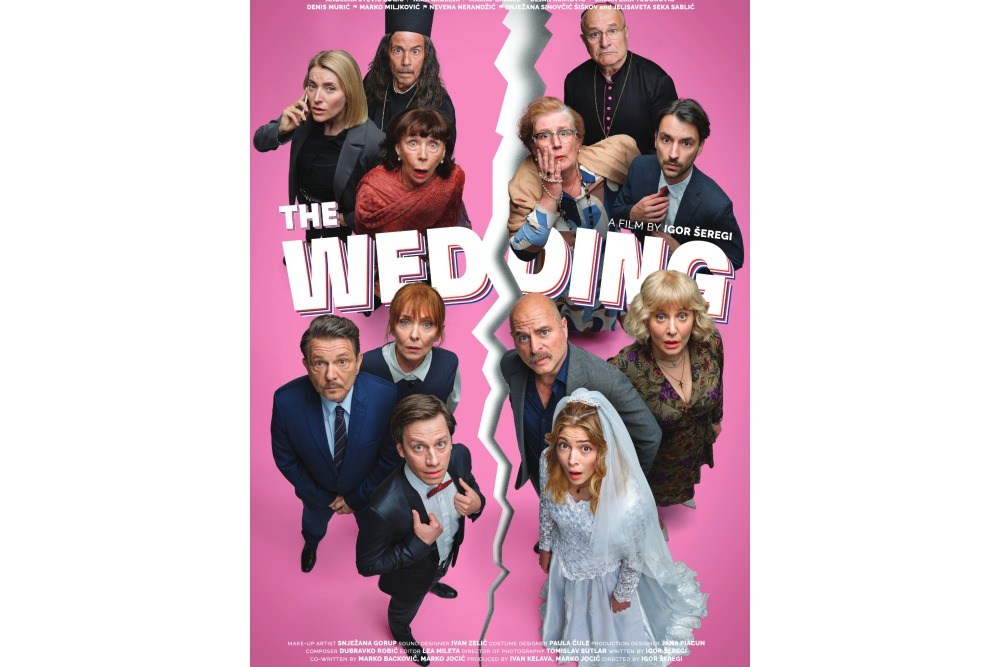
A sequel to the record-breaking Croatian-Serbian comedy The Wedding is already in development, while the original film is attracting international remake interest following a theatrical run that has reached more than 2.5 million spectators across 32 territories.
Released in January, director Igor Šeregi’s cross-cultural comedy has generated more than $20 million at the box office. Most admissions came from Croatia and Serbia, giving the filmmakers a remarkable return on a production shot over 21 days for one million euros, or approximately $1.1 million.
In Croatia, a country with a population of just under 3.9 million, the movie sold more than 800,000 tickets. That surpassed the roughly 500,000-admission record set by Titanic in 1998. The Wedding also posted record-breaking runs in Serbia, Bosnia and Herzegovina and North Macedonia, alongside a successful Slovenian release.
Šeregi said the result exceeded the team’s initial ambitions. “For the last 13 years in Croatia, there wasn’t a movie that crossed 100,000 admissions,” he said. “We were hoping maybe with Serbia, with the region, we can cross 100,000, but thankfully we were wrong.”
A Comedy Built Around Cultural Fault Lines
The story centers on the daughter of a Croatian businessman and her Serbian boyfriend, whose father is a high-ranking politician. When the couple announce a pregnancy and plans to marry, their nationalist parents react with horror.
The film uses that family collision to explore differences and shared traditions across the Balkans, while taking aim at nationalism and political corruption. It arrived about 25 years after the end of the post-Yugoslavia cycle of conflict and at a moment of renewed tension between Croatia and Serbia.
Šeregi described the characters as reflecting different generational attitudes: the grandmothers are the most nationalistic, the parents are focused more on money, and the younger generation is less concerned with nationality or religion.
To sharpen the Serbian perspective and accurately distinguish between Croatian and Serbian dialogue, Šeregi brought Serbian writers into the final script stage. “Basically, we are the same, but we’re hard about our differences, and that’s where the comedy lies for me,” he said.
The marketing followed a similarly tailored approach. Producer Ivan Kelava said separate Croatian and Serbian Facebook and Instagram accounts were created, each using its own language. The campaign maintained a single TikTok profile because, he said, younger users were less concerned about whether content was presented in Croatian or Serbian.
A Decade-Long Road to Cinemas
The movie took 10 years to reach production, including a seven-year wait to secure state funding. Šeregi said regional public funds have generally favored festival-focused projects, making it difficult for commercial films to move forward.
Kelava led production through Zagreb-based Eclectica, which he co-founded, while also working as Head of Production at Hanway Films in London. Eclectica produced the film with Serbia’s Viktorija film, with support from the Croatian Audiovisual Centre, Creative Europe MEDIA, broadcaster HRT and Duplicato Media of Blitz Group. Duplicato Media handled the Croatian release, while Art Vista distributed the film in Serbia.
The ensemble includes Rene Bitorajac as Croatian businessman Miljenko Loncaric, who learns he is close to bankruptcy on the same day his daughter reveals her pregnancy and wedding plans. Dragan Bitorajac plays Serbian minister Vuk Dimitrijevic.
Other Serbian cast members include Vesna Trivalic, Anđelka Stević Žugić, Marko Grabež, Denis Murić and Jelisaveta “Seka” Sablić, with Srdjan Todorovic playing an Orthodox bishop. The Croatian cast includes Linda Begonja, Roko Sikavica, Nika Grbelja, Snježana Sinovčić and Dejan Acimovic, who portrays a Catholic bishop.
Šeregi credited the actors, comedy and music as the film’s key ingredients. He nicknamed the ensemble “The Avengers.”
Although The Wedding was not nominated for the main Adriatic Film & TV Awards, it received a special mention for its commercial success. Grabež, who plays the groom, was nominated for Rising Star but lost to DJ Ahmet actor Arif Jakup.
Sequel and Remake Plans Take Shape
Šeregi and Kelava are not yet revealing the sequel’s story. Šeregi appeared to play down speculation that the plot would focus on the baptism of the couple’s newborn child, saying only that there are “a lot of intrigues and things to be fighting and laughing about.”
The production will also face a new practical challenge: filming discreetly after the original turned its cast into a major audience draw. Šeregi compared the prospect to entering a restaurant with a Premier League soccer squad and expecting nobody to notice.
Meanwhile, Hanway, which controls international rights, has reported interest in remaking the original. A Latin American adaptation is in development, and the company is set to discuss additional deals at AFM.
ShowBiz Take
The Wedding matters because its performance overturns the expectations that shaped its difficult development. A commercial local comedy with no clear regional precedent, delayed for years while seeking funding, ultimately outdrew a decades-old Croatian admissions record and found audiences well beyond one national market.
Its remake potential also suggests that the central idea travels: families emphasizing their differences even when their lives and cultures strongly overlap. As Šeregi noted, viewers outside the Balkans told him they recognized the story through their own experiences.
What Happens Next?
The filmmakers are moving ahead with the sequel but have not disclosed its plot or production timetable. Hanway will continue pursuing remake discussions at AFM, while the Latin American version remains in the works.