
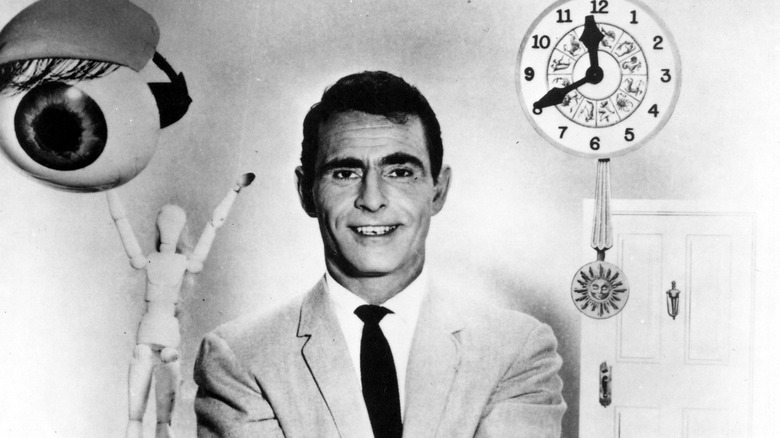
A first-season episode of “The Twilight Zone” faced an unusual production challenge: Its central prop was illegal in California, forcing the show to keep a police officer on set while filming.
The prop was a slot machine used in “The Fever,” the 17th episode of the season. Because California had outlawed gambling machines, the production could not simply obtain one through an ordinary prop supplier. Instead, the show borrowed impounded machines from the police department—and those machines remained under police supervision.
Why “The Fever” needed police oversight
Producer Buck Houghton explained the predicament in “The Twilight Zone Companion,” saying that even a prop house was barred from keeping gambling machines.
“A prop house couldn’t even have them,” Houghton said. The production’s solution came directly from law enforcement, but with a firm safeguard attached. “There was a policeman on the set at all times, to make damn sure that somebody didn’t take one off and set it up in his uncle’s barber shop.”
The arrangement allowed the episode to feature the very object driving its story while keeping the production within California law.
In “The Fever,” a married couple wins a trip to Las Vegas. The husband begins the episode with a strong dislike of gambling, but he soon becomes unable to pull himself away from a slot machine. He loses a large amount of money and may also be losing his grip on reality.
Later that night, he is haunted by a vision of the machine, which takes on a demonic presence. His escalating ordeal ends when he falls to his death. The episode delivers a direct warning about gambling obsession, with the slot machine operating as both the practical centerpiece of the production and the threatening force within the story.
Rod Serling drew from his own gambling experience
The idea behind “The Fever” was connected to Rod Serling’s own visit to Las Vegas, according to the biography “Serling: The Rise and Twilight of TV’s Last Angry Man.”
Serling had signed a contract requiring him to write 90 percent of “The Twilight Zone” scripts. After the deal for the show was completed, he and his wife, Carol, traveled to Las Vegas to celebrate.
Carol was doing well at the slot machines, while Serling was losing heavily. Despite those losses, he found himself unable to stop playing. He later transformed that experience into “The Fever,” taking the compulsion he had observed in himself and pushing it toward the episode’s supernatural and fatal conclusion.
That personal connection added another layer to a production already shaped by a real-world restriction. Serling’s encounter with gambling inspired the story, while California’s prohibition on gambling machines determined how the episode’s defining prop could be brought onto the set.
The story later gained an additional ending
Serling returned to “The Fever” when he adapted it and several other episodes into short fiction for the 1960 collection “Stories From the Twilight Zone.”
The short-story version included an extra detail following the gambler’s death. One year later, his widow attends a church event and sees a slot machine at the gathering. Her reaction is immediate and overwhelming.
As the story puts it, “It had taken three of her friends from the Women’s Alliance to stop her screaming and get her back home to bed.”
The added passage extends the consequences beyond the husband’s death, showing that the sight of another slot machine continues to torment his wife long after the central events.
ShowBiz Take
The police officer’s presence offers a striking glimpse of how an on-screen story can collide with off-screen law. “The Fever” depended on a slot machine for its plot, but California’s rules meant that acquiring one required more than a visit to a prop house.
The solution—borrowing impounded machines and keeping them under constant police watch—turned a legal obstacle into a workable production arrangement. It also created an unusual parallel between the episode and its making: The machine that proves impossible for the main character to leave alone also had to be closely guarded on set to ensure it never disappeared.