
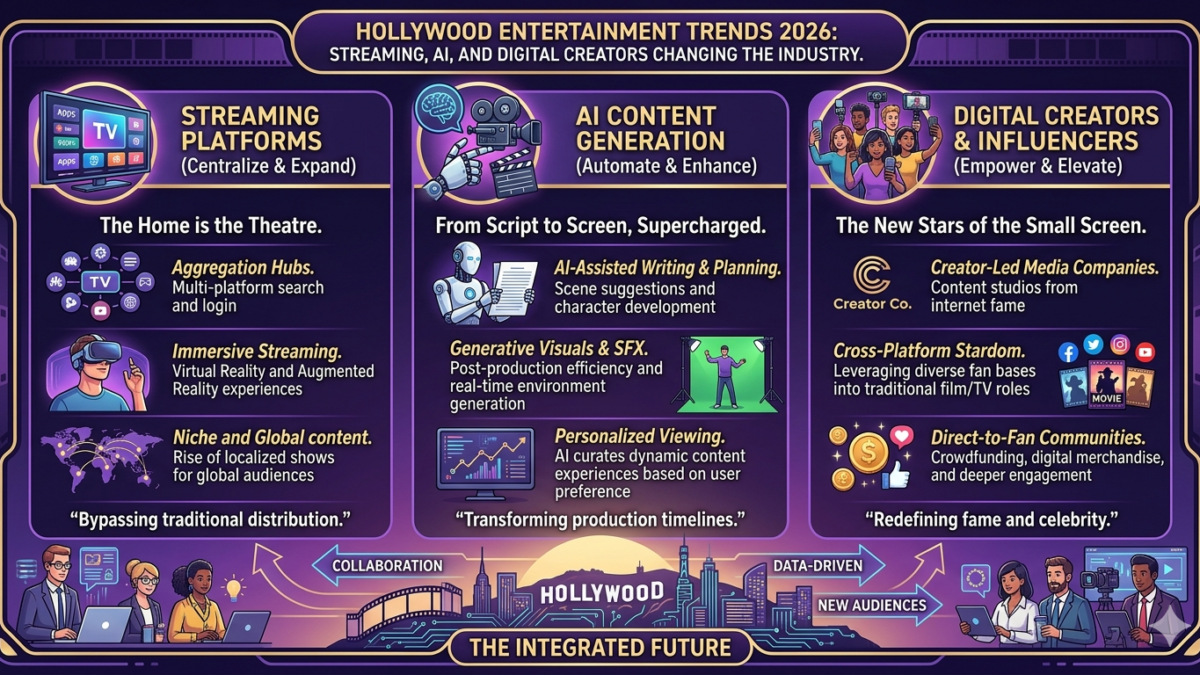
The entertainment industry continues to evolve at a rapid pace. From the rise of artificial intelligence and new streaming strategies to the growing influence of creators and global audiences, 2026 is shaping up to be a transformative year across movies, television, music, gaming, and celebrity culture.
As studios, networks, streaming services, and artists adapt to changing consumer habits, several major trends are emerging that could define the future of entertainment for years to come.
1. Streaming Enters a New Phase
The streaming wars are no longer focused solely on subscriber growth. Many major platforms are shifting their attention toward profitability, bundling options, advertising-supported tiers, and subscriber retention. Services are investing more strategically in content while searching for ways to reduce costs and increase engagement.
Sports programming, live events, and exclusive franchises remain key weapons in the battle for viewers.
2. Artificial Intelligence Expands Across Entertainment
Artificial intelligence is becoming an increasingly important tool in content creation, marketing, visual effects, localization, and audience analysis. While AI continues to spark debate throughout Hollywood and the music industry, companies are exploring ways to use the technology to streamline workflows and improve efficiency.
The conversation has shifted from whether AI will impact entertainment to how it will be used responsibly and creatively.
3. Event Movies Are Driving Theatrical Success
Moviegoers continue to show up for major franchise releases, blockbuster spectacles, and highly anticipated event films. Studios are placing greater emphasis on projects that can generate excitement, social conversation, and premium theater attendance.
Smaller and mid-budget productions are increasingly finding audiences through streaming platforms, while theaters focus on delivering premium experiences that justify leaving home.
4. Global Audiences Are More Important Than Ever
International audiences play a significant role in determining entertainment success. Films, television series, music artists, and digital creators are reaching global audiences faster than ever before through streaming platforms and social media.
Studios are developing content with worldwide appeal, while audiences continue embracing productions from countries beyond the traditional Hollywood system.
5. Creator Culture Continues to Grow
Content creators, influencers, podcasters, and independent media personalities have become major players in the entertainment ecosystem. Many creators now command audiences comparable to traditional television networks and media brands.
Brands, studios, and streaming platforms increasingly collaborate with creators to reach younger demographics and build online engagement.
6. Live Experiences Remain a Major Business
Concert tours, fan conventions, festivals, immersive attractions, and live events continue generating significant revenue. Audiences increasingly value experiences that offer personal interaction and memorable moments that cannot be replicated online.
The success of major world tours demonstrates that live entertainment remains one of the strongest sectors in the industry.
7. Celebrity Brands Continue Expanding
Celebrities are becoming entrepreneurs at an unprecedented rate. From beauty products and fashion labels to beverages and technology ventures, stars are building businesses that extend far beyond their entertainment careers.
Personal branding has become a critical component of long-term success in today’s media landscape.
8. Nostalgia Remains a Powerful Force
Reboots, sequels, anniversaries, and franchise revivals continue attracting audiences. Familiar intellectual property offers studios a lower-risk path while providing viewers with recognizable stories and characters.
While original content remains important, nostalgia continues influencing many of the industry’s biggest projects.
9. Social Media Drives Discovery
Platforms such as TikTok, Instagram, YouTube, and emerging social networks continue shaping what audiences watch, listen to, and discuss. Viral moments can dramatically increase interest in television series, songs, films, and celebrity stories.
Marketing strategies increasingly focus on generating social engagement alongside traditional advertising campaigns.
10. Entertainment Is Becoming More Personalized
Advances in recommendation technology, audience analytics, and digital distribution are helping companies deliver more personalized experiences. Consumers now expect content recommendations tailored to their interests and viewing habits.
As competition grows, personalization is becoming a key differentiator among entertainment platforms.
Final Take
The entertainment landscape of 2026 is defined by innovation, competition, and evolving audience expectations. Streaming services are adapting their business models, artificial intelligence is reshaping production workflows, and global audiences are exerting greater influence than ever before.
While technology continues transforming the industry, one thing remains constant: audiences are always searching for compelling stories, unforgettable experiences, and meaningful connections. The companies that successfully balance innovation with creativity will be best positioned to thrive in the years ahead.
ShowBiz Originals delivers exclusive analysis, commentary, and insights on the entertainment industry, movies, television, music, streaming, gaming, and celebrity culture.